








Share to Social Media
Updated: April 22, 2026
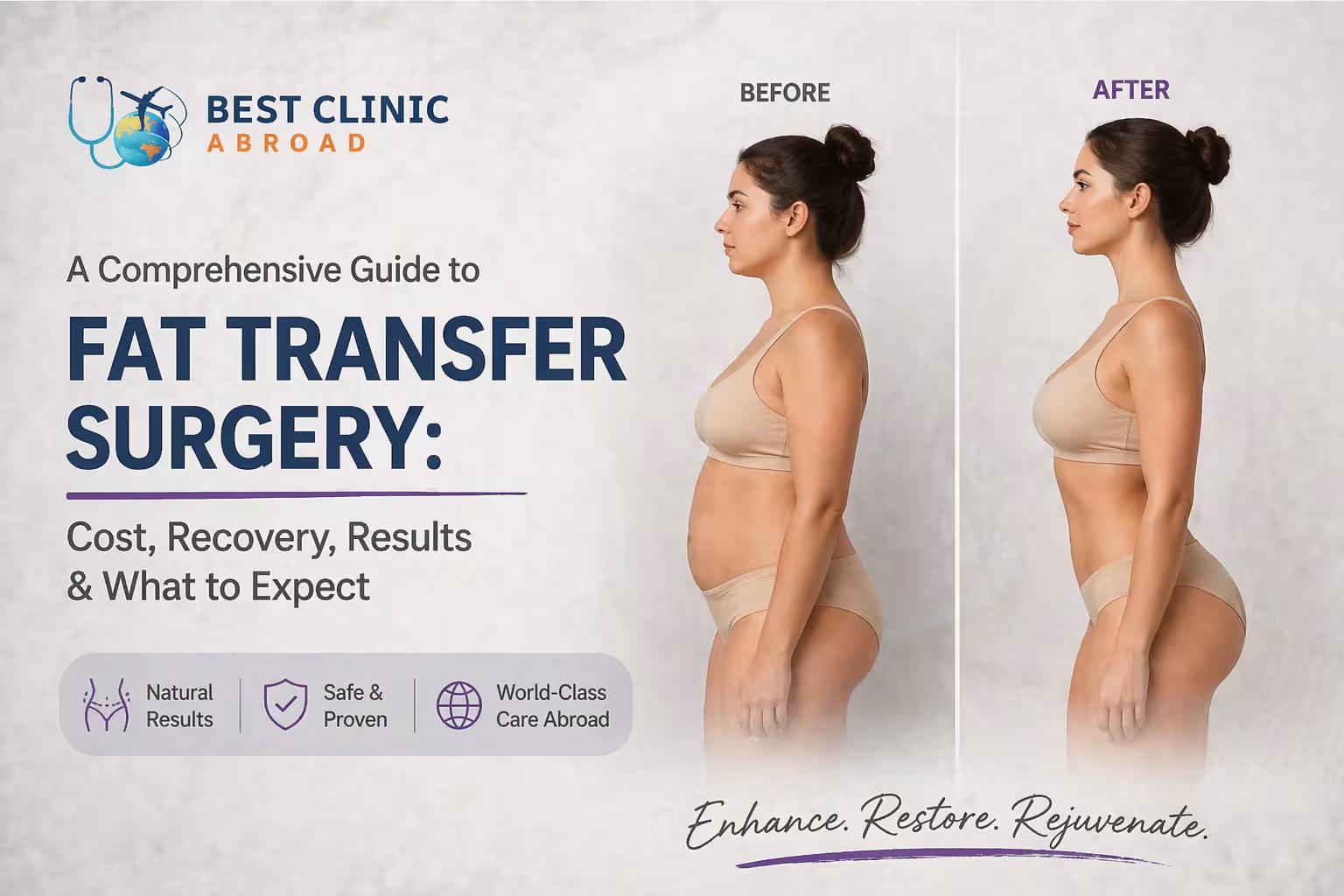
Fat Transfer Surgery Abroad: Cost, Recovery, Results & What to Expect
Fat transfer surgery, also known as fat grafting, is an advanced cosmetic procedure designed to enhance body contours using your own natural fat. Unlike traditional implants or synthetic fillers, this technique involves removing fat from one part of the body and reinjecting it into another to restore volume, improve symmetry, and achieve natural-looking results.
In recent years, there has been a strong global shift toward procedures that prioritize natural outcomes over artificial enhancements. As a result, fat transfer has become one of the most in-demand aesthetic treatments worldwide. According to data from the International Society of Aesthetic Plastic Surgery, fat grafting procedures have consistently increased due to their dual benefits and long-lasting results.
At the same time, many patients are now exploring fat transfer surgery abroad cost options to access high-quality care at a more affordable price. Countries such as Turkey, Thailand, and South Korea have emerged as leading destinations, offering experienced surgeons, modern facilities, and comprehensive treatment packages for international patients.
What Is Fat Transfer Surgery?
Fat transfer surgery is a minimally invasive cosmetic procedure that uses your own fat to enhance specific areas of the body. The procedure is performed in three key stages, each designed to maximize safety and effectiveness.
Fat Harvesting (Liposuction)
Fat is gently removed from donor areas such as the abdomen, thighs, hips, or lower back using liposuction techniques. These areas are typically chosen because they have excess fat that can be safely removed without affecting body proportions.
Fat Purification
Once the fat is extracted, it is carefully processed to remove impurities such as blood, oil, and damaged cells. Only healthy fat cells are retained, which improves the fat transfer survival rate and increases the likelihood of long-lasting results.
Fat Injection
The purified fat is then strategically injected into the target area in small amounts. This technique ensures even distribution, enhances contour, and allows the fat cells to integrate naturally with surrounding tissues.
Common Areas Treated
- Face (cheeks, under eyes, lips)
- Breasts (for natural enhancement)
- Buttocks (Brazilian Butt Lift – BBL)
- Hands (to restore volume)
- Scars and contour irregularities
This approach makes fat transfer a versatile procedure that can address multiple aesthetic concerns in a single session.
Why Fat Transfer Is Gaining Popularity
Fat transfer has gained significant popularity because it aligns with modern patient preferences for natural and subtle enhancements. Unlike implants or fillers, which introduce foreign materials into the body, fat transfer uses your own tissue, making it a more biologically compatible option.
Key Benefits
- Uses your own fat, reducing the risk of allergic reactions
- Provides the dual benefit of fat removal and volume enhancement
- Delivers soft, natural-looking results
- Minimizes scarring due to small incisions
- Offers long-lasting outcomes compared to temporary fillers
Patients today are increasingly looking for procedures that enhance their appearance without making it obvious that they have undergone surgery. Fat transfer meets this demand by offering gradual and natural improvements.
Who Is an Ideal Candidate?
Not everyone is a suitable candidate for fat transfer surgery, and proper evaluation is essential to ensure safe and effective results.
You may be a good candidate if you:
- Are you close to your ideal body weight
- Have enough excess fat for harvesting
- Are in good overall health
- Do not smoke or are willing to stop before surgery
- Prefer natural enhancement rather than implants
- Have realistic expectations about the outcome
Very lean patients or those seeking dramatic volume increases may need alternative procedures, such as implants, to achieve their desired results.
Fat Transfer Procedure: Step-by-Step
Understanding the process helps patients feel more confident and prepared.
Step 1 – Initial Consultation
During this stage, the surgeon evaluates your goals, medical history, and body type. A customized treatment plan is created based on your expectations and anatomical considerations.
Step 2 – Liposuction
Fat is gently extracted from the donor area using specialized instruments. This step is performed under local or general anesthesia, depending on the extent of the procedure.
Step 3 – Fat Processing
The extracted fat is purified using advanced techniques such as centrifugation or filtration. This ensures only viable fat cells are used for transfer.
Step 4 – Fat Injection
The surgeon carefully injects the fat into the target area in multiple layers. This technique improves blood supply to the transferred fat and enhances long-term survival.
Step 5 – Post-Procedure Monitoring
After the procedure, patients are monitored and given detailed aftercare instructions to ensure proper healing and optimal results.
Fat Transfer Recovery Timeline
Recovery is generally smooth, but it varies depending on the treated areas and individual healing response.
Fat Grafting Results Timeline
- Week 1: Swelling, bruising, and mild discomfort are common
- Weeks 2–3: Most patients return to normal daily activities
- Weeks 4–6: Swelling continues to decrease, and improvements become visible
- Months 3–6: Final results are achieved as the fat stabilizes
Patients are often advised to wear compression garments in donor areas to support healing and reduce swelling.
Results: What to Expect
Fat transfer provides gradual, natural, and long-lasting results.
Key Considerations
- The fat transfer survival rate is typically between 50% and 70%
- Some fat is naturally absorbed by the body
- Final results appear within 3 to 6 months
- Additional sessions may be required for optimal volume
The fat that successfully integrates becomes a permanent part of your body, which is why fat transfer is considered a long-term solution.
Is Fat Transfer Permanent?
One of the most frequently asked questions is whether fat transfer is permanent.
The answer is partially yes.
The fat cells that survive after the procedure establish a blood supply and become a permanent part of the treated area. However, not all transferred fat survives, which is why surgeons often account for some degree of reabsorption.
Factors That Influence Permanence
- Surgical technique
- Blood supply in the treated area
- Patient lifestyle and weight stability
- Smoking and overall health
Maintaining a stable weight is important because significant weight fluctuations can affect the results.
Fat Transfer vs Implants vs Fillers
Choosing between fat transfer, implants, and fillers depends on individual goals.
Fat Transfer vs Implants
- Fat transfer uses natural tissue, while implants use synthetic materials
- Results from fat transfer are more natural
- Implants provide more dramatic volume
- Implants may require replacement over time
Fat Transfer vs Fillers
- Fat transfer offers long-lasting results
- Fillers are temporary and require maintenance
- Fat transfer can be more cost-effective in the long term
Fat Transfer Surgery Abroad Cost
Cost is one of the primary reasons patients consider traveling abroad for treatment.
Average Fat Transfer Surgery Abroad Cost
- Turkey: $2,000 – $5,000
- United States / United Kingdom: $6,000 – $15,000
Factors Affecting Cost
- Number of areas treated
- Surgeon expertise
- Clinic accreditation
- Technique used
- Post-operative care
Lower costs abroad do not necessarily mean lower quality. Many international clinics offer high standards of care at competitive prices.
Best Country for Fat Transfer
Selecting the best country for fat transfer involves balancing quality, safety, and affordability.
Top Destinations
- Turkey – Known for cost-effective, high-quality care
- South Korea – Advanced cosmetic techniques
- Thailand – Affordable treatment packages
Why Turkey Is a Leading Choice
- Experienced and internationally trained surgeons
- Accredited hospitals and clinics
- Advanced fat grafting techniques
- Comprehensive packages for international patients
Fat Transfer Surgery Abroad: What to Expect
Planning treatment abroad requires careful preparation.
Step 1 – Online Consultation
Patients share their goals and medical information with the clinic. Photos may be used for initial assessment.
Step 2 – Treatment Planning
Clinics provide recommendations, cost estimates, and procedure details.
Step 3 – Travel Arrangements
Patients organize flights, accommodation, and transportation. Many clinics offer assistance with these arrangements.
Step 4 – Procedure and Recovery
Patients undergo surgery and remain in the destination country for initial recovery and follow-up visits.
Risks and Safety Considerations
While fat transfer is generally considered safe, it is still a surgical procedure and carries certain risks.
Possible Risks
- Swelling and bruising
- Infection
- Uneven fat absorption
- Asymmetry
- Rare complications such as fat embolism
Choosing a qualified and experienced surgeon significantly reduces these risks.
FAQs
Is fat transfer surgery safe abroad?
Fat transfer surgery can be safe abroad when performed in accredited clinics by experienced, board-certified surgeons. Many countries popular for medical tourism follow international standards and use advanced techniques. It’s important to verify credentials, clinic certifications, and patient reviews before making a decision.
How much does fat transfer surgery cost abroad?
The cost of fat transfer surgery abroad typically ranges between $2,000 and $5,000 in countries like Turkey, compared to $6,000–$15,000 in the US or UK. Pricing depends on the number of areas treated, the surgeon's expertise, and the clinic's quality. Many packages also include consultation, surgery, and aftercare.
Is fat transfer permanent, or does it go away?
Fat transfer is partially permanent because the fat that survives becomes a natural part of your body. However, not all transferred fat cells survive, and some are reabsorbed within the first few months. Final results usually stabilize after 3 to 6 months.
What is the fat transfer survival rate?
The average fat transfer survival rate is around 50% to 70%, depending on the technique used and the patient’s healing process. Skilled surgeons use precise injection methods to improve fat retention. Following post-surgery care instructions also plays a key role in long-term results.
How long do you need to stay abroad for fat transfer surgery?
Most patients are advised to stay abroad for about 5 to 7 days after the procedure. This allows time for initial recovery, follow-up appointments, and monitoring by the surgeon. The exact duration may vary depending on the treatment area and individual healing.
When can I travel after fat transfer surgery?
Patients can usually travel within 5 to 7 days after fat transfer surgery, once the surgeon confirms it is safe. Short flights are generally manageable earlier, but long-haul travel may require extra precautions. Always follow your surgeon’s advice to avoid complications.
Is fat transfer better than implants?
Fat transfer offers more natural-looking and feeling results because it uses your own tissue, while implants provide a more noticeable volume increase. The choice depends on your goals, body type, and expectations. A consultation helps determine which option is more suitable.
Which country is best for fat transfer surgery?
Countries like Turkey, Thailand, and South Korea are considered top choices for fat transfer surgery. They offer experienced surgeons, modern clinics, and cost-effective treatment packages. The right destination depends on your budget, preferences, and treatment needs.
Medical Disclaimer
This content is provided for general informational purposes only and should not be considered medical advice. Fat transfer procedures vary based on individual health, goals, and clinical assessment. Always consult a qualified, licensed healthcare professional before making any medical decisions or undergoing treatment. Outcomes, recovery, and risks can differ from patient to patient.
Reviewed by: Dr Imad
General Physician & Medical Coordinator
Best Clinic Abroad
Updated: April 22, 2026
Comments (0)
No comment found

Bestclinicabroad
Connect with the world's Best Clinic and doctors at Best Clinic Abroad. Your well-being is our priority, with personalized care every step of the way.


Field of Specialties and Diagnosis:
Contact Info
- 272, Bath Street, Glasgow, G2 4JR, SCOTLAND
- +32 47 2702751
- support@bestclinicabroad.com
© Copyrights Reserved
Terms and ConditionsPrivacy Policy
