









Bestclinicabroad
Connect with the world's Best Clinic and doctors at Best Clinic Abroad. Your well-being is our priority, with personalized care every step of the way.


Connect with the world's Best Clinic and doctors at Best Clinic Abroad. Your well-being is our priority, with personalized care every step of the way.



 Mostiště 93, 594 01 Velké Meziříčí, Czechia
St. Zdislava Hospital, located in the peaceful Bohemian Highlands Hospital of the Czech Republic, has become a leader in medical care since its opening in 2007. Known as a premier Robotic surgery center in the Czech Republic, the hospital specializes in a variety of procedures, including Prostate surgery in the Czech Republic, Bariatric surgery in the Czech Republic, and kidney and bladder surgeries. St. Zdislava is committed to integrating the latest research and technologies, such as Da Vinci robotic surgery in the Czech Republic, into its treatments.
Key Highlights of St. Zdislava Hospital:
St. Zdislava Hospital remains a top destination for those seeking reliable, effective medical care in Europe, particularly in robotic surgeries and advanced medical treatments. Its reputation as one of the best hospitals for robotic surgery in Europe is supported by its commitment to high-quality patient care, modern medical infrastructure, and comprehensive healthcare services, including Orthopedic surgery in the Czech Republic, Joint replacement surgery in the Czech Republic, and more. With its focus on patient well-being and satisfaction, St. Zdislava Hospital is a key player in Czech Republic medical tourism.


 U Malvazinky 5, 150 00 Praha 5, Czechia
Established in Prague, Czech Republic, in 1999, the Malvazinky Rehabilitation Clinic offers a comprehensive range of services, focusing on orthopedics and rehabilitation. The clinic offers comprehensive care, encompassing preoperative preparations, surgical procedures, and meticulous postoperative rehabilitation services. With a team of highly skilled specialists, the clinic ensures that patients receive personalized and effective treatments tailored to their needs. The facility is recognized for its modern infrastructure and patient-centered approach, making it a leading choice for rehabilitation services in the region.
Key Services at Malvazinky Rehabilitation Clinic:
The Malvazinky Rehabilitation Clinic combines advanced technologies, skilled specialists, and a focus on patient well-being, making it a top choice for rehabilitation care in the Czech Republic.
 K Nemocnici 1106/14, 268 01 Hořovice, Czechia
Hořovice Hospital is a leading healthcare provider in the Czech Republic, delivering comprehensive medical services across multiple specialties. The hospital combines advanced medical technology with a highly qualified team to ensure exceptional care. Its patient-centered approach emphasizes comfort, accessibility, and personalized treatment plans, catering to both local and international patients.
Key Services at Hořovice Hospital:
Hořovice Hospital is recognized for its dedication to quality healthcare, blending innovative practices with compassionate care in a modern environment.

 Roentgenova 37, 150 00 Praha 5, Czechia
Na Homolce Hospital, located in Prague, is one of the most advanced medical centers in the Czech Republic. Founded in 1971, it has grown into a global leader in healthcare services, specializing in cardiovascular treatments, neurosurgery, and neurology. The hospital excels in providing top-tier patient care through a combination of skilled specialists and advanced technology. With over 1700 employees and 357 beds, Na Homolce treats thousands of patients every year, performing around 16,000 operations annually.
Key Highlights of Na Homolce Hospital
Expert Medical Specialties
High Success Rates & Comprehensive Care
Advanced Medical Technologies
Patient-Centered Care & Comfort
Accreditations & Recognitions
Patient Satisfaction
Na Homolce Hospital in Prague is a globally recognized institution, committed to providing the highest standard of care through advanced medical technologies, exceptional specialists, and patient-centered services. Whether treating cardiovascular issues, neurological conditions or performing surgeries, the hospital is known for its comprehensive care and high success rates. Accredited by major health organizations, Na Homolce offers modern accommodations, clear patient communication, and a commitment to overall patient satisfaction, ensuring the best possible healthcare outcomes.










The Czech Republic operates a highly regulated healthcare system in which general surgery is delivered within clearly defined national frameworks that prioritize patient safety, clinical governance, and evidence-based practice. Surgical care is governed by national health legislation aligned with European Union standards, ensuring that hospitals, operating theaters, and surgical teams function under consistent regulatory oversight. In recent years, general surgery in the Czech Republic has continued to modernize through the expanded use of minimally invasive and laparoscopic techniques, enhanced recovery after surgery (ERAS) care models, digital surgical planning tools, and updated infection-control and perioperative safety protocols that reflect current international practice.
General surgeons in the Czech Republic follow a structured and transparent professional pathway. This typically includes completion of a university medical degree, followed by a competitive residency program in general surgery with supervised clinical practice across abdominal, gastrointestinal, endocrine, and emergency surgery. Formal specialist certification and licensing are regulated at the national level, with ongoing requirements for continuing medical education to maintain clinical competence. These training and oversight standards are consistent with internationally recognized principles referenced by bodies such as the World Health Organization, supporting safe and ethical surgical care.
General surgical services are delivered primarily in tertiary-care hospitals and university-affiliated medical centers equipped with modern operating suites, advanced anesthesia services, intensive care units, and diagnostic imaging departments. Academic affiliations support multidisciplinary collaboration among surgeons, anesthesiologists, radiologists, pathologists, and nursing teams, as well as participation in clinical audits and research. This infrastructure strengthens institutional accountability and adherence to national patient safety frameworks.
For international patients, planning general surgery involves practical and administrative considerations alongside medical evaluation. Patients typically begin exploring treatment options by reviewing hospital accreditation, surgical department capabilities, and publicly available information about procedural scope. In practice, hospitals commonly request medical records such as diagnostic imaging, laboratory reports, referral letters, and prior operative summaries for preliminary review. Communication with international patient departments often occurs through dedicated coordinators, where patients and families frequently ask about the expected length of hospital stay, postoperative recovery timelines, travel documentation, and follow-up care planning. Depending on the procedure, postoperative stays of 7–14 days or longer may be required. Language support is commonly available through English-speaking staff or professional medical interpreters, and early planning for follow-up care after returning home is usually encouraged to support continuity of treatment.
Across the Czech Republic, general surgery services operate within nationally regulated systems that emphasize patient safety, transparent documentation, and clinical governance. Oversight by the Ministry of Health of the Czech Republic provides an additional layer of reassurance for patients considering surgical treatment abroad.
General surgery in the Czech Republic reflects ongoing advances in surgical science and perioperative care. Hospitals have increasingly adopted minimally invasive and laparoscopic techniques for abdominal and gastrointestinal procedures, supported by high-definition imaging systems, digital diagnostics, and preoperative planning tools. CT and MRI imaging are routinely integrated into diagnostic workflows to support accurate surgical decision-making while adhering to imaging and radiology safety standards.
Compliance with international clinical and patient-safety standards is a central aspect of surgical care. Facilities follow strict protocols for infection prevention, sterile processing, anesthesia safety, and perioperative monitoring. Post-treatment observation is typically structured through standardized recovery pathways, including pain management protocols, early mobilization where appropriate, and coordinated discharge planning. These measures are designed to support patient safety rather than to predict individual outcomes.
Continuous professional development is mandatory for general surgeons and surgical teams. Participation in international conferences, professional societies, and Continuing Medical Education (CME) programs is a common practice. Treatment plans are individualized based on professional evaluation, informed consent is required for all surgical interventions, and final clinical decisions are made exclusively by licensed surgeons working within accredited hospitals. Collectively, these practices contribute to the Czech Republic’s recognition for regulation, innovation, and patient safety in general surgical care.
Laparoscopic Abdominal Surgery
Laparoscopic abdominal surgery is used to diagnose and treat a range of intra-abdominal conditions through minimally invasive access. Diagnostic planning typically includes imaging studies and laboratory evaluation. Procedures are performed using specialized instruments and camera systems under strict anesthesia and infection-control protocols, with clinical oversight focused on procedural safety and anatomical precision.
Hernia Repair Surgery
Hernia repair surgery addresses abdominal wall defects that may cause discomfort or functional impairment. Preoperative assessment includes physical examination and imaging when indicated. Surgical repair is conducted using open or minimally invasive techniques within regulated operating environments, emphasizing tissue integrity, mesh handling safety, and postoperative monitoring.
Gallbladder Surgery (Cholecystectomy)
Cholecystectomy is performed to treat gallbladder disease, commonly using laparoscopic methods. Diagnostic planning includes ultrasound imaging and laboratory testing. Surgery is carried out under standardized anesthesia protocols with clinical oversight focused on bile duct safety, infection prevention, and structured postoperative observation.
Colorectal Surgery
Colorectal surgery addresses diseases of the colon and rectum, including inflammatory and structural conditions. Diagnostic planning relies on imaging, endoscopic evaluation, and pathology review. Procedures are performed in tertiary-care settings with multidisciplinary collaboration, emphasizing surgical precision, anesthesia safety, and postoperative care coordination.
Thyroid and Endocrine Surgery
Endocrine surgery focuses on conditions affecting the thyroid and related glands. Diagnostic planning includes imaging, laboratory hormone analysis, and specialist evaluation. Surgery is conducted with careful attention to anatomical structures and nerve preservation, supported by intraoperative safety protocols and postoperative monitoring.
Emergency General Surgery
Emergency general surgery addresses acute surgical conditions requiring prompt intervention. Diagnostic assessment typically includes imaging and laboratory evaluation under time-sensitive protocols. Procedures are performed in fully equipped surgical units with multidisciplinary oversight to support patient safety and stabilization.
Motol University Hospital
Accreditations:
National oversight by the Ministry of Health of the Czech Republic
University-affiliated teaching hospital
Specializations:
Motol University Hospital provides comprehensive general surgical services within a tertiary-care academic environment, including abdominal, endocrine, and emergency surgery supported by multidisciplinary teams and advanced diagnostic facilities.
General University Hospital in Prague
Accreditations:
National regulatory oversight
Affiliated with Charles University
Specializations:
This hospital offers a wide scope of general surgical procedures, integrating gastrointestinal, colorectal, and hepatobiliary surgery with academic research and structured clinical governance.
Na Homolce Hospital
Accreditations:
Joint Commission International
Ministry of Health oversight
Specializations:
Na Homolce Hospital delivers general surgical care supported by internationally accredited safety systems, modern operating theaters, and multidisciplinary clinical teams.
University Hospital Brno
Accreditations:
National healthcare regulation
University-affiliated teaching hospital
Specializations:
University Hospital Brno provides general surgery across elective and emergency indications, supported by advanced imaging, intensive care services, and academic collaboration.
St. Anne’s University Hospital Brno
Accreditations:
Ministry of Health oversight
University affiliation
Specializations:
This institution integrates general surgery within a research-oriented academic setting, emphasizing evidence-based practice, perioperative safety, and multidisciplinary care.
University Hospital Hradec Králové
Accreditations:
National regulatory oversight
University affiliation
Specializations:
The hospital offers a broad range of general surgical services in a tertiary-care environment, supported by diagnostic imaging, anesthesia services, and structured postoperative care.
Central Military Hospital Prague
Accreditations:
National healthcare regulation
Specializations:
The Central Military Hospital provides general and emergency surgical services within a highly regulated institutional framework emphasizing patient safety and coordinated care.
| Procedure | Estimated Cost |
| Laparoscopic Hernia Repair | $2,500–$5,000 |
| Gallbladder Surgery | $3,000–$6,000 |
| Colorectal Surgery | $6,000–$12,000 |
| Thyroid Surgery | $3,500–$7,000 |
| Emergency Abdominal Surgery | $5,000–$10,000 |
| Diagnostic Laparoscopy | $2,000–$4,000 |
Note: The prices listed above are approximate, non-binding estimates provided for general informational purposes only. Actual treatment costs may vary based on individual clinical requirements, diagnostic findings, treatment complexity, materials or technology used, physician expertise, facility type, and duration of care. Final pricing is determined only after a professional evaluation by a licensed specialist or accredited medical institution.
Choosing general surgery abroad can feel uncertain, particularly when recovery time and postoperative care are involved. In the Czech Republic, many patients find reassurance in a healthcare system grounded in national regulation, clinical governance, and institutional accountability. Hospitals operate under clearly defined legal frameworks governing licensing, surgical standards, and patient safety systems.
Specialist training standards align with European medical education requirements, emphasizing structured residency programs, supervised surgical practice, and continuous professional development. Hospitals invest in modern medical technology, including minimally invasive surgical tools, digital diagnostics, and advanced anesthesia systems. Transparency in documentation, informed consent processes, and clinical communication helps patients understand surgical planning and perioperative care.
Government oversight supports ethical medical tourism by regulating hospital practices, protecting patient rights, and ensuring accountability. Certain limitations apply, including eligibility for specific procedures based on professional evaluation, required postoperative stays, and practical considerations related to recovery, mobility, and follow-up care planning after returning home.
Best Clinic Abroad is a medical travel facilitator that supports patients with the non-clinical aspects of seeking general surgery care in the Czech Republic. It is not a medical provider and does not offer diagnoses, treatment recommendations, or influence clinical decisions made by licensed surgeons or accredited hospitals. Its role focuses on coordination and information support.
➤ Hospital coordination – Support communication and coordination with accredited hospitals
➤ Appointment support – Assist with scheduling and organizing consultations
➤ Communication assistance – Help patients understand next steps without replacing medical advice
➤ Logistical guidance – Offer non-clinical support related to travel planning
Patients commonly ask about required medical records, hospital communication processes, and administrative timelines; Best Clinic Abroad helps clarify these steps while reinforcing that all medical decisions are made exclusively by licensed physicians. Readers may choose to engage with Best Clinic Abroad to better understand coordination pathways and available next steps.
Is general surgery in the Czech Republic safe for international patients?
It is natural to seek reassurance before surgery abroad. In the Czech Republic, general surgery is delivered within a nationally regulated healthcare system overseen by the Ministry of Health, with licensed hospitals following established patient safety and clinical governance frameworks.
Do hospitals provide documents to support medical visa applications?
Hospitals do not issue visas, but international patient departments commonly provide appointment confirmations or medical letters. You can usually submit these documents as part of your visa application through the appropriate embassy or consular authority.
Can I arrange an online general surgery consultation before traveling?
Yes, online consultations are commonly used for preliminary review. Through Best Clinic Abroad, online consultation coordination can be arranged with accredited hospitals, allowing you to share medical records for initial assessment. These consultations are informational and do not replace in-person evaluation or surgical decision-making.
Will English-speaking staff or translators be available during my hospital stay?
Many hospitals that treat international patients have English-speaking medical staff, and professional medical interpreters are often available when needed. This supports clear communication during consultations, consent discussions, and postoperative planning.
Disclaimer: This content is provided for informational purposes only and does not constitute medical advice. It reflects non-clinical observation of healthcare coordination processes and institutional practices in Czech Republic and does not represent direct medical practice. Diagnosis and treatment decisions should always be made in consultation with a licensed medical specialist based on individual clinical evaluation.
Last updated: February 2026

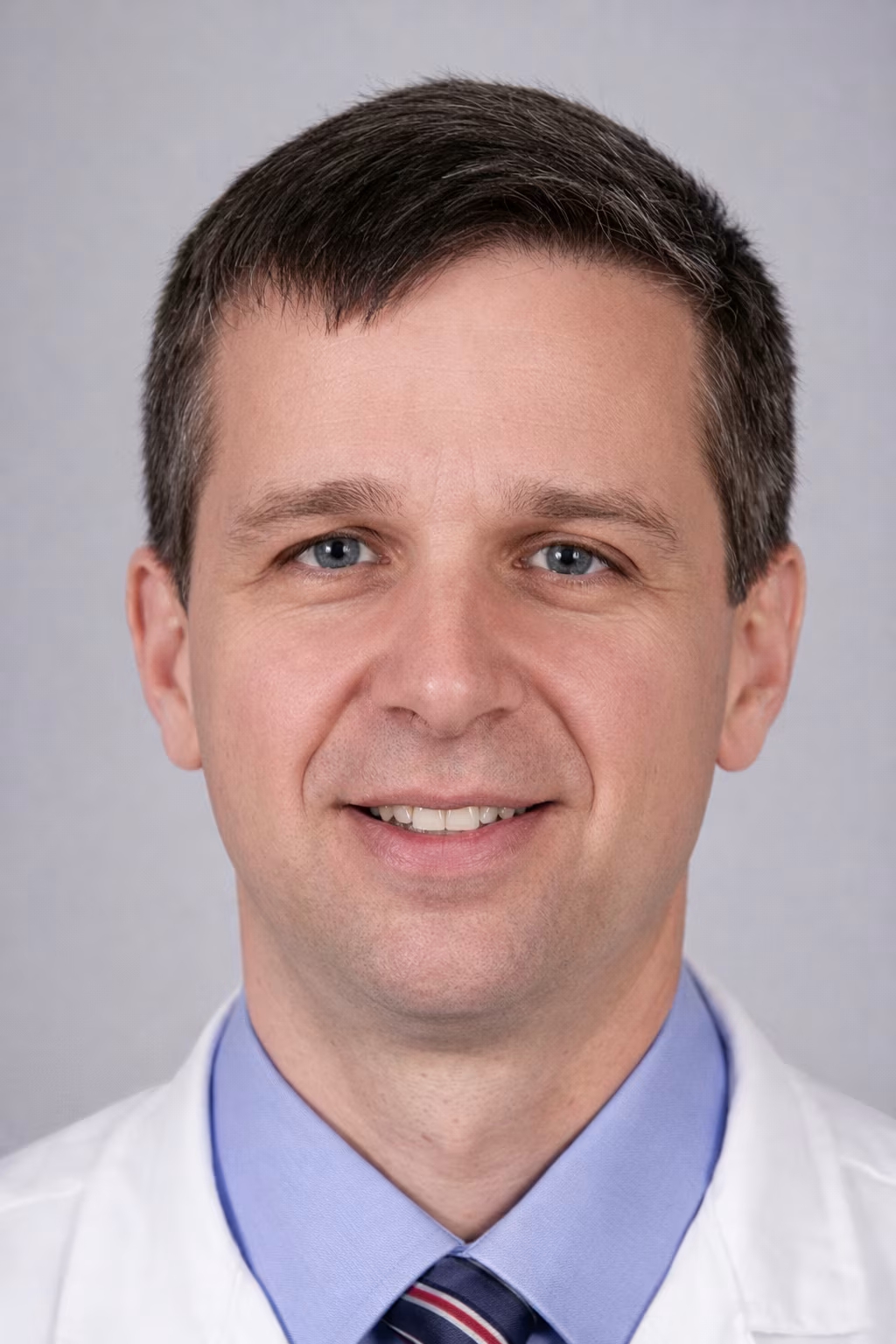
 Dr. Igor Simonik
 General Surgery
.avif&w=3840&q=75)


