









Bestclinicabroad
Connect with the world's Best Clinic and doctors at Best Clinic Abroad. Your well-being is our priority, with personalized care every step of the way.


Connect with the world's Best Clinic and doctors at Best Clinic Abroad. Your well-being is our priority, with personalized care every step of the way.



 P.º de los Héroes 10999, Zona Urbana Rio;
Hospital Angeles Tijuana, established in 2004, is a prestigious private hospital that is part of the Angeles Health Network, the largest private hospital group in Mexico. The hospital provides world-class healthcare services, specializing in cardiology, neurology, orthopedics, oncology, bariatric surgery, and general surgery. Equipped with cutting-edge medical technology and a highly experienced medical team, the hospital is dedicated to offering personalized and patient-centered care. Strategically located near the U.S.-Mexico border, it is a top destination for international patients seeking high-quality, cost-effective medical treatments.
Key Services at Hospital Angeles Tijuana


 Cto. Brasil 82, Parque Industrial Álamo, El Alamo, 21100, B.C., Mexicali, Mexico
Hospital de la Familia, also known as Family Hospital, was established in 2003 by a group of dedicated physicians. Initially, it focused on women's health services, reflecting the founders' specialties in gynecology. Over time, the hospital expanded its scope to provide comprehensive medical care for the entire family, earning a reputation for high-quality healthcare services in the region.
Hospital de la Familia is dedicated to providing high-quality, patient-centered care with a focus on safety, affordability, and excellence. With a strong reputation in medical tourism, the hospital continues to serve international patients seeking world-class treatment at competitive prices. Its commitment to innovation and compassionate care makes it a trusted healthcare destination in Mexico.
Key Services at Hospital de la Familia
Hospital de la Familia is committed to delivering exceptional healthcare through innovation, expertise, and a patient-centered approach. It is a top destination for specialized medical services in the region.
 C. Uxmal 1099, Pueblo Nuevo, 21120, Mexicali, Mexico;
Hospital de las Californias Mexicali is a well-established healthcare facility located at Avenida Jalisco 1099 in Mexicali, Mexico. Recognized as one of the best hospitals in Mexicali, it has a strong foundation built over 50 years, earning a reputation for providing reliable medical services to both local and international patients. Its commitment to high-quality care is evident through its round-the-clock availability, ensuring immediate emergency medical care in Mexicali when needed.
Key Features of Hospital de las Californias Mexicali
Hospital de las Californias Mexicali is recognized for its medical expertise, advanced medical technology, and a wide range of healthcare services in Mexicali. Whether you're looking for affordable surgeries in Mexico or dependable healthcare services in Mexicali, the hospital stands out as a trusted medical institution in Mexico. With its strategic location, skilled team, and patient-first approach, it remains a preferred option for those seeking cross-border healthcare solutions.
 Zona Río, 22320 Tijuana, Baja California, Mexico
San Juan Clinic is a well-recognized multispecialty medical centre in Tijuana, located near the airport for easy accessibility. The clinic specializes in minimally invasive, laparoscopic, and short hospital stay surgeries, attracting numerous international patients each year. Known for its patient-friendly environment, modern infrastructure, and highly skilled medical team, San Juan Clinic ensures high-quality care using the latest medical advancements.
Advanced Technology & Facilities
San Juan Clinic is committed to excellence in patient care, integrating innovative techniques with a compassionate approach to healthcare.
 Vía Rápida Oriente 4222 Zona Rio, Chamizal, 22415
Gilenis Surgical Center Tijuana (GSC) is a well-regarded multi-specialty hospital in Mexico, located in Tijuana’s medical district. The hospital has built a strong reputation for providing high-quality healthcare services, specializing in dental care, plastic surgery, aesthetic medicine, and weight loss procedures. Positioned in the city’s central medical hub, GSC attracts international patients from Europe, the USA, Canada, and Australia, offering affordable plastic surgery in Mexico and other cost-effective medical treatments without compromising on quality.
Key Features of Gilenis Surgical Center?
With modern infrastructure, personalized treatment plans, and a commitment to patient satisfaction, Gilenis Surgical Center continues to be a preferred choice for medical tourism in Tijuana. Whether seeking top-rated dental clinics in Tijuana, safe plastic surgery, or specialized weight loss treatments, GSC provides internationally recognized healthcare solutions in a comfortable and accessible setting.
 De Las Azucenas 3966, El Prado, 22105 Tijuana, B.C., Mexico
Established as a leading healthcare institution in Tijuana, International Biocare Hospital is dedicated to improving patients’ quality of life through an integrative medical approach. The hospital specializes in treating complex diseases with a focus on overall wellness and recovery. It is recognized for its advanced treatments in oncology, including stem cell therapy and oxidative therapies. International Biocare Hospital has become a preferred choice for patients seeking innovative and cost-effective medical interventions.
Advanced Technology & Facilities
Key Services
International Biocare Hospital stands out in the competitive healthcare sector for its commitment to high-quality care, affordability, and personalized medical services. Its holistic approach and innovative treatments attract patients from around the world seeking effective and accessible healthcare solutions.
 Calle Diego Rivera No. 2339-101 Zona Rio Urbana, 22010
Advanced Health Medical Center is a leading healthcare institution in Tijuana, Mexico, known for its high medical standards and patient-centered approach. Accredited by the General Health Council and JCI, the hospital offers a wide range of medical specialties, including general surgery, plastic surgery, orthopedics, urology, obesity surgery, oncology, and hematology. With a team of experienced specialists and a focus on international protocols, the center ensures quality care for both local and international patients.
Advanced Technology & Facilities
Key Services
With a commitment to excellence, Advanced Health Medical Center provides high-quality treatments, modern medical technology, and a comfortable healthcare experience for all patients.
 C. Uxmal 1000, Esperanza, Mexicali, B.C., Mexico, 21140
Sanatorio Quiroz Mexicali is a well-established private hospital in Mexicali, Mexico, with a history dating back to 1984. Originally founded as the best maternity hospital in Mexicali, it has expanded into a multidisciplinary medical center, offering services in Orthopedics, Women's Health, Urology, Internal Medicine, and Cosmetic and Weight Loss Surgery in Mexicali. With a strong focus on patient-centered care, the hospital is dedicated to providing high-quality medical services in Mexico with a compassionate approach.
Key Features of Sanatorio Quiroz Mexicali
With a strong reputation and nearly four decades of excellence, Sanatorio Quiroz Mexicali remains a preferred choice for patients seeking reliable and compassionate medical care in Mexico. The hospital’s commitment to efficiency, effectiveness, and equitable patient care ensures a trustworthy healthcare experience for both local and international patients.
 Av. Batallon de San Patricio 112, Real San Agustín, 66278
Zambrano Hellion Hospital, located in Mexico, is a globally recognized medical institution and ranks among the top hospitals in Mexico for its exceptional healthcare services and diverse specialties. Known as one of Mexico's best medical centers, the hospital is celebrated for its high-success-rate medical treatments, adherence to international standards of patient care, and advanced diagnostic services. Ranking 37th in Latin America according to the Ranking of Clinics and Hospitals of America Economy, the hospital is recognized for its precise diagnoses and outstanding reputation in global publications.
Key Highlights of Zambrano Hellion Hospital
Facilities and Capacity
105-bed hospital serving over 50,000 patients annually.
Equipped with 75 specialized rooms and a hybrid hemodynamics room for precise treatments.
Houses 300 highly specialized doctors, offering a wide range of medical expertise.
Specialized Services
Renowned for specialties including Neurology and Neurosurgery, Oncology, Orthopedics and Traumatology, Cardiology, Pediatrics, Women’s Health, and Rehabilitation.
Offers Reproductive Medicine in Monterrey and comprehensive general surgery services.
Advanced Diagnostic Technology
Utilizes modern tools like EUS technology for digestive diagnostics, electroencephalograms for brain activity evaluation, and arthroscopes for joint disease treatment.
Known for its advanced radiology equipment and precision in diagnosis.
International Patient Services
Caters to international patients with personalized services, diverse payment options, and insurance support.
Ensures a seamless healthcare journey with compassionate care and a focus on individual needs.
Global Recognition and Rankings
Ranked 37th in Latin America by the Ranking of Clinics and Hospitals of America Economy.
Acknowledged for its high-success-rate treatments and specialized healthcare services in Mexico.
Zambrano Hellion Hospital’s dedication to comprehensive healthcare services and high-quality patient care has made it a leader in specialized healthcare services in Mexico. With its focus on precision, compassion, and modern medical solutions, the hospital remains a preferred choice for both local and international patients seeking exceptional medical care.

Mexico has developed a well-regulated healthcare system that increasingly attracts international patients seeking general surgery care. Over the past decade, national healthcare authorities have strengthened clinical governance frameworks, modernized hospital infrastructure, and expanded oversight mechanisms to align with international patient-safety expectations. Many tertiary-care hospitals now integrate minimally invasive surgical techniques, advanced anesthesia monitoring systems, and digital health records, reflecting current and evolving standards in general surgery practice. These developments are supported by regulatory updates from national authorities and alignment with global health guidance, including principles recognized by organizations such as the World Health Organization.
General surgery services in Mexico are delivered within a structured professional environment. Surgeons complete formal medical education, followed by residency training accredited by national academic and regulatory bodies. Board certification and licensing are overseen by professional councils operating under the authority of the Mexican Ministry of Health, ensuring that surgeons meet defined competency and ethical standards. Continuous professional development is expected, and many specialists participate in international conferences, peer-reviewed research, and Continuing Medical Education (CME) programs to stay current with evolving surgical techniques and safety protocols.
Hospital infrastructure supporting general surgery typically includes tertiary-care capacity, modern operating theaters, and multidisciplinary teams involving anesthesiology, radiology, pathology, and intensive care units. Several hospitals maintain academic or university affiliations, contributing to structured training environments and adherence to evidence-based medicine. In practice, these institutions often manage complex surgical cases while maintaining standardized infection control, imaging safety, and postoperative monitoring protocols.
For foreign patients, there are practical considerations that are commonly part of the planning process. Mexico generally allows entry for medical travel under standard tourist visas, though patients are advised to confirm current entry requirements before travel. Postoperative stays often range from 7 to 14 days, depending on the procedure and clinical monitoring needs, and hospitals typically discuss this early in the coordination process. Language differences can arise, but many hospitals offer English-speaking staff or professional interpretation services. Follow-up care planning is also important; in practice, patients and families often ask how medical records will be shared with physicians at home and what documentation will be provided for ongoing care after returning.
Patients exploring general surgery options in Mexico typically begin by reviewing publicly available information about accredited hospitals and surgeon credentials. Hospitals commonly request prior medical records, imaging reports, and referral letters for preliminary review. Communication with international patient departments often takes place via email or secure online platforms, where administrative teams clarify documentation needs, estimated timelines, and non-clinical logistics. These exchanges are usually informational and help patients understand institutional processes without replacing medical consultation.
General surgery care in Mexico increasingly reflects the adoption of contemporary medical technologies and internationally recognized safety standards. Hospitals routinely use digital diagnostics, high-resolution CT imaging, and advanced anesthesia monitoring systems to support diagnostic accuracy and procedural planning. Minimally invasive and laparoscopic techniques are widely integrated where clinically appropriate, supporting precision and standardized surgical approaches. These practices are implemented within frameworks that emphasize informed consent, individualized treatment planning, and multidisciplinary review.
Compliance with international clinical and patient-safety standards is a central focus. Hospitals apply strict protocols for infection prevention, sterile processing, radiology safety, and perioperative anesthesia management. Post-treatment monitoring is structured, with defined observation periods and documentation processes to support continuity of care. Quality assurance systems commonly include internal audits and adherence to benchmarks associated with global accreditation bodies such as the Joint Commission International.
Continuous professional development is an expected component of surgical practice. General surgeons participate in CME activities, subspecialty training, and international academic exchanges. While treatment plans are always individualized and dependent on professional evaluation, Mexico is broadly recognized at a national level for maintaining regulated surgical environments that emphasize safety, accountability, and ongoing modernization rather than procedural volume or outcomes.
Appendectomy is performed to remove the appendix when inflammation or infection is suspected. In Mexico, this procedure is commonly carried out using laparoscopic techniques, supported by preoperative imaging such as ultrasound or CT scans to confirm diagnosis. Surgical teams follow standardized anesthesia and infection control protocols, with clinical oversight from general surgeons and anesthesiologists. The primary medical objective is the safe removal of the affected tissue while minimizing surgical trauma.
Hernia repair addresses the protrusion of tissue through weakened muscle or fascia. Mexican hospitals utilize both open and minimally invasive approaches, depending on clinical assessment and anatomical considerations. Preoperative evaluation often includes physical examination and imaging to guide planning. Mesh materials, when used, follow regulatory standards, and procedures are conducted under strict perioperative safety and monitoring protocols.
Cholecystectomy involves the removal of the gallbladder, typically due to gallstones or inflammation. Laparoscopic cholecystectomy is widely practiced, supported by digital imaging and intraoperative monitoring systems. Diagnostic planning commonly includes ultrasound or CT imaging. Surgical teams emphasize anesthesia safety, sterile technique, and postoperative observation to ensure clinical stability.
Colorectal surgery encompasses procedures involving the colon and rectum for conditions such as obstruction or inflammatory disease. In Mexico, these procedures are performed in tertiary-care settings with access to advanced imaging, pathology services, and multidisciplinary consultation. Surgical planning is individualized, and patient safety frameworks guide intraoperative and postoperative management.
Thyroid surgery is conducted to address structural or functional thyroid conditions. Preoperative assessment often includes imaging and laboratory studies to guide surgical planning. Procedures are performed with attention to nerve monitoring and anesthesia safety, under the oversight of trained general surgeons and endocrinology consultants where appropriate.
An exploratory laparotomy is used when diagnosis or treatment requires direct visualization of abdominal organs. This procedure is performed in fully equipped surgical theaters with comprehensive monitoring and postoperative care capacity. Clinical oversight includes multidisciplinary evaluation and adherence to strict safety and documentation standards.
Hospital Ángeles Health System
Accreditations:
Joint Commission International (JCI)
Oversight by the Mexican Ministry of Health
University-affiliated training programs
Specializations:
Provides tertiary-care surgical services across multiple subspecialties, including general and minimally invasive surgery, supported by multidisciplinary clinical teams and advanced diagnostic infrastructure.
Centro Médico ABC
Accreditations:
Joint Commission International (JCI)
Mexican Ministry of Health oversight
Academic teaching affiliation
Specializations:
Offers comprehensive general surgery services within an academic medical environment, integrating research activity, imaging, and intensive care support.
Hospital San José TecSalud
Accreditations:
National accreditation and regulatory oversight
University hospital affiliation
Specializations:
Focuses on evidence-based surgical care with access to advanced imaging, anesthesia services, and multidisciplinary consultation.
Hospital Zambrano Hellion
Accreditations:
Joint Commission International (JCI)
Mexican Ministry of Health oversight
Academic affiliation
Specializations:
Provides complex general surgery services in a tertiary-care setting with structured clinical governance and research integration.
Hospital Español de México
Accreditations:
National regulatory oversight
Teaching hospital status
Specializations:
Delivers a broad range of general surgical procedures supported by diagnostic imaging, pathology, and postoperative care units.
Médica Sur
Accreditations:
Joint Commission International (JCI)
Mexican Ministry of Health oversight
Specializations:
Known for multidisciplinary surgical care, integrating general surgery with oncology, radiology, and intensive care services.
Hospital Star Médica
Accreditations:
National accreditation
Ministry of Health oversight
Specializations:
Provides general surgery services across a network of hospitals, emphasizing standardized protocols and modern surgical infrastructure.
| Procedure | Estimated Cost |
| Appendectomy | $3,000–$6,000 |
| Hernia Repair | $3,500–$7,500 |
| Cholecystectomy | $4,000–$8,000 |
| Colorectal Surgery | $8,000–$15,000 |
| Thyroid Surgery | $5,000–$9,000 |
| Exploratory Laparotomy | $7,000–$14,000 |
Note: The prices listed above are approximate, non-binding estimates provided for general informational purposes only. Actual treatment costs may vary based on individual clinical requirements, diagnostic findings, treatment complexity, materials or technology used, physician expertise, facility type, and duration of care. Final pricing is determined only after a professional evaluation by a licensed specialist or accredited medical institution.
Mexico’s healthcare system operates under national regulation designed to ensure patient safety, ethical practice, and institutional accountability. Hospitals and clinics providing general surgery are subject to oversight by the Mexican Ministry of Health, with additional quality frameworks adopted from international accreditation bodies. These systems emphasize evidence-based medicine, transparent documentation, and informed consent processes.
Specialist training standards are clearly defined, requiring completion of accredited residency programs and ongoing professional education. Many institutions maintain structured peer review, morbidity and mortality meetings, and clinical audit systems. Advanced medical technologies, including digital imaging and minimally invasive surgical tools, are integrated within regulated environments rather than introduced informally.
Mexico has also established frameworks to support medical tourism, including guidelines intended to protect international patients and clarify institutional responsibilities. At the same time, there are limitations and considerations: eligibility for certain procedures may depend on clinical complexity, postoperative stays may be required before travel, and coordination with home-country providers is essential for follow-up care. These practical factors are commonly discussed early to support realistic planning.
Best Clinic Abroad acts as a medical travel facilitator, helping patients and families understand how to navigate cross-border healthcare systems. It is not a medical provider and does not offer diagnoses, treatment recommendations, or influence clinical decisions. Its role is limited to non-clinical coordination and information support.
➤ Hospital coordination – Support communication and coordination with accredited hospitals
➤ Appointment support – Assist with scheduling and organizing consultations
➤ Communication assistance – Help patients understand next steps without replacing medical advice
➤ Logistical guidance – Offer non-clinical support related to travel planning
All medical decisions are made exclusively by licensed physicians and accredited hospitals, and patients who wish to explore coordination support may choose to engage with Best Clinic Abroad to better understand administrative and communication processes.
Do I need a special visa for general surgery treatment in Mexico?
In most cases, you can enter Mexico for medical care using a standard tourist visa, depending on your nationality. Hospitals and facilitators typically recommend confirming current entry requirements with official consular sources before travel, as visa rules can change.
Will there be an English translator available during my hospital visits?
Many hospitals that treat international patients commonly provide English-speaking staff or access to professional medical interpreters. In practice, you can usually ask about language support in advance so communication needs are clearly understood.
Can I have an online consultation before traveling for surgery?
It is common for hospitals to offer online consultations to review your medical records and discuss whether an in-person evaluation is appropriate. These consultations are typically arranged through the hospital’s international patient department or coordinated through a medical travel facilitator.
How does medical tourism coordination usually work before surgery?
You will often be asked to share existing medical records, imaging, and a brief medical history for review. Communication typically happens by email or secure platforms, where hospitals explain administrative steps, timelines, and documentation needs without providing treatment advice.
Disclaimer: This content is provided for informational purposes only and does not constitute medical advice. It reflects non-clinical observation of healthcare coordination processes and institutional practices in Mexico and does not represent direct medical practice. Diagnosis and treatment decisions should always be made in consultation with a licensed medical specialist based on individual clinical evaluation.



.avif&w=3840&q=100)


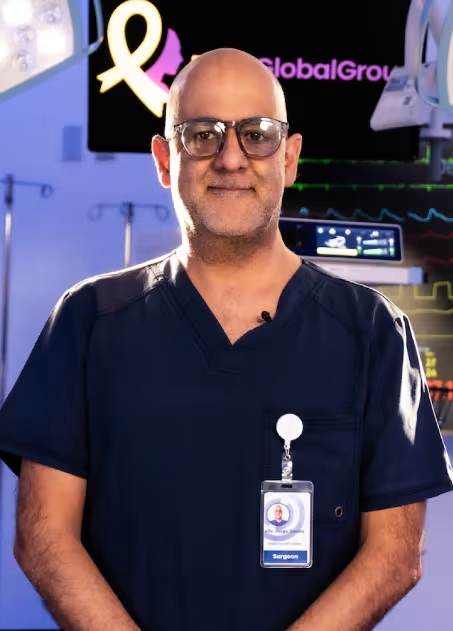




 Dr. Ary Zarate
 General Surgery


