









Bestclinicabroad
Connect with the world's Best Clinic and doctors at Best Clinic Abroad. Your well-being is our priority, with personalized care every step of the way.


Connect with the world's Best Clinic and doctors at Best Clinic Abroad. Your well-being is our priority, with personalized care every step of the way.


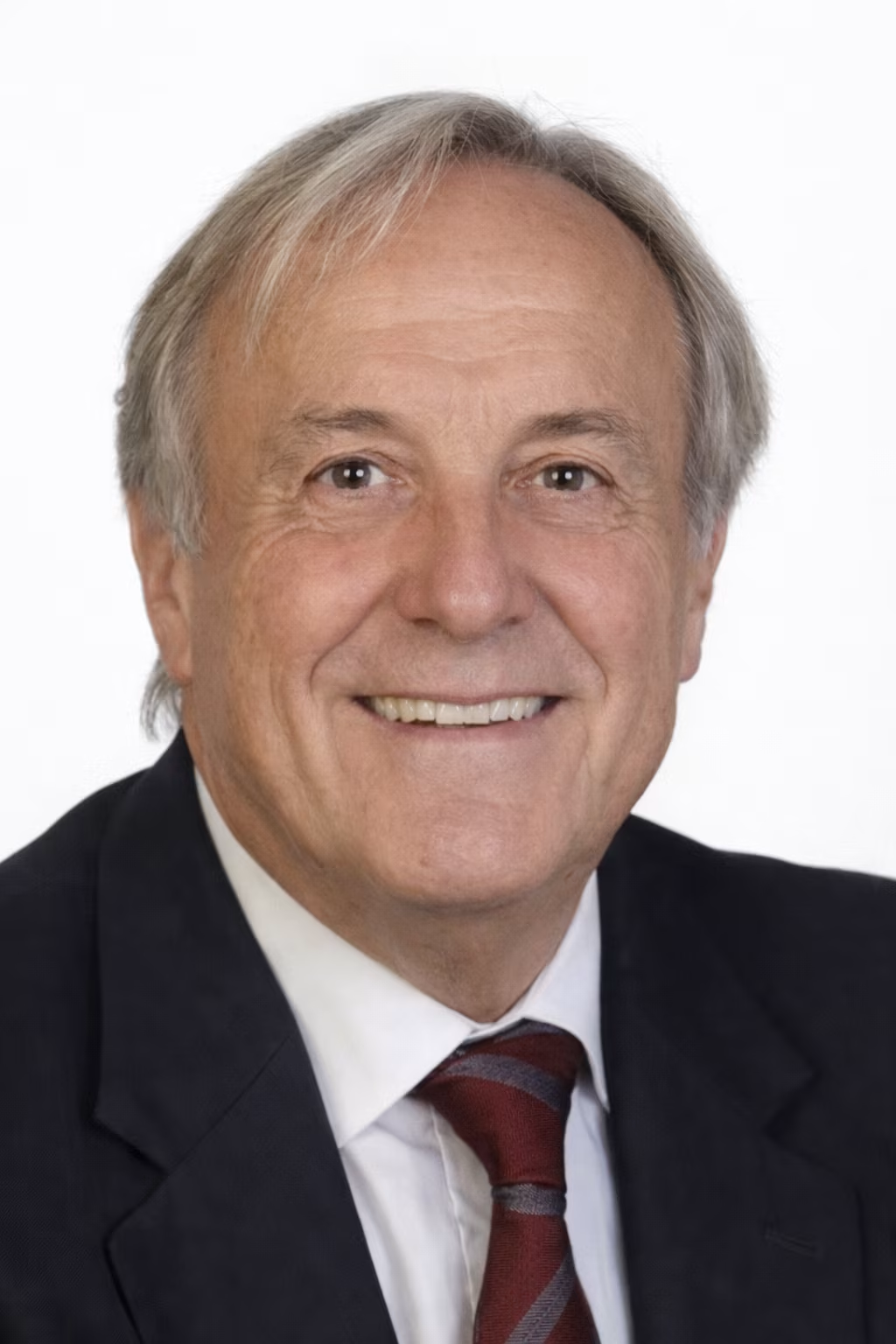
Dr. Georg Gaul is the best cardiologist in Austria with over 40 years of experience in cardiology and cardiovascular surgery. He graduated from the University of Vienna in 1970 and later pursued a specialization in cardiology at Vienna Hanusch Hospital, where he worked for four decades. His contributions to the Austrian Society for Cardiology were significant, including serving as its President from 2002 to 2003. The famous heart specialist in Vienna, Dr. Gaul has also been an academic lecturer at the Medical University of Vienna and a fellow of the European Society of Cardiology since 2003. He currently practices as an attending physician at Viennese private hospitals and serves as the deputy head of the catheter laboratory at Rudolfinerhaus Private Hospital. His extensive knowledge and dedication make him a leading cardiology expert in Europe, trusted by patients seeking exceptional cardiac care in Austria.
Price upon request
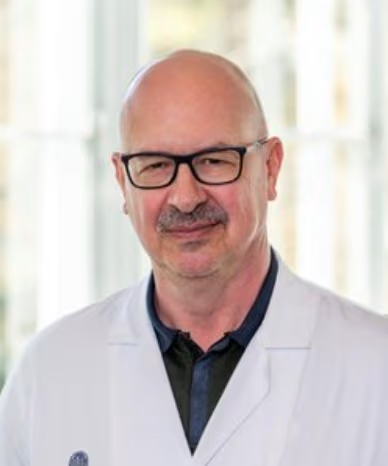
Dr. Guenther Laufer is a top cardiovascular surgeon in Austria, renowned for his expertise in advanced heart surgeries. As the best heart surgeon in Vienna, he specializes in minimally invasive heart procedures, achieving an impressive 95% success rate. Over the years, he has built a reputation as a leading heart specialist in Austria, treating complex cardiovascular conditions with precision. His journey from a general surgeon to a famous cardiac surgeon reflects his dedication and excellence in the field. Patients praise his compassionate care and life-saving interventions, making him a popular heart doctor in Austria. His expertise in oncological heart surgery and modern surgical techniques makes him a preferred choice for international patients seeking expert care. Holding specialist training from Vienna, he continues to set benchmarks in cardiac surgery with his innovative approach. His contributions to cardiovascular health cement his status as a renowned cardiac surgeon in Vienna, trusted by patients worldwide.
Price upon request

Dr. Herwig Koppel stands as one of Austria's distinguished angiologists and cardiologists, contributing his expertise over an extensive career. In his current role as the Head of the Center for Interdisciplinary Cardiovascular Medicine at the Graz Ragnitz Private Clinic, Dr. Koppel specializes in angiology, internal medicine, and rehabilitation. His focus lies in the comprehensive diagnosis and treatment of cardiovascular diseases, stroke, and vein-related disorders. With a history of leadership as the medical director at PVA Graz Outpatient and Rehabilitation Clinic, Dr. Koppel also serves as a university lecturer and applies his knowledge in a practice located in Gleisdorf within the LIFE center. His dedication to advancing cardiovascular medicine is further underscored by his current position at the helm of the Center for Interdisciplinary Cardiovascular Medicine at the Privatklinik Graz Ragnitz.
Price upon request

Dr. Rainer Spinka, born on November 3, 1951, is a highly experienced internal medicine specialist with expertise in hematology-oncology and cardiology. As a medical expert in Austria, he completed his medical education in Vienna and played a key role in the development of the Donaustadt health network, contributing to advancements in heart disease treatment and cancer care. Over the years, he held leadership positions, made significant contributions to blood disorder treatments, and expanded his private practice in Vienna. Though he retired in 2011, his work continues to influence the field of internal medicine, cardiovascular care, and endocrine and metabolic disorders.
Price upon request
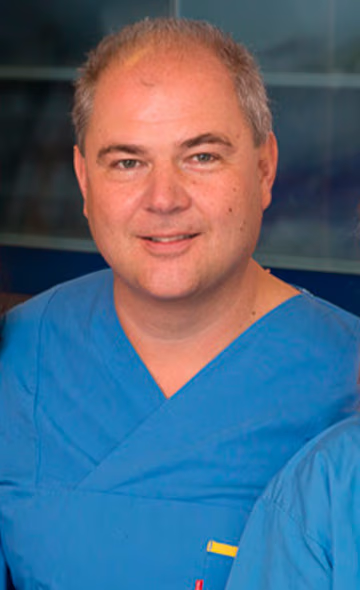
Dr. Thomas Brunner is a renowned Austrian cardiac surgeon with over 26 years of experience in minimally invasive heart surgeries. As Deputy Medical Director at Rudolfinerhaus Private Hospital, he specializes in cardiac ablation, utilizing 3D technology in cardiology and magnetic navigation systems to enhance precision and improve outcomes for arrhythmia patients. His expertise in advanced cardiac treatments has made him a trusted name in cardiovascular health.
A pioneer in modern cardiovascular techniques, Dr. Brunner introduced radial artery angiography in Vienna, a method recognized for its accuracy, minimal complications, and faster recovery. His proficiency extends to EKG, ECG, vascular ultrasound, and ultrasonography, along with his specialization in bypass surgery and emergency pacemaker implantation. His contributions to Rudolfinerhaus Private Hospital cardiology have solidified his reputation as a leader in invasive heart procedures.
Recognized as one of the top heart surgeons in Austria, Dr. Thomas Brunner continues to integrate the latest innovations in minimally invasive cardiac treatments, ensuring the highest standards of patient care. His dedication to utilizing modern techniques in heart surgery makes him a famous heart surgeon in Austria.
Price upon request

Prof. Thomas Weiss serves as a senior physician in the 3rd Medical Department of Cardiology and Intensive Care Medicine at Wilhelminenspital in Vienna. In this role, he actively participates in the cardiac catheter team, leads the hypertension outpatient clinic, and holds the position of deputy head of the department. His primary research interests encompass acute myocardial infarction, thrombocardiology, and arterial hypertension. Following his graduation from the University of Vienna, he underwent training both in Vienna and internationally, including at the Australian Centre for Blood Diseases and Monash University in Melbourne (2 years) and the University Hospital for Cardiology in Oslo, Norway (4 years). Prof. Weiss is a habilitated vascular biologist (MUW) and holds a PhD from the University of Oslo.
Price upon request
Cardiovascular diseases remain the leading cause of death globally. According to the World Health Organization (WHO), heart disease and stroke account for an estimated 20 million deaths each year. Conditions such as coronary artery disease, heart valve disorders, arrhythmias, and heart failure require long-term medical management and, in some cases, interventional cardiology or cardiovascular surgery. As awareness of advanced cardiac care grows, many patients explore treatment options in countries known for structured healthcare systems and strict medical regulation.
Austria has a highly regulated healthcare framework supported by national medical boards and European Union standards. Cardiologists and cardiovascular surgeons undergo extensive training that includes medical school, residency in internal medicine or surgery, and formal subspecialty training in cardiology or cardiac surgery. Hospitals follow established European Society of Cardiology (ESC) and international cardiovascular guidelines for diagnosis, imaging, interventional procedures, and open-heart surgery.
Cardiac services in Austria are provided in university hospitals, tertiary referral centers, and specialized heart institutes in cities such as Vienna, Graz, Innsbruck, and Linz. These centers are equipped with catheterization laboratories, cardiac imaging units, and intensive care facilities. Multidisciplinary heart teams typically include cardiologists, cardiovascular surgeons, anesthesiologists, and rehabilitation specialists.
For international patients seeking cardiologists and cardiovascular surgeons in Austria, treatment planning generally includes detailed diagnostic assessment, risk evaluation, and shared decision-making. Emotional support, patient education, and realistic discussion of risks and limitations are part of standard care. Austria’s infrastructure and regulatory oversight provide a structured and safety-focused environment for cardiac treatment.
The following physicians are listed for informational purposes only. This is not a ranking, and inclusion does not imply comparative quality.
Prof. Dr. Thomas Binder, MD
Specialization: Cardiology and Echocardiography
Years of Experience: 25+ years
Prof. Dr. Thomas Binder practices at Vienna General Hospital (AKH Wien). His clinical focus includes cardiac imaging, echocardiography, and structural heart disease assessment. He works within a university-based cardiology department following European Society of Cardiology guidelines. His approach emphasizes accurate diagnosis and individualized management plans. Multidisciplinary collaboration is part of routine patient care.
Prof. Dr. Irene Lang, MD
Specialization: Pulmonary Hypertension and Interventional Cardiology
Years of Experience: 30+ years
Prof. Dr. Irene Lang is affiliated with the Medical University of Vienna. Her clinical work includes management of pulmonary hypertension and complex catheter-based interventions. She practices in a tertiary academic center with advanced cardiac catheterization facilities. Treatment strategies are guided by evidence-based cardiovascular protocols and individualized risk assessment.
Prof. Dr. Dominik Wiedemann, MD
Specialization: Cardiovascular Surgery
Years of Experience: 20+ years
Prof. Dr. Dominik Wiedemann works at Vienna General Hospital (AKH Wien) in the Department of Cardiac Surgery. His clinical areas include coronary artery bypass surgery, valve surgery, and aortic procedures. Surgical decisions are based on structured heart team evaluations. Perioperative care follows established European cardiac surgery standards.
Prof. Dr. Günther Laufer, MD
Specialization: Cardiac Surgery
Years of Experience: 30+ years
Prof. Dr. Günther Laufer practices at Medical University of Vienna. His focus includes complex valve surgery and heart failure surgical management. He works within a high-volume academic cardiac surgery unit. Clinical protocols include advanced imaging, anesthesia monitoring, and intensive postoperative care.
Prof. Dr. Johannes Holfeld, MD
Specialization: Cardiothoracic Surgery
Years of Experience: 20+ years
Prof. Dr. Johannes Holfeld is associated with the Medical University of Innsbruck. His work includes minimally invasive cardiac surgery and coronary bypass procedures. He practices within a university hospital environment that supports research-informed surgical techniques. Patient suitability and risk factors are carefully evaluated prior to surgery.
Prof. Dr. Kurt Huber, MD
Specialization: Interventional Cardiology
Years of Experience: 30+ years
Prof. Dr. Kurt Huber practices at Wilhelminenspital Vienna. His clinical focus includes acute coronary syndromes and catheter-based coronary interventions. He follows European guidelines for myocardial infarction management and secondary prevention. Treatment decisions are tailored to individual patient profiles.
Prof. Dr. Otmar Pachinger, MD
Specialization: Cardiology and Internal Medicine
Years of Experience: 35+ years
Prof. Dr. Otmar Pachinger is affiliated with the Medical University of Innsbruck. His areas of expertise include heart failure and preventive cardiology. He works within structured hospital systems that emphasize long-term cardiovascular risk management. Evidence-based protocols guide diagnostic and therapeutic decisions.
Prof. Dr. Martin Andreas, MD
Specialization: Cardiac Surgery
Years of Experience: 20+ years
Prof. Dr. Martin Andreas practices at Vienna General Hospital (AKH Wien). His clinical focus includes heart valve repair, coronary bypass surgery, and aortic interventions. Surgical planning involves detailed imaging and multidisciplinary case review. Postoperative care includes monitoring in specialized cardiac intensive care units.
| Consultation Type | Estimated Cost Range |
| Cardiologist or cardiovascular surgeon consultation | $250–$450 |
Note: Costs are approximate and provided for general guidance only. Prices vary depending on the healthcare provider, hospital type, city, and consultation format (in-person or remote). Diagnostic tests, imaging, or additional evaluations are not included. Final fees are determined by the provider after an individual clinical assessment and may be affected by currency fluctuations.
Choosing a heart specialist abroad can feel overwhelming. Cardiovascular conditions often involve complex decisions, and it is natural to seek clarity about safety, expertise, and coordination of care. Understanding how the healthcare system operates can help you approach treatment planning with confidence and realistic expectations.
➤ Availability of English-speaking medical staff and professional medical translators in many facilities
➤ Specialized clinics that manage a high volume of international patients
➤ Government regulations and oversight mechanisms supporting medical tourism safety and international patient protection
➤ Structured hospital documentation, patient-safety protocols, and informed consent practices
International patients should review visa or entry requirements based on nationality and anticipated treatment duration. For interventional cardiology or cardiac surgery, a postoperative stay of at least 7–14 days may be recommended for monitoring and early follow-up, depending on the procedure and recovery progress. While English is commonly spoken in major medical centers, communication may vary in smaller regions. Planning coordinated follow-up care with your local cardiologist after returning home is an important aspect of safe long-term management.
Patients considering cardiac treatment in Austria may share their medical records, imaging reports, and prior test results with Best Clinic Abroad to receive support in coordinating consultations and understanding the initial steps of evaluation with licensed cardiologists and cardiovascular surgeons.
Do I need visa assistance for heart treatment in Austria?
Visa requirements depend on your nationality and planned duration of stay. Austria is part of the Schengen Area, so short-term medical travel typically follows Schengen visa rules. You should contact the Austrian embassy or consulate in your country to confirm the appropriate visa category. Hospitals may provide documentation confirming your appointment, but visa decisions are handled by immigration authorities.
Do cardiologists and cardiovascular surgeons in Austria speak English?
In major cities and university hospitals, many cardiologists and cardiovascular surgeons communicate in English, particularly when treating international patients. English is widely used in medical research and training. However, language proficiency can vary outside large urban centers. If needed, professional medical interpreters may be available to support communication.
Is online consultation available before traveling to Austria for cardiac care?
Yes, preliminary online consultations are often possible. If you coordinate your care through Best Clinic Abroad, their team can assist in arranging an online consultation with a licensed cardiologist or cardiovascular surgeon in Austria. You may be asked to submit medical records, echocardiography results, angiography images, or laboratory reports for review. Final treatment decisions are generally made after an in-person evaluation and comprehensive clinical assessment.
How long should I plan to stay in Austria after cardiac surgery or intervention?
The recommended stay depends on the type of procedure. For minimally invasive catheter-based interventions, recovery time may be shorter. For open-heart surgery, a hospital stay followed by monitored recovery is required. Many patients are advised to remain in Austria for at least 7–14 days after discharge for early follow-up, though this varies by individual health status and surgical complexity.
Can follow-up care continue in my home country after treatment in Austria?
Yes, follow-up care is typically coordinated with your local cardiologist once you return home. It is important to obtain discharge summaries, medication lists, and procedure reports before traveling. Some specialists may offer remote follow-up consultations when appropriate. Ongoing monitoring, medication adherence, and lifestyle management remain essential components of long-term cardiac care.
Disclaimer
This content is provided for informational purposes only and does not constitute medical advice. Diagnosis and treatment decisions should be made in consultation with a licensed medical specialist based on individual clinical evaluation.


