









Bestclinicabroad
Connect with the world's Best Clinic and doctors at Best Clinic Abroad. Your well-being is our priority, with personalized care every step of the way.


Connect with the world's Best Clinic and doctors at Best Clinic Abroad. Your well-being is our priority, with personalized care every step of the way.


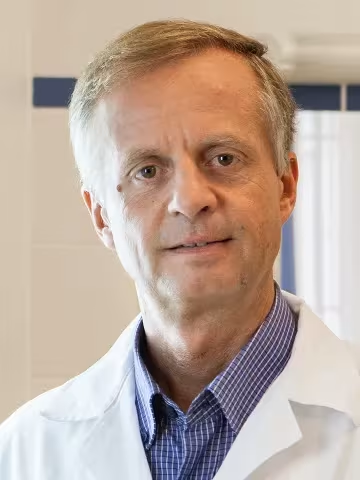
Dr. Johannes Drach, a leading oncohematologist in Austria, is recognized for his vast expertise in internal medicine. With 24 years of experience, he has significantly contributed to the field of hematology and oncology. As the best oncohematologist in Austria, he has served at AKH Vienna Hospital, where he worked in the Bone Marrow Transplantation and Internal Medicine Departments. His dedication to cancer care is evident through his active involvement with the Austrian Society of Hemato-oncology, serving on the Board of Directors since 2006. Dr. Johannes Drach, a renowned bone marrow transplant doctor, has also held leadership roles, including Medical Director at Confraternität Private Clinic since 2012. His contributions as a top hematology doctor in Austria have played a crucial role in enhancing cancer treatment protocols and advancing research in blood disorders. As a popular blood disorder specialist in Vienna, he remains committed to improving patient outcomes with advanced treatments.
Price upon request
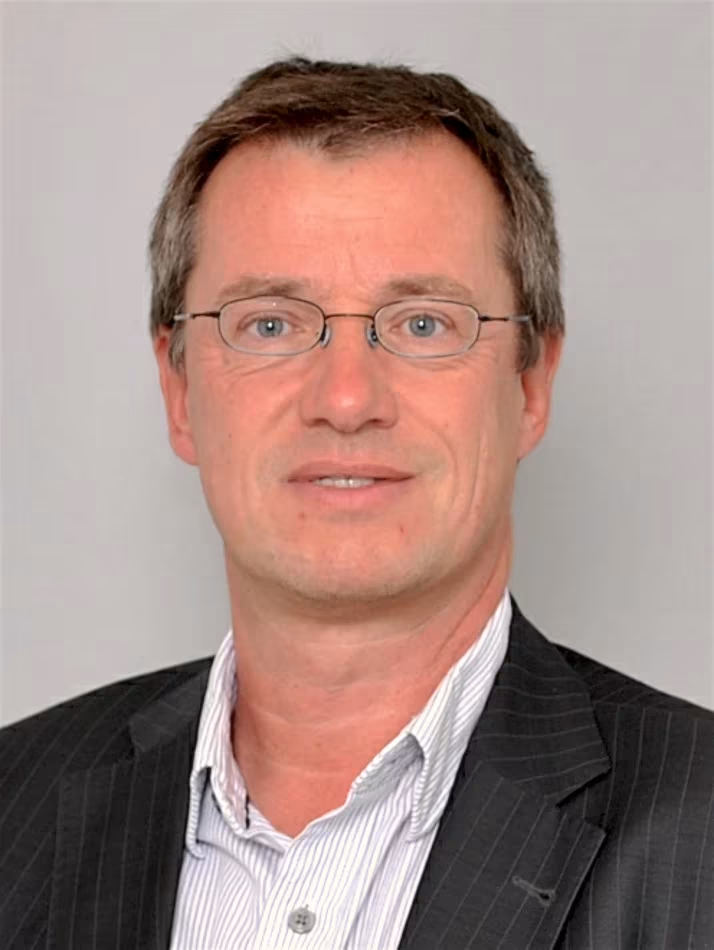
Dr. Paul Knobl, a Senior Physician in the Department of Medicine 1, Division of Hematology and Hemostasis at the Medical University of Vienna, Austria, brings a wealth of clinical experience and a distinguished record of scientific contributions to his field. With a focus on blood diseases, both benign and malignant, Dr. Knobl specializes in conditions such as leukemia, lymphomas, and myeloma. His expertise extends to blood coagulation and thrombotic disorders, blood platelet diseases, and critical care medicine, particularly in managing cases of sepsis, severe respiratory, and cardiovascular diseases.
Price upon request
Cancer and blood disorders remain major global health concerns. According to the World Health Organization (WHO), cancer is one of the leading causes of death worldwide, with millions of new cases diagnosed each year. Hematologic conditions such as leukemia, lymphoma, multiple myeloma, anemia, and clotting disorders also contribute significantly to global disease burden. As treatment approaches evolve to include targeted therapies, immunotherapy, stem cell transplantation, and precision medicine, many patients seek care in countries with structured oncology systems and strict regulatory oversight.
Austria has a well-established healthcare system supported by national medical licensing authorities and European Union healthcare directives. Hematologists-oncologists in Austria complete medical education followed by specialist training in internal medicine and subspecialization in hematology and oncology. Clinical practice aligns with European Society for Medical Oncology (ESMO) guidelines and other internationally recognized oncology standards. Treatment decisions are generally made within multidisciplinary tumor boards, ensuring collaborative planning.
Oncology services in Austria are delivered through university hospitals, tertiary care centers, and specialized cancer institutes in cities such as Vienna, Graz, Innsbruck, and Salzburg. These centers provide access to advanced diagnostic imaging, pathology services, radiation oncology, chemotherapy units, and bone marrow transplantation programs. Laboratory monitoring and supportive care services are integrated into treatment pathways.
For international patients considering hematologists-oncologists in Austria, care usually begins with a comprehensive review of pathology reports, imaging, and prior treatments. Physicians discuss risks, potential side effects, and realistic expectations. Emotional and psychological support are recognized as important components of cancer care. Austria’s regulated healthcare infrastructure offers a safety-focused environment for complex hematology and oncology management.
The following physicians are listed for informational purposes only and are not ranked.
Prof. Dr. Michael Pfreundschuh, MD
Specialization: Hematology and Medical Oncology
Years of Experience: 30+ years
Prof. Dr. Michael Pfreundschuh is affiliated with Vienna General Hospital (AKH Wien). His clinical focus includes lymphoma and systemic cancer therapies. He works within a university oncology department that follows European oncology guidelines. Treatment plans are reviewed in multidisciplinary tumor boards. Supportive care and monitoring are integrated into each patient’s management strategy.
Prof. Dr. Heinz Ludwig, MD
Specialization: Hematology and Oncology
Years of Experience: 35+ years
Prof. Dr. Heinz Ludwig practices at Wilhelminenspital Vienna. His expertise includes multiple myeloma and hematologic malignancies. He works in a tertiary care oncology center with access to advanced chemotherapy and immunotherapy protocols. Patient-specific risk factors and treatment tolerance are carefully evaluated before therapy initiation.
Prof. Dr. Wolfgang Hilbe, MD
Specialization: Medical Oncology
Years of Experience: 25+ years
Prof. Dr. Wolfgang Hilbe is associated with the Medical University of Innsbruck. His areas of focus include lung cancer and systemic oncology treatments. Clinical management follows evidence-based oncology guidelines and individualized assessment. Coordination with radiology and pathology teams supports accurate staging and treatment planning.
Prof. Dr. Gerhard Prager, MD
Specialization: Oncology and Surgical Collaboration
Years of Experience: 20+ years
Prof. Dr. Gerhard Prager practices at Medical University of Vienna. His work involves collaborative cancer care within multidisciplinary teams. Treatment pathways include coordination with surgeons, radiation oncologists, and hematologists. Clinical decisions are based on international cancer management standards and patient-specific evaluation.
Prof. Dr. Ulrich Jäger, MD
Specialization: Hematology
Years of Experience: 25+ years
Prof. Dr. Ulrich Jäger is affiliated with the Medical University of Vienna. His expertise includes leukemia and lymphoma management. Diagnostic evaluations involve bone marrow studies and laboratory monitoring. Treatment protocols align with recognized European hematology guidelines.
Prof. Dr. Peter Valent, MD
Specialization: Hematology and Mast Cell Disorders
Years of Experience: 30+ years
Prof. Dr. Peter Valent works at Vienna General Hospital (AKH Wien). His clinical focus includes rare hematologic diseases and systemic disorders. He practices in a research-informed academic environment. Patient management emphasizes careful diagnosis, laboratory confirmation, and individualized therapy selection.
Prof. Dr. Florian Greilberger, MD
Specialization: Hematology and Oncology
Years of Experience: 20+ years
Prof. Dr. Florian Greilberger practices at Ordensklinikum Linz. His work includes management of solid tumors and hematologic conditions. He collaborates with pathology, radiology, and surgical teams. Treatment plans are tailored based on tumor characteristics and patient health status.
Prof. Dr. Thomas Bauernhofer, MD
Specialization: Medical Oncology
Years of Experience: 20+ years
Prof. Dr. Thomas Bauernhofer is affiliated with the Medical University of Graz. His clinical areas include gastrointestinal cancers and systemic therapies. He works within structured oncology units that provide chemotherapy and supportive care services. Risk assessment and side-effect management are integral to his clinical approach.
| Consultation Type | Estimated Cost Range |
| Hematologist-oncologist consultation | $220–$500 |
Note: Costs are approximate and provided for general guidance only. Prices vary depending on the healthcare provider, hospital type, city, and consultation format (in-person or remote). Diagnostic tests, imaging, or additional evaluations are not included. Final fees are determined by the provider after an individual clinical assessment and may be affected by currency fluctuations.
Seeking cancer or blood disorder treatment abroad can feel emotionally challenging. Decisions often involve complex therapies, potential side effects, and long-term follow-up planning. Understanding the healthcare structure and regulatory safeguards in a country can help you make informed and thoughtful choices.
➤ Availability of English-speaking medical staff and professional medical translators in many facilities
➤ Specialized clinics that manage a high volume of international patients
➤ Government regulations and oversight mechanisms supporting medical tourism safety and international patient protection
➤ Structured hospital documentation, patient-safety protocols, and informed consent practices
International patients should review visa or entry requirements based on nationality and expected treatment duration. Oncology treatments such as chemotherapy or stem cell procedures may require a stay of at least 7–14 days or longer, depending on therapy cycles and monitoring needs. English is commonly spoken in major medical centers, but communication may vary in smaller regions. Planning coordinated follow-up care with your local oncologist after returning home is important for ongoing monitoring and supportive care.
Patients considering hematology or oncology treatment in Austria may share pathology reports, imaging studies, and prior treatment summaries with Best Clinic Abroad to receive support in coordinating consultations and understanding the next steps of evaluation with licensed specialists.
Do I need visa assistance for cancer or hematology treatment in Austria?
Visa requirements depend on your nationality and the expected duration of your stay. Austria is part of the Schengen Area, so medical visits typically follow Schengen visa regulations. You should contact the Austrian embassy or consulate in your country for accurate information. Hospitals may provide appointment confirmation letters, but visa approval is handled by immigration authorities.
Do hematologists-oncologists in Austria speak English?
Many hematologists-oncologists working in university hospitals and major cancer centers communicate in English, particularly when treating international patients. English is commonly used in oncology research and education. However, language proficiency may vary outside large cities. Medical interpreters can often be arranged when needed.
Is online consultation available before traveling to Austria for oncology or hematology care?
Yes, online consultation is often available for international patients seeking hematology or oncology care in Austria. If you coordinate your case through Best Clinic Abroad, their team can assist in arranging an online consultation with a licensed hematologist-oncologist. You may be asked to provide pathology reports, laboratory results, imaging scans, and prior treatment records. Final treatment decisions are typically made after an in-person clinical assessment and review of complete diagnostic information.
How long should I plan to stay in Austria during cancer treatment?
The length of stay depends on the type of treatment recommended. Some therapies require short inpatient stays, while others involve multiple cycles over several weeks. Your treating physician will provide individualized guidance based on your diagnosis and treatment plan. Monitoring for side effects and response to therapy is an important part of care.
Can follow-up care continue in my home country after treatment in Austria?
Yes, follow-up care is usually coordinated with your local oncologist or hematologist once you return home. It is important to obtain detailed treatment summaries, medication lists, and laboratory reports before traveling. Some specialists may offer remote follow-up consultations when appropriate. Ongoing monitoring and supportive care are essential parts of long-term cancer management.
Disclaimer
This content is provided for informational purposes only and does not constitute medical advice. Diagnosis and treatment decisions should be made in consultation with a licensed medical specialist based on individual clinical evaluation.


