








Bestclinicabroad
Connect with the world's Best Clinic and doctors at Best Clinic Abroad. Your well-being is our priority, with personalized care every step of the way.


Connect with the world's Best Clinic and doctors at Best Clinic Abroad. Your well-being is our priority, with personalized care every step of the way.


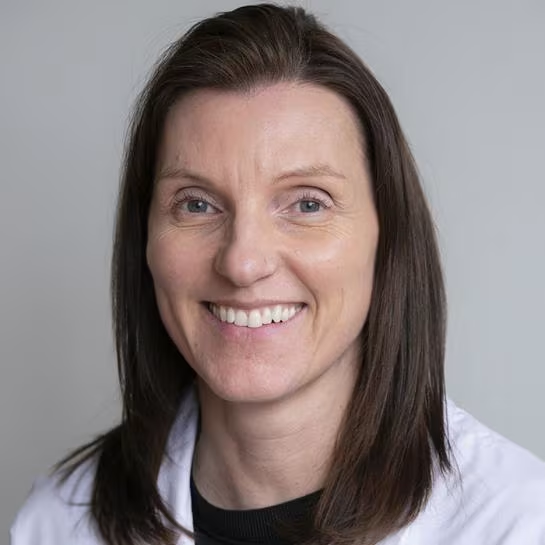
Prof. Dr. Sylvie Rottey is a distinguished oncologist with extensive experience in medical oncology, specializing in the treatment of solid tumors, breast cancer, and genetic cancer testing. She is a leading figure in oncology research and clinical practice, serving as a Medical Director at University Hospitals Leuven (UZ Leuven), one of Belgium’s top institutions for comprehensive cancer care.
Prof. Dr. Rottey focuses on delivering personalized cancer treatments that incorporate the latest advancements in genetic testing, targeted therapies, and immunotherapy. Her extensive experience includes managing complex cancer cases, particularly those requiring multidisciplinary approaches to care. Prof. Dr. Rottey’s clinical approach prioritizes evidence-based strategies, advanced diagnostic tools, and cutting-edge treatment options to ensure optimal patient outcomes.
As a well-respected educator, Prof. Dr. Rottey also holds a faculty position at the University of Leuven, where she trains the next generation of oncologists and contributes to the development of new treatment protocols. Her commitment to advancing the field of oncology is reflected in her active involvement in clinical trials and research focused on improving cancer therapies and outcomes for patients.
Price upon request
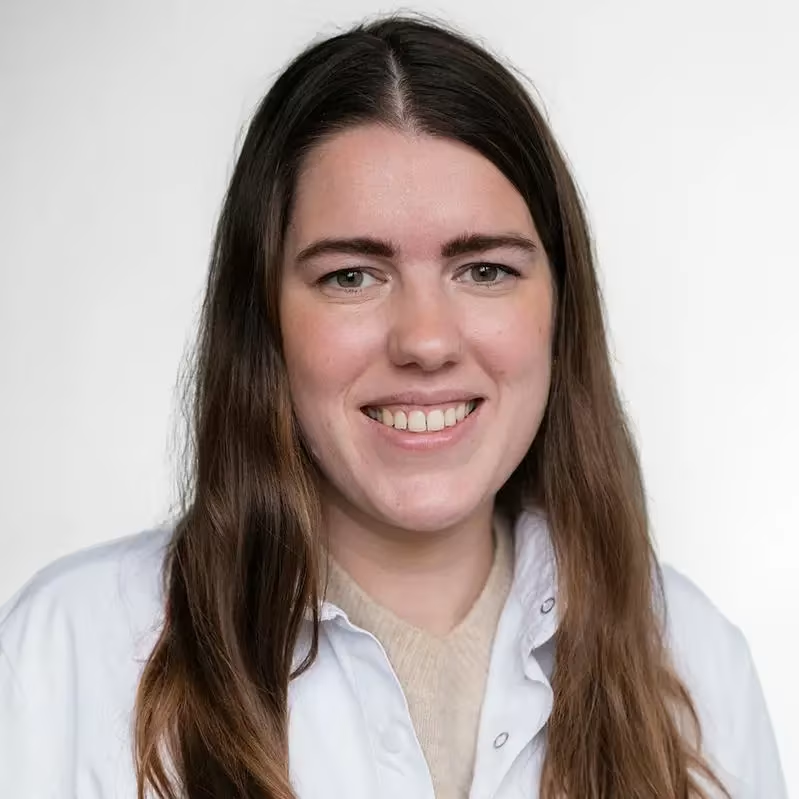
Dr. Aglaja De Pauw is an accomplished medical oncologist with over 10 years of experience. She is a leading figure in the field of oncology, particularly in the diagnosis and management of breast cancer and palliative care. Dr. De Pauw currently practices at Ghent University Hospital (UZ Gent), where she provides expert care for patients with complex oncological conditions, with a particular emphasis on breast cancer and palliative care.
Dr. De Pauw's clinical expertise spans a broad spectrum of oncological disorders, but her primary focus is on breast cancer care and palliative treatments. With a comprehensive understanding of oncology, she utilizes the latest in diagnostic technologies and treatment protocols, ensuring each patient receives personalized care tailored to their specific needs.
In addition to her clinical practice, Dr. De Pauw is deeply engaged in oncological research and education. As a faculty member at Ghent University, she teaches future oncologists, contributes to oncological research programs, and actively participates in the advancement of breast cancer care and palliative care innovations. Her research is particularly focused on genetic factors influencing cancer and exploring new treatments for refractory cancers.
Dr. De Pauw's compassionate approach and dedication to improving patients' quality of life make her a trusted specialist in oncology and palliative care. She regularly consults with international patients, offering expert guidance and personalized treatment plans for those affected by oncological conditions.
Price upon request
Cancer remains one of the leading causes of illness and death worldwide. According to the World Health Organization, millions of new cancer cases are diagnosed each year, with common types including breast cancer, lung cancer, colorectal cancer, prostate cancer, and hematologic malignancies. As survival rates improve due to early detection and modern therapies, the demand for experienced oncologists continues to grow. Many patients seek structured, guideline-based cancer care in countries with regulated healthcare systems.
Belgium has a nationally organized healthcare framework supported by university hospitals, tertiary cancer centers, and specialized oncology institutes. Oncologists in Belgium complete full medical training followed by specialization in medical oncology and internal medicine. Certification is regulated by national health authorities, and many specialists are affiliated with academic institutions. Clinical practice typically follows European Society for Medical Oncology guidelines and internationally recognized cancer treatment protocols.
Modern oncology care in Belgium includes chemotherapy, immunotherapy, targeted therapy, hormone therapy, and participation in structured clinical trials when appropriate. Diagnostic pathways often involve molecular profiling, advanced imaging, and multidisciplinary tumor board discussions. Treatment decisions are individualized based on tumor type, stage, genetic characteristics, overall health, and patient preferences.
For international patients, Belgium offers advanced hospital infrastructure and regulated patient-safety standards. Costs vary depending on treatment complexity and duration. Emotional and psychological support services are often integrated into oncology care, recognizing the physical and emotional impact of cancer. Belgium provides an evidence-based environment where oncologists focus on careful assessment, transparent communication, and individualized treatment planning.
Martine Piccart, MD, PhD
Specialization: Medical Oncology
Years of Experience: 35+ years
Hospital: Institut Jules Bordet, Brussels
Professor Martine Piccart is a medical oncologist specializing in breast cancer treatment. At Institut Jules Bordet, a dedicated tertiary cancer center, she has contributed to research in targeted and systemic therapies. Her clinical focus includes individualized treatment planning based on tumor biology and staging. Cases are reviewed in multidisciplinary tumor boards. Patient monitoring includes structured evaluation of treatment response and side effects.
Ahmad Awada, MD, PhD
Specialization: Medical Oncology
Years of Experience: 25+ years
Hospital: Institut Jules Bordet, Brussels
Dr. Ahmad Awada focuses on solid tumors, including breast and gastrointestinal cancers. His practice includes chemotherapy, immunotherapy, and targeted treatment strategies aligned with European oncology guidelines. Diagnostic decisions are based on imaging and molecular testing. Side effect management and supportive care are part of structured treatment pathways. Patients are informed about risks such as fatigue, infection, and hematologic suppression.
Thierry Gil, MD
Specialization: Thoracic Oncology
Years of Experience: 25+ years
Hospital: Cliniques Universitaires Saint-Luc, Brussels
Dr. Thierry Gil specializes in lung cancer and thoracic malignancies. At Cliniques Universitaires Saint-Luc, he works within a multidisciplinary oncology team. Treatment planning may include systemic therapy and coordination with radiation and surgical teams when indicated. Molecular testing is used to guide targeted therapies when appropriate. Monitoring for treatment-related complications is an essential part of care.
Frédéric Baron, MD, PhD
Specialization: Hematologic Oncology
Years of Experience: 20+ years
Hospital: University Hospital of Liège
Professor Frédéric Baron focuses on hematologic cancers, including leukemia and lymphoma. His work includes stem cell transplantation programs under strict safety protocols. Pre-treatment evaluation involves laboratory testing, imaging, and risk assessment. Post-treatment monitoring addresses infection risk and graft-related complications. Care follows recognized hematology and oncology standards.
Tessa Kerre, MD, PhD
Specialization: Hematologic Malignancies
Years of Experience: 20+ years
Hospital: Ghent University Hospital
Professor Tessa Kerre practices in leukemia and lymphoma management. At Ghent University Hospital, she works in a multidisciplinary hematology-oncology unit. Diagnostic assessment includes bone marrow analysis and molecular profiling. Treatment decisions are individualized based on disease subtype and patient condition. Careful follow-up is required due to variability in treatment response.
Philippe Aftimos, MD
Specialization: Precision Oncology
Years of Experience: 15+ years
Hospital: Institut Jules Bordet, Brussels
Dr. Philippe Aftimos specializes in precision oncology and early-phase clinical trials. His clinical focus includes molecular-guided therapy selection. At Institut Jules Bordet, genomic profiling may be used to identify treatment options when clinically indicated. Patient eligibility for clinical trials is evaluated carefully. Risks and benefits are discussed transparently before enrollment.
Jean-Pascal Machiels, MD, PhD
Specialization: Head and Neck Oncology
Years of Experience: 20+ years
Hospital: Cliniques Universitaires Saint-Luc, Brussels
Professor Jean-Pascal Machiels focuses on head and neck cancers. Treatment planning often involves coordination with surgical and radiation oncology teams. Systemic therapies are selected based on tumor characteristics and staging. Potential risks such as mucositis, fatigue, and immune-related effects are discussed during consultation. Long-term follow-up includes surveillance imaging and symptom monitoring.
Jan Cools, MD, PhD
Specialization: Molecular Oncology
Years of Experience: 20+ years
Hospital: University Hospitals Leuven (UZ Leuven)
Professor Jan Cools works in molecular oncology with a focus on targeted therapies. At UZ Leuven, he collaborates with oncology teams to integrate genetic testing into treatment planning. Diagnostic pathways may include advanced laboratory analysis. Treatment response and side effects are monitored systematically. Care decisions are based on established clinical guidelines and patient-specific factors.
The oncologists listed above are provided for informational purposes only and do not represent rankings or endorsements.
| Consultation Type | Estimated Cost Range |
| Oncologists consultation | $200–$500 |
Note: Costs are approximate and provided for general guidance only. Prices vary depending on the healthcare provider, hospital type, city, and consultation format (in-person or remote). Diagnostic tests, imaging, or additional evaluations are not included. Final fees are determined by the provider after an individual clinical assessment and may be affected by currency fluctuations.
Choosing an oncologist in another country can feel challenging. Cancer treatment involves complex decisions, and you may want clarity about safety standards and hospital systems before traveling. Taking time to understand how oncology care is organized can help you feel more informed.
➤ Availability of English-speaking medical staff and professional medical translators in many facilities
➤ Specialized clinics that manage a high volume of international patients
➤ Government regulations and oversight mechanisms supporting medical tourism safety and international patient protection
➤ Structured hospital documentation, patient-safety protocols, and informed consent practices
For international patients, practical considerations are important. Visa or entry requirements depend on your nationality and treatment duration. Some therapies, such as chemotherapy cycles or immunotherapy infusions, may require stays of at least 7–14 days or repeated visits. In major cities such as Brussels, Leuven, Ghent, and Antwerp, English communication is common, but language barriers may occur in smaller regions. Planning follow-up care with your local oncologist after returning home is essential for monitoring treatment response and managing side effects.
Patients considering Oncologists care in Belgium can share their pathology reports, imaging results, and medical records with Best Clinic Abroad to receive coordinated guidance on consultation options and structured support for treatment planning.
Do I need visa assistance to travel to Belgium for cancer treatment?
Visa requirements depend on your nationality and the expected length of treatment. Many patients from outside the European Union require a Schengen medical visa. You should contact the Belgian embassy or consulate in your country for accurate and updated information. Hospitals may provide documentation confirming your appointment, but visa decisions are made by immigration authorities.
Can I communicate in English with oncologists in Belgium?
In most university hospitals and specialized cancer centers, oncologists and healthcare teams speak English. International patient departments often help coordinate appointments and documentation. However, language support may vary outside large cities. If needed, interpreter services can usually be arranged in advance.
Is it possible to arrange an online consultation before traveling for oncology treatment?
Yes, you can arrange an online consultation through Best Clinic Abroad. You may securely share pathology reports, imaging scans, and laboratory results for preliminary review by oncology teams. This helps you understand possible treatment pathways and whether travel to Belgium is appropriate. Final treatment decisions are made only after a comprehensive in-person evaluation.
How long should I plan to stay in Belgium for cancer treatment?
The duration depends on your diagnosis and treatment plan. Some therapies require short visits, while others involve multiple cycles over weeks or months. Your oncology team will provide guidance based on your specific condition and treatment schedule.
What happens with follow-up care after I return home?
Follow-up care is essential in oncology. Before traveling home, you should obtain detailed treatment summaries, medication instructions, and imaging copies. Coordination with your local oncologist ensures continuity of care and ongoing monitoring for recurrence or treatment-related side effects.
Disclaimer
This content is provided for informational purposes only and does not constitute medical advice. Diagnosis and treatment decisions should be made in consultation with a licensed medical specialist based on individual clinical evaluation.


