









Bestclinicabroad
Connect with the world's Best Clinic and doctors at Best Clinic Abroad. Your well-being is our priority, with personalized care every step of the way.


Connect with the world's Best Clinic and doctors at Best Clinic Abroad. Your well-being is our priority, with personalized care every step of the way.


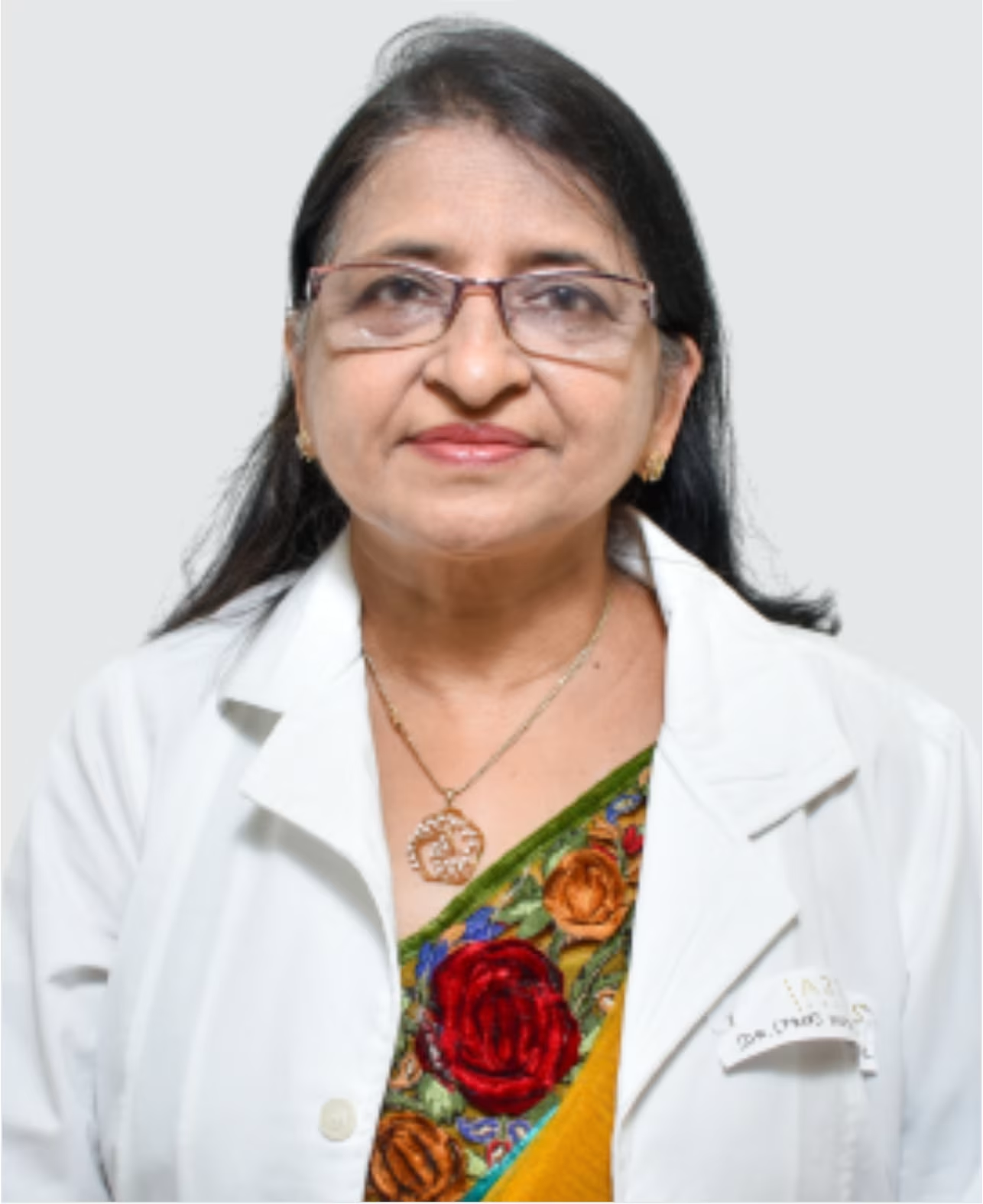
Dr. Nutan Agarwal is a leading gynecologist in India, with an outstanding career spanning 37 years in gynecology and reproductive medicine. Recognized as one of the best reproductive medicine specialists, she has helped numerous patients with infertility treatments, high-risk pregnancies, and advanced gynecological procedures. Currently practicing at Artemis Hospital, Gurgaon, Dr. Agarwal provides comprehensive and personalized care to her patients. As a top fertility doctor in India, she is known for her modern, patient-centric approach that includes both in-person and online fertility consultations. Her expertise in assisted reproductive technology (ART), IVF, and minimally invasive gynecological surgeries makes her a popular gynecologist for reproductive health solutions. Dr. Nutan Agarwal’s dedication extends to making healthcare more accessible by offering secure virtual consultations for global patients. With her extensive experience, medical innovations, and commitment to patient care, she is regarded as a famous IVF specialist in India.
Price upon request

Dr. Sumana Manohar is a leading gynecologist in Chennai with 23 years of experience in women’s health and reproductive medicine. As the best obstetrician in Chennai, she specializes in Endoscopic and Robotic Gynecological Surgery, Infertility Treatment, and High-Risk Obstetrics, offering advanced and personalized care. She has served as the Coordinator of the Obstetrics & Gynecology department at Apollo Hospitals, Greams Road, ensuring expert maternal and reproductive healthcare since 2015. Additionally, she leads the Suman Clinic in Nungambakkam, where she provides comprehensive treatment for gynecological and fertility concerns. Recognized as a famous infertility specialist in Chennai, Dr. Sumana’s dedication to robotic gynecological surgery and reproductive medicine makes her a popular women's health expert and a trusted name in the field.
Price upon request
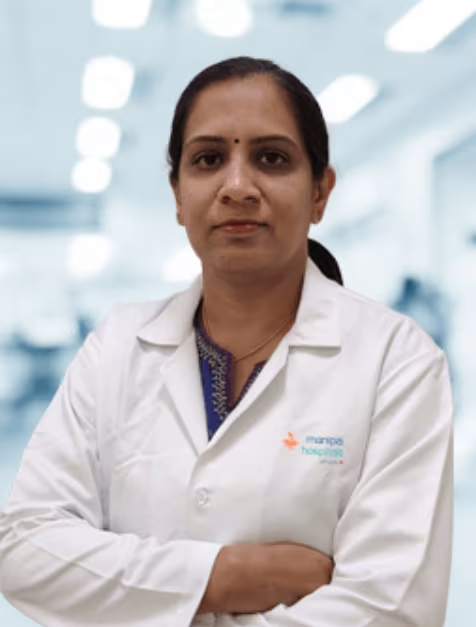
Dr. Lakshmi H K is a leading obstetrician and gynaecologist in Hebbal, Bangalore, with over 17 years of clinical experience, including 14 years of specialization. She currently serves at Manipal Hospitals, Hebbal, one of the most trusted healthcare providers in India. Dr. Lakshmi H K is recognized for her compassionate patient care and a detailed approach to women's health. Her medical qualifications include an MBBS, DGO, and DNB in Obstetrics and Gynaecology. She is a life member of the Indian Medical Association (IMA) and Bangalore Society of Obstetrics and Gynaecology (BSOG), reflecting her dedication to professional growth. Fluent in English, Kannada, and Hindi, she ensures seamless communication with patients from different backgrounds. Whether it’s a routine consultation or high-risk pregnancy case, her patient-first approach and precise diagnosis have made her one of the top gynaecologists in Bangalore. Her ability to manage complex cases and commitment to quality healthcare make her a popular and trusted doctor in India.
Price upon request
Infertility is a common medical condition that affects millions of couples worldwide. According to the World Health Organization (WHO), approximately 1 in 6 people globally experience infertility at some point in their reproductive lives. Infertility can result from female factors, male factors, combined causes, or unexplained reasons. Common contributing conditions include ovulatory disorders, tubal blockages, endometriosis, low sperm count, hormonal imbalance, and age-related decline in ovarian reserve. As awareness increases and assisted reproductive technologies (ART) evolve, the demand for experienced Fertility Specialists continues to grow.
Fertility Specialists in India are typically trained as obstetricians and gynecologists (MBBS followed by MD or MS in Obstetrics & Gynecology) who pursue additional fellowship training in reproductive medicine, infertility, and assisted reproductive technologies such as IVF (in vitro fertilization), ICSI (intracytoplasmic sperm injection), and fertility preservation. Some specialists also have training in reproductive endocrinology. Professional licensing is regulated by the National Medical Commission, and ART clinics operate under national guidelines for assisted reproduction.
Major metropolitan cities such as New Delhi, Mumbai, Chennai, Hyderabad, and Bengaluru host tertiary fertility centers equipped with advanced embryology laboratories, cryopreservation facilities, ultrasound monitoring, and hormonal testing services. Many centers follow internationally recognized clinical protocols and laboratory standards to ensure quality control and patient safety.
Fertility treatment is highly individualized. Age, ovarian reserve, sperm quality, uterine health, previous treatment history, and overall medical condition influence outcomes. Risks may include ovarian hyperstimulation syndrome (OHSS), multiple pregnancy, procedural complications, and emotional stress. Responsible fertility care includes thorough counseling, realistic expectation setting, and psychological support throughout the treatment journey.
The following doctors are listed for informational purposes only. This is not a ranking, and inclusion does not imply superiority.
Dr. Firuza R. Parikh, MD
Specialization: Reproductive Medicine and IVF
Years of Experience: 30+ years
Dr. Firuza R. Parikh is associated with Jaslok Hospital & Research Centre, Mumbai, a tertiary-care multispecialty hospital. Her clinical focus includes IVF, ICSI, recurrent pregnancy loss evaluation, and fertility preservation. Treatment planning involves hormonal profiling, ovarian reserve testing, and individualized stimulation protocols. Laboratory coordination with trained embryologists is central to her clinical approach.
Dr. Nandita Palshetkar, MD
Specialization: Assisted Reproductive Technology
Years of Experience: 30+ years
Dr. Nandita Palshetkar practices at Bloom IVF Group, Mumbai. Her expertise includes IVF, egg freezing, and management of age-related infertility. Treatment decisions are guided by ultrasound monitoring, AMH levels, and patient history. Counseling regarding realistic expectations and potential treatment cycles is emphasized.
Dr. Rita Bakshi, MD
Specialization: IVF and Reproductive Medicine
Years of Experience: 25+ years
Dr. Rita Bakshi is affiliated with International Fertility Centre, New Delhi. Her clinical work includes IVF, IUI (intrauterine insemination), and male infertility management. She coordinates closely with embryology laboratories for embryo culture and transfer procedures. Patient education about hormonal stimulation risks and multiple pregnancy is part of routine care.
Dr. Hrishikesh Pai, MD
Specialization: Reproductive Endocrinology and ART
Years of Experience: 30+ years
Dr. Hrishikesh Pai practices at Lilavati Hospital & Research Centre, Mumbai. His expertise includes complex infertility cases, ovarian reserve assessment, and fertility preservation. Individualized treatment protocols are developed after detailed hormonal and imaging evaluation. Emotional support and transparent discussion of success probabilities are important components of his practice.
Dr. Kamini Rao, MD
Specialization: Assisted Reproductive Technology
Years of Experience: 35+ years
Dr. Kamini Rao is associated with a tertiary fertility center in Bengaluru. Her clinical focus includes IVF, donor programs, and management of complex infertility. Treatment planning involves structured evaluation of both partners. Laboratory standards and embryo quality assessment play a key role in her clinical framework.
| Consultation Type | Estimated Cost Range (USD) |
| Initial consultation with a Fertility Specialist | $40-$150 |
Note: Costs are approximate and provided for general guidance only. Prices vary depending on the healthcare provider, hospital type, city, and consultation format (in-person or remote). Diagnostic tests, imaging, or additional evaluations are not included. Final fees are determined by the provider after an individual clinical assessment and may be affected by currency fluctuations.
Considering fertility treatment abroad can feel emotionally and medically complex. You may be evaluating laboratory standards, specialist experience, safety protocols, and communication clarity. Careful review of credentials and clinic accreditation is important before beginning treatment.
➤ Availability of English-speaking medical staff and professional medical translators in many facilities
➤ Specialized clinics that manage a high volume of international patients
➤ Government regulations and oversight mechanisms supporting medical tourism safety and international patient protection
➤ Structured hospital documentation, patient-safety protocols, and informed consent practices
Foreign patients should review visa and entry requirements before traveling. Fertility treatment may require multiple visits over several weeks, and some treatment cycles may require a stay of 7-14 days or longer depending on monitoring and embryo transfer scheduling. While English is widely spoken in metropolitan centers, language differences may occur outside major cities. It is important to plan follow-up hormonal monitoring and early pregnancy care with a local gynecologist after returning home.
Patients considering Fertility Specialists care in India can share their medical history, prior fertility reports, hormonal test results, and imaging findings with Best Clinic Abroad to receive assistance in arranging consultations and understanding available options. Best Clinic Abroad acts as a medical travel facilitator and does not provide medical treatment or replace consultation with licensed reproductive medicine specialists.
Who is the best infertility doctor in India?
There is no officially designated “best” infertility doctor in India. Fertility specialists vary in their experience, subspecialty focus, and laboratory infrastructure. The most suitable doctor for you depends on your specific diagnosis, age, ovarian reserve, sperm parameters, and prior treatment history. It is advisable to review training credentials, ART clinic standards, and treatment transparency before making a decision.
Is 37 too late for IVF?
Age 37 is not necessarily too late for IVF, but fertility potential generally declines with age, particularly after 35. Ovarian reserve and egg quality tend to decrease, which may affect response to stimulation and pregnancy rates. Some women at 37 may respond well to IVF, while others may require modified treatment strategies. A thorough evaluation, including AMH testing and ultrasound assessment, is important before planning treatment.
At what age are 90% of your eggs gone?
Women are born with a fixed number of eggs, and ovarian reserve gradually declines over time. By the early 30s, a significant portion of eggs has already diminished, and by the late 30s to early 40s, ovarian reserve declines more rapidly. While exact percentages vary among individuals, many studies suggest that by age 37-38, a large proportion of the initial egg reserve has been lost. However, fertility varies widely from person to person.
What is a good AMH level for IVF?
Anti-Müllerian Hormone (AMH) is used as a marker of ovarian reserve. A “good” AMH level depends on age and laboratory reference ranges. Generally, AMH levels between approximately 1.0 and 3.5 ng/mL are often considered within a normal range for reproductive-age women. Very low AMH may indicate reduced ovarian reserve, while very high levels can be associated with conditions such as polycystic ovary syndrome (PCOS). AMH is only one part of fertility assessment and should be interpreted alongside other clinical findings.
Disclaimer
“This content is provided for informational purposes only and does not constitute medical advice. Diagnosis and treatment decisions should be made in consultation with a licensed medical specialist based on individual clinical evaluation.”


