









Bestclinicabroad
Connect with the world's Best Clinic and doctors at Best Clinic Abroad. Your well-being is our priority, with personalized care every step of the way.


Connect with the world's Best Clinic and doctors at Best Clinic Abroad. Your well-being is our priority, with personalized care every step of the way.


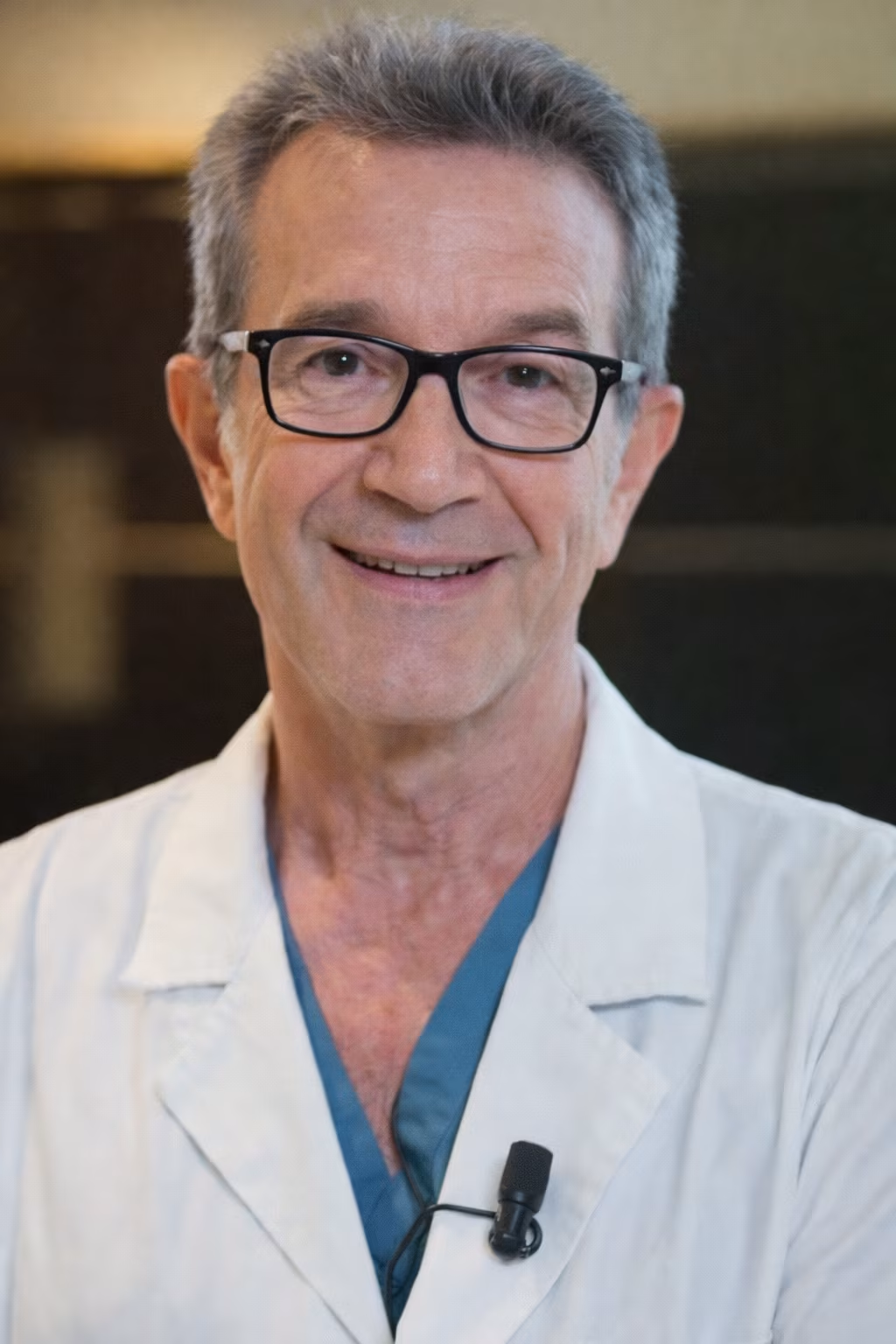
Prof. Dr. Luigi Masoni is a famous general surgeon in Italy with over 40 years of extensive surgical experience. He leads the General Surgery Operating Unit at Ospedale San Carlo di Nancy in Rome, part of the GVM Health Group. Renowned for his expertise in minimally invasive and robotic abdominal surgery, he performs over 600 elective and emergency procedures annually, making him one of the top general surgeons in Italy. His work spans complex surgeries involving the colon, small intestine, liver, gallbladder, and adrenal glands, as well as coelioscopic gynecological and proctologic interventions. Prof. Masoni is especially noted for his contributions to colorectal cancer surgery, pelvic floor surgery, and for developing a pioneering bilio-intestinal bypass technique via laparoscopy in 2000—a world first.
Price upon request
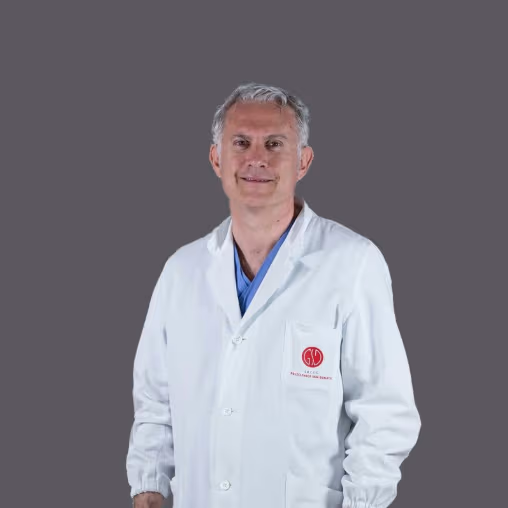
Prof. Dr. Giovanni Nano is a leading vascular and endovascular surgeon in Italy, currently serving as Head of the Vascular Surgery Unit at IRCCS Policlinico San Donato and Full Professor of Vascular Surgery at the University of Milan. With over 30 years of clinical and academic experience, he is recognized as one of the top vascular surgeons in Europe. Prof. Nano is renowned for his contributions to the evolution of endovascular aneurysm repair in Italy, having trained with pioneers like Prof. Parodi and Dr. Dietrich. His extensive background in academic teaching, surgical leadership, and research has made him a famous name in vascular and phlebological care.
Price upon request
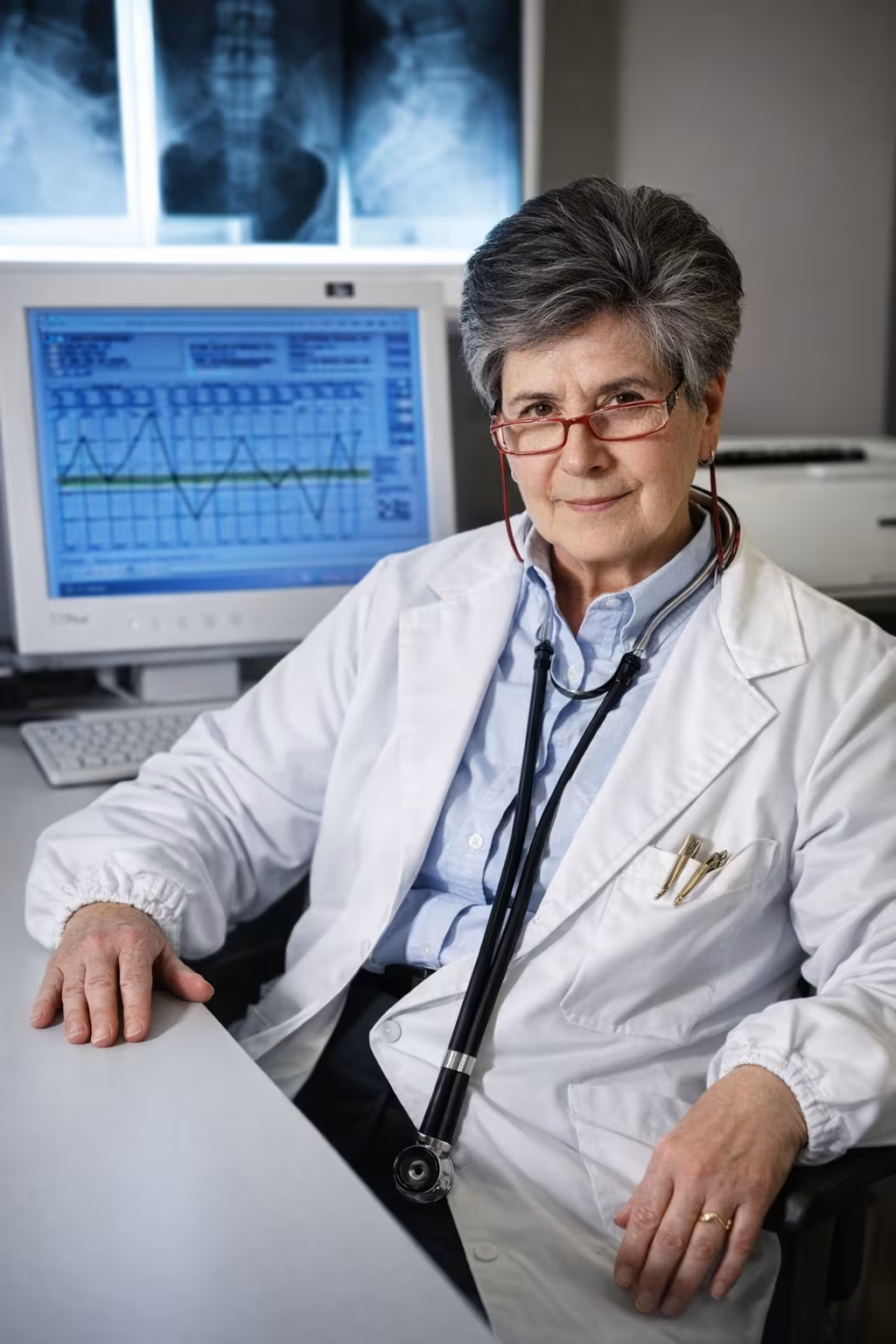
Prof. Dr. Renata Caudarella is a leading specialist in internal medicine, nephrology, and osteoporosis in Italy, currently serving at the Department of Osteoporosis at Maria Cecilia Hospital in Cotignola. With over three decades of clinical and academic experience, she is widely respected for her expertise in bone mineral density disorders, renal stone formation, and postmenopausal metabolic health. In addition to her clinical work, she serves as an Associate Professor of Metabolic Diseases and is an active member of the Ettore Sansavini Foundation for Scientific Research. Dr. Caudarella has authored over 110 scientific publications, with research spanning topics such as urinary calculi, calcium lithiasis, and bone health. Her extensive academic contributions, coupled with her clinical excellence, make her one of the top internal medicine and nephrology experts in Italy.
Price upon request
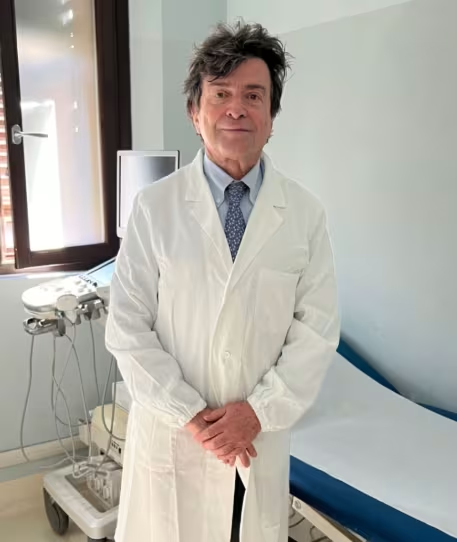
Prof. Dr. Giorgio Zoli is a leading gastroenterologist and internal medicine specialist in Italy, known for his pioneering work in chronic inflammatory bowel diseases and clinical nutrition. With a medical career spanning over four decades, Prof. Zoli has held key academic and clinical leadership roles, including Associate Professor at the University of Bologna and Director of the Department of Medicine at AUSL Ferrara. Renowned for his clinical excellence, innovative research, and teaching contributions, Prof. Zoli has played a pivotal role in shaping gastroenterology practices both nationally and internationally.
Price upon request
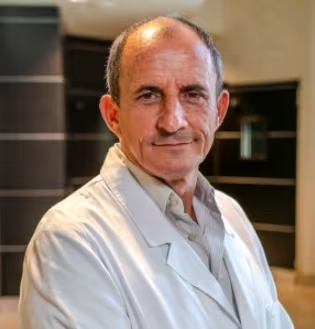
Prof. Paolo Gentileschi is a top bariatric and metabolic surgeon in Italy with over two decades of experience in minimally invasive and laparoscopic procedures. He serves as the Director of Bariatric and Metabolic Surgery at San Carlo di Nancy Hospital and Co-Head of the same department at San Pier Damiano Hospital. He also contributes to the General Surgery Unit at Tiberia Hospital. Prof. Gentileschi has personally performed more than 3,000 laparoscopic bariatric surgeries and leads a specialized multidisciplinary obesity treatment team that handles approximately 900 cases annually, using advanced techniques like sleeve gastrectomy and gastric bypass. His expertise and leadership have made him one of the most respected and famous surgeons for obesity treatment in Italy.
Price upon request
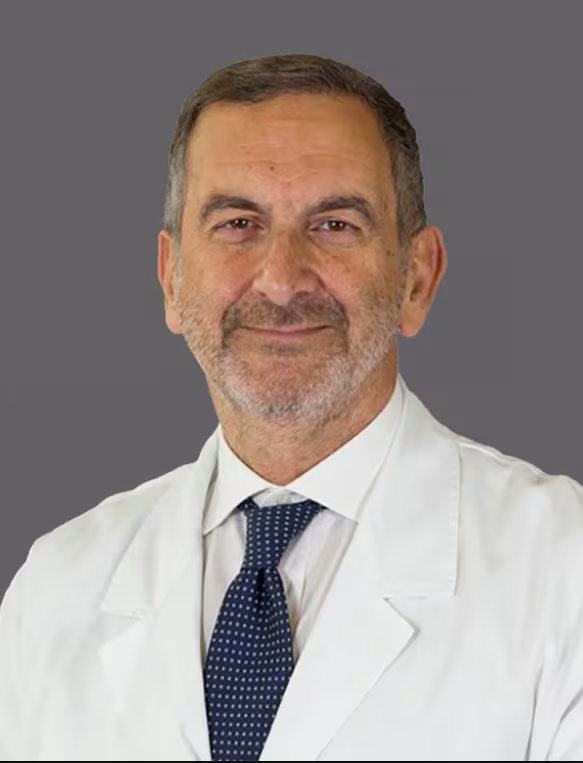
Prof. Luigi Bonavina is one of the most respected gastrointestinal and general surgeons in Italy, currently serving as Head of the University General Surgery Unit and the Esophagus Center at IRCCS Policlinico San Donato in Milan. He is also a Full Professor of Surgery at the University of Milan and collaborates with Casa di Cura La Madonnina. With over 45 years of experience, Prof. Bonavina is a top expert in esophageal surgery, particularly in the treatment of gastroesophageal reflux disease (GERD), Barrett’s esophagus, esophageal motility disorders, and esophageal cancer. Internationally acclaimed for his pioneering use of minimally invasive surgical techniques—including thoracoscopic, laparoscopic, and transoral approaches—he is considered one of the leading gastrointestinal surgeons in Europe.
Price upon request
According to the World Health Organization, surgical conditions account for a significant proportion of the global disease burden, with millions of procedures performed each year to treat abdominal disorders, cancers, hernias, gallbladder disease, colorectal conditions, and emergency surgical cases. Access to safe, timely surgery is recognized as an essential component of universal healthcare. General surgeons play a central role in diagnosing and managing a wide range of surgical conditions, often coordinating care with anesthesiologists, radiologists, oncologists, and intensive care teams.
Italy has a well-established public and private healthcare system regulated by the Italian Ministry of Health. Surgical services are delivered through regional health authorities, academic hospitals, and accredited private institutions. Many Italian hospitals follow European Union clinical standards and international surgical safety guidelines, including structured preoperative assessment and infection-control protocols. Multidisciplinary team meetings are common, particularly for oncological and complex abdominal cases.
For international patients, Italy offers access to modern operating theaters, minimally invasive techniques such as laparoscopy and robotic surgery, and comprehensive perioperative monitoring. Treatment planning is typically individualized, based on clinical findings, imaging results, and overall patient health. Surgeons emphasize informed consent, risk discussion, and realistic expectations.
In addition to clinical care, many institutions recognize the emotional and psychological impact of surgery. Preoperative counseling and postoperative recovery planning are often integrated into the care pathway. While outcomes vary depending on diagnosis, age, and comorbidities, Italy’s surgical infrastructure is designed to support evidence-based, patient-centered treatment in a structured healthcare environment.
Francesco Corcione, MD
Specialization: Minimally invasive and laparoscopic general surgery
Years of Experience: Over 30 years
Dr. Francesco Corcione is affiliated with the University of Naples Federico II. His clinical focus includes advanced laparoscopic procedures for gastrointestinal diseases, hernia repair, and colorectal surgery. He has contributed to surgical research on minimally invasive techniques and enhanced recovery protocols. His work emphasizes adherence to European surgical standards and structured perioperative care.
Pier Cristoforo Giulianotti, MD
Specialization: General and robotic surgery
Years of Experience: Over 25 years
Dr. Giulianotti has been associated with the University of Rome Tor Vergata. He is known for experience in robotic-assisted abdominal surgery, including hepatobiliary and pancreatic procedures. His clinical practice integrates advanced surgical technologies with evidence-based oncology protocols. Multidisciplinary tumor board collaboration is central to his treatment planning.
Nicola de Manzini, MD
Specialization: Gastrointestinal and colorectal surgery
Years of Experience: Over 30 years
Dr. Nicola de Manzini practices at the University Hospital of Trieste. His work involves colorectal cancer surgery, inflammatory bowel disease management, and minimally invasive abdominal procedures. He follows European Society of Coloproctology guidelines and emphasizes patient safety and structured postoperative monitoring.
Alberto Arezzo, MD
Specialization: Colorectal and minimally invasive surgery
Years of Experience: Over 20 years
Dr. Alberto Arezzo is affiliated with the Città della Salute e della Scienza in Turin. His clinical interests include laparoscopic colorectal surgery and enhanced recovery after surgery (ERAS) pathways. He participates in surgical research related to patient outcomes and complication reduction strategies.
Giorgio Ercolani, MD
Specialization: Hepatobiliary and pancreatic surgery
Years of Experience: Over 25 years
Dr. Giorgio Ercolani works at IRCCS Azienda Ospedaliero-Universitaria di Bologna. His practice includes liver resections, pancreatic surgery, and complex abdominal procedures. Clinical decision-making is guided by oncological protocols and multidisciplinary case review meetings.
Massimo Falconi, MD
Specialization: Pancreatic and gastrointestinal surgery
Years of Experience: Over 30 years
Dr. Massimo Falconi has been associated with San Raffaele Hospital. He has experience in pancreatic tumors and advanced abdominal surgery. His approach includes careful preoperative staging, evidence-based surgical planning, and structured postoperative follow-up.
Mario Morino, MD
Specialization: Laparoscopic and gastrointestinal surgery
Years of Experience: Over 30 years
Dr. Mario Morino practices at the University of Turin. His focus includes minimally invasive esophageal and gastric surgery. He has participated in European surgical guideline development and emphasizes patient-informed consent and risk communication.
Luigi Boni, MD
Specialization: Minimally invasive and endocrine surgery
Years of Experience: Over 20 years
Dr. Luigi Boni is affiliated with the IRCCS Ospedale San Raffaele. His clinical work includes laparoscopic abdominal procedures and thyroid surgery. He follows standardized surgical safety checklists and evidence-based endocrine surgery protocols.
The above physician profiles are provided for informational purposes only and are not presented as rankings.
| Consultation Type | Estimated Cost Range |
| General Surgeons consultation | $200–$400 |
Note: Costs are approximate and provided for general guidance only. Prices vary by healthcare provider, hospital type, city, and consultation format (in-person or remote). Diagnostic tests, imaging, or additional evaluations are not included. Final fees are determined by the provider after an individual clinical assessment and may be affected by currency fluctuations.
Choosing a surgical specialist in another country can feel complex. You may have questions about safety, communication, and care standards. It is reasonable to seek clarity before making decisions about surgical treatment abroad.
➤ Availability of English-speaking medical staff and professional medical translators in many facilities
➤ Specialized clinics that manage a high volume of international patients
➤ Government regulations and oversight mechanisms supporting medical tourism safety and international patient protection
➤ Structured hospital documentation, patient-safety protocols, and informed consent practices
International patients should also consider visa or entry requirements based on nationality. For major abdominal procedures, a postoperative stay of approximately 7–14 days may be advised, depending on recovery progress and medical assessment. While large cities often provide English-language support, smaller centers may have more limited resources. It is also important to plan follow-up care in your home country, especially for wound checks, pathology reviews, or ongoing oncological monitoring.
Patients considering General Surgeons care in Italy can share their medical reports with Best Clinic Abroad to receive coordinated support, guidance on consultation options, and a clear starting point for treatment planning.
Do I need a medical visa to undergo surgery with general surgeons in Italy?
Visa requirements depend on your nationality and the length of your planned stay. If you are from a non-EU country, you may need a short-stay Schengen medical visa for planned surgical treatment in Italy. Hospitals typically provide a treatment invitation letter that supports your visa application. You should verify requirements with the Italian embassy or consulate in your country before making travel arrangements.
Will I be able to communicate in English with general surgeons in Italy?
In many major Italian hospitals, especially in cities such as Rome, Milan, and Turin, surgeons and medical staff are comfortable communicating in English. International patient departments often assist with translation and documentation. However, outside major urban centers, English fluency may vary. It is reasonable to confirm language support in advance when scheduling your consultation.
Can I have an online consultation before traveling to Italy?
Yes, you can request an online consultation through Best Clinic Abroad. This allows you to share your medical records, imaging reports, and previous evaluations before traveling. The coordinating team can arrange a remote discussion with a qualified general surgeon in Italy, helping you understand whether an in-person assessment or surgery may be appropriate. Online consultations do not replace a full physical examination but can support initial planning.
How long should I plan to stay in Italy after general surgery?
The length of stay depends on the type of procedure and your recovery progress. For minor laparoscopic procedures, you may be advised to remain in Italy for about 7 days. For more complex abdominal or oncological surgeries, a stay of 10–14 days or longer may be recommended. Your surgeon will assess wound healing, pain control, and overall stability before clearing you for travel.
Are Italian hospitals regulated for patient safety?
Yes, hospitals in Italy operate under national healthcare regulations overseen by regional authorities and the Ministry of Health. Surgical departments follow standardized safety protocols, including preoperative assessments, sterile operating procedures, and postoperative monitoring. Many tertiary and academic hospitals also align with European clinical guidelines and participate in quality-control audits to maintain safety standards.
Disclaimer
This content is provided for informational purposes only and does not constitute medical advice. Diagnosis and treatment decisions should be made in consultation with a licensed medical specialist based on individual clinical evaluation.


