









Bestclinicabroad
Connect with the world's Best Clinic and doctors at Best Clinic Abroad. Your well-being is our priority, with personalized care every step of the way.


Connect with the world's Best Clinic and doctors at Best Clinic Abroad. Your well-being is our priority, with personalized care every step of the way.


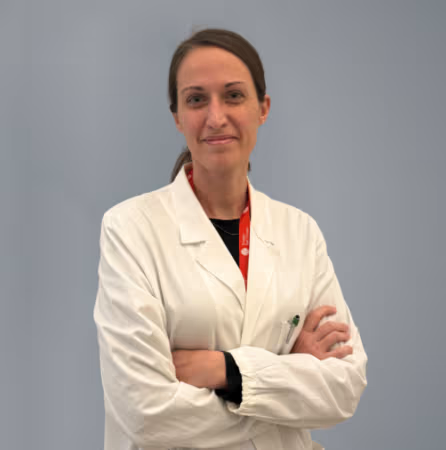
Dr. Giulia Berzero is a leading neurologist in Italy with over a decade of experience in neuro-oncology. She currently practices at the IRCCS Galeazzi-Sant'Ambrogio Hospital and the IRCCS San Raffaele Hospital in Milan. With an academic background from the prestigious University of Pavia and advanced training in Paris, Dr. Berzero is highly regarded for her expertise in diagnosing and treating primary brain tumors and neurological complications associated with systemic cancers. She is considered one of the top neurologists in Italy for her clinical precision and strong academic contributions in neuro-oncology.
Price upon request
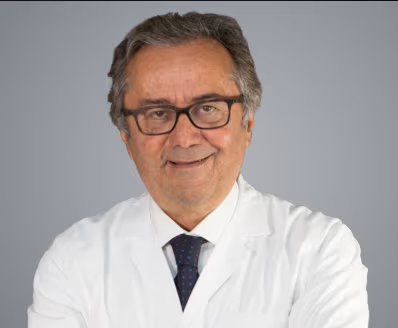
Prof. Dr. Luigi Ferini-Strambi is a world-renowned and leading neurologist and sleep medicine specialist based in Milan, Italy. He serves as Head of the Sleep Medicine Center at IRCCS San Raffaele Hospital and as a Full Professor of Neurology at the Vita-Salute San Raffaele University. A pioneer in the study of sleep-related neurological disorders, he has dedicated over four decades to clinical research, academic leadership, and patient care. He is globally acknowledged as one of the top sleep medicine specialists and neurologists in the world, particularly for his work in REM sleep behavior disorder, neurodegeneration, and Alzheimer's disease.
Price upon request
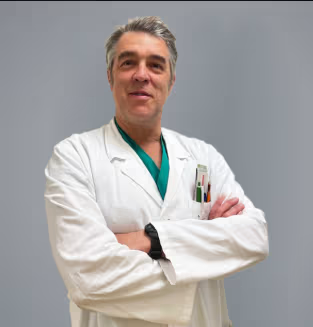
Dr. Alessandro Oldani is a renowned neurologist and sleep medicine specialist with over 30 years of dedicated experience. He currently serves as the Head of the Functional Unit at the Sleep Medicine Center of the IRCCS San Raffaele Turro Hospital in Milan, under the direction of Prof. Luigi Ferini-Strambi. A graduate of the University of Milan with top honors in both medicine and neurology, Dr. Oldani has devoted his entire professional life to the diagnosis and treatment of sleep disorders. His longstanding commitment and academic contributions have made him one of the leading sleep medicine specialists in Italy.
Price upon request
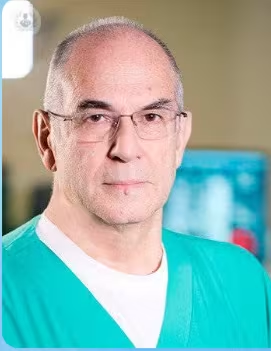
Dr. Enrico Motti is one of the most renowned and top neurosurgeons in Italy, with over 45 years of clinical experience in the field of neurosurgery. He currently serves as the Head of the Stereotactic Neurosurgery Unit and Gamma Knife Service at the Department of Neurosurgery at Maria Cecilia Hospital, Cotignola. As a founding member of the European Gamma Knife Society and an active member of the Italian Society of Neurosurgery, Dr. Motti has been instrumental in advancing minimally invasive and radiosurgical treatments in Europe. He is one of the best neurosurgeons in Italy for treating brain tumors, functional lesions, and vascular malformations using Gamma Knife radiosurgery and microsurgical techniques.
Price upon request
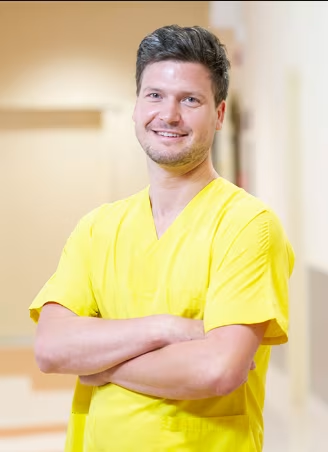
Dr. François Lechanoine is a top neurosurgeon in Italy, known for his advanced expertise in brain, spine, and pediatric neurosurgery. With over 2,500 surgical procedures performed across France, Italy, Africa, and the United States, he brings a highly international and multidisciplinary approach to neurosurgical care. Dr. Lechanoine is currently a senior consultant neurosurgeon at Maria Cecilia Hospital in Italy, where he also leads training programs in endoscopic spine and brain surgery. As one of the most innovative and best neurosurgeons in Italy, he combines hands-on excellence with academic leadership and ongoing research.
Price upon request
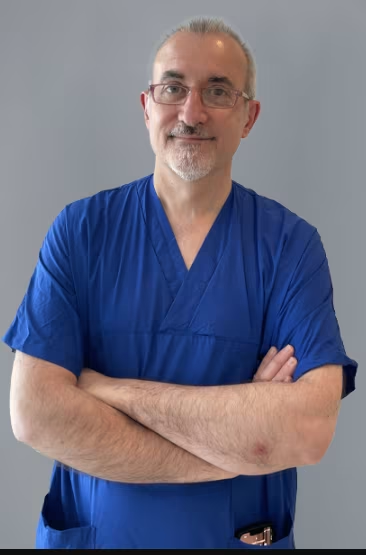
Professor Lorenzo Bello is one of the most renowned neurosurgeons in Italy and a global expert in oncological neurosurgery. He serves as the Head of the Oncological Neurosurgery Team at IRCCS Ospedale Galeazzi - Sant’Ambrogio in Milan. With over 30 years of experience and advanced international training from Harvard Medical School, he specializes in the treatment of intrinsic brain lesions using advanced brain mapping and awake surgery techniques. Prof. Bello is at the forefront of image-guided, robotic, and minimally invasive neurosurgical methods, making him one of the top brain tumor surgeons in Europe.
Price upon request
Neurological disorders are among the leading causes of disability worldwide. According to the World Health Organization, conditions such as stroke, epilepsy, Parkinson’s disease, multiple sclerosis, brain tumors, and traumatic brain injuries affect hundreds of millions of people globally. As populations age, the demand for specialized neurological and neurosurgical care continues to grow. This has led many international patients to explore advanced healthcare systems known for structured training pathways, academic medicine, and regulated clinical practice.
Italy has a well-established public and private healthcare system that provides comprehensive neurological and neurosurgical services. Care is delivered through university-affiliated hospitals, tertiary referral centers, and specialized neuroscience institutes. Italian neurologists and neurosurgeons undergo rigorous medical education, including medical school, residency training, and subspecialty fellowships. Clinical practice is regulated by national medical boards and guided by European and international standards, including recommendations from organizations such as the European Academy of Neurology and the European Association of Neurosurgical Societies.
Hospitals in major cities such as Milan, Rome, Bologna, and Verona are equipped with advanced imaging technologies, neuro-navigation systems, intraoperative monitoring, and multidisciplinary neuro-rehabilitation programs. Many facilities also support international patients through structured coordination services.
Treatment planning in Italy is typically individualized. Physicians evaluate diagnostic imaging, laboratory findings, and functional status before recommending conservative management, minimally invasive procedures, or complex neurosurgical interventions when clinically indicated. Psychological support and rehabilitation services are often integrated into care, recognizing that neurological conditions can significantly affect quality of life.
For patients considering care abroad, Italy offers a regulated, academically grounded environment for neurological and neurosurgical evaluation, with an emphasis on patient safety and evidence-based decision-making.
Prof. Alessandro Olivi, MD
Specialization: Neurosurgery
Years of Experience: 30+ years
Prof. Alessandro Olivi is a senior neurosurgeon at Policlinico Universitario Agostino Gemelli IRCCS in Rome. His clinical work focuses on brain tumors, skull base surgery, and complex intracranial procedures. He has extensive experience in microsurgical techniques and neuronavigation systems. His practice is aligned with European neurosurgical guidelines, with emphasis on careful patient selection and multidisciplinary tumor board evaluation.
Prof. Lorenzo Bello, MD
Specialization: Neurosurgery
Years of Experience: 25+ years
Prof. Lorenzo Bello practices at IRCCS Istituto Neurologico Carlo Besta in Milan. His primary focus includes glioma surgery, awake brain surgery, and functional mapping techniques. He has contributed to research on preserving neurological function during tumor resection. Clinical decisions are based on advanced imaging, intraoperative neurophysiological monitoring, and structured rehabilitation planning.
Prof. Giovanni Broggi, MD
Specialization: Neurosurgery
Years of Experience: 35+ years
Prof. Giovanni Broggi is associated with IRCCS Istituto Neurologico Carlo Besta in Milan. His expertise includes brain tumors, epilepsy surgery, and stereotactic neurosurgery. He has been involved in the development of modern functional neurosurgery approaches. Treatment planning typically involves interdisciplinary consultation and careful assessment of surgical risks and benefits.
Prof. Carlo Colosimo, MD
Specialization: Neurology
Years of Experience: 30+ years
Prof. Carlo Colosimo works at Fondazione Policlinico Universitario Agostino Gemelli IRCCS in Rome. His clinical focus includes movement disorders such as Parkinson’s disease, dystonia, and tremor. He follows evidence-based medical management and collaborates with neurosurgical teams for deep-brain stimulation evaluation when indicated. His work integrates pharmacologic treatment and long-term neurological monitoring.
Prof. Alfredo Berardelli, MD
Specialization: Neurology
Years of Experience: 35+ years
Prof. Alfredo Berardelli is affiliated with Sapienza University of Rome and Policlinico Umberto I. His expertise includes movement disorders, neurophysiology, and neuromuscular diseases. He has participated in international guideline development for movement disorder management. Clinical care is centered on diagnostic precision and individualized therapeutic strategies.
Prof. Gioacchino Tedeschi, MD
Specialization: Neurology
Years of Experience: 30+ years
Prof. Gioacchino Tedeschi practices at the University of Campania Luigi Vanvitelli in Naples. His clinical focus includes multiple sclerosis, neuroimmunology, and advanced neuroimaging. He is involved in research evaluating disease progression and treatment response. Management plans typically involve long-term follow-up and coordination with rehabilitation specialists.
Prof. Roberto Delfini, MD
Specialization: Neurosurgery
Years of Experience: 30+ years
Prof. Roberto Delfini is associated with Sapienza University of Rome. His areas of focus include spinal surgery, brain tumors, and vascular neurosurgery. He has extensive experience in microsurgical spinal techniques and complex cranial procedures. Clinical decisions are guided by imaging studies, neurological examination, and multidisciplinary discussion.
Prof. Domenico d’Avella, MD
Specialization: Neurosurgery
Years of Experience: 25+ years
Prof. Domenico d’Avella practices at Azienda Ospedaliera Universitaria Integrata Verona. His expertise includes cerebrovascular surgery, aneurysm management, and skull base procedures. He integrates microsurgical and endovascular approaches when clinically appropriate. Treatment planning emphasizes safety protocols and postoperative neurological monitoring.
Doctor listings above are provided for informational purposes only and do not represent rankings.
| Consultation Type | Estimated Cost Range |
| Neurologists and Neurosurgeons consultation | $200–$400 |
Note: Costs are approximate and provided for general guidance only. Prices vary by healthcare provider, hospital type, city, and consultation format (in-person or remote). Diagnostic tests, imaging, or additional evaluations are not included. Final fees are determined by the provider after an individual clinical assessment and may be affected by currency fluctuations.
Choosing a specialist abroad can feel complex, especially when dealing with neurological conditions that require careful evaluation and long-term follow-up. Many patients seek clarity about training standards, communication, and patient safety systems before making a decision. Italy’s healthcare structure provides a regulated framework that may help patients make informed choices.
➤ Availability of English-speaking medical staff and professional medical translators in many facilities
➤ Specialized clinics that manage a high volume of international patients
➤ Government regulations and oversight mechanisms supporting medical tourism safety and international patient protection
➤ Structured hospital documentation, patient-safety protocols, and informed consent practices
Foreign patients should also consider practical aspects before traveling. Visa or Schengen entry requirements vary depending on nationality and intended length of stay. After neurosurgical procedures, a postoperative stay of at least 7–14 days is commonly recommended for monitoring, though this depends on the individual condition and surgical complexity. While major urban hospitals often provide English-language coordination, smaller regional facilities may have limited language support. Planning follow-up care with a local neurologist or neurosurgeon in your home country is important to ensure continuity of treatment.
Patients considering Neurologists and Neurosurgeons care in Italy can share their medical reports with Best Clinic Abroad to receive coordinated support, guidance on consultation options, and a clear starting point for treatment planning.
FAQs
Do I need a medical visa to visit Italy for neurological or neurosurgical treatment?
If you are traveling from outside the European Union, you may need a Schengen medical visa depending on your nationality and length of stay. You should check with the Italian consulate in your country for updated requirements. Hospitals typically provide medical documentation that supports visa applications. It is important to apply well in advance, as processing times can vary.
Are English-speaking neurologists and neurosurgeons available in Italy?
Many major hospitals and university medical centers in cities such as Rome and Milan have English-speaking specialists and international patient departments. In addition, professional medical interpreters are often available when needed. If you prefer communication in English, you should confirm language support with the hospital before scheduling your appointment.
Can I have an online consultation before traveling to Italy?
Yes, online consultation options are available for international patients. You can arrange an online consultation through Best Clinic Abroad, which helps coordinate communication with the appropriate neurologist or neurosurgeon in Italy. During a remote consultation, your medical records, imaging reports, and clinical history are reviewed to determine whether in-person evaluation or further testing may be appropriate.
How long should I plan to stay in Italy after a neurosurgical procedure?
The length of stay depends on the type of surgery and your individual recovery. For many neurosurgical procedures, hospitals may recommend remaining in Italy for at least 7–14 days for postoperative monitoring and follow-up assessment. Your treating physician will provide guidance based on your condition and surgical complexity. Planning adequate recovery time before traveling home is important for safety.
Is follow-up care possible after returning to my home country?
Yes, follow-up care is usually coordinated between your Italian specialist and your local healthcare provider. You may receive discharge summaries, imaging results, and treatment recommendations to share with your neurologist or neurosurgeon at home. Ongoing communication ensures that long-term monitoring and medication adjustments are managed appropriately.
Disclaimer
This content is provided for informational purposes only and does not constitute medical advice. Diagnosis and treatment decisions should be made in consultation with a licensed medical specialist based on individual clinical evaluation.


