








Bestclinicabroad
Connect with the world's Best Clinic and doctors at Best Clinic Abroad. Your well-being is our priority, with personalized care every step of the way.


Connect with the world's Best Clinic and doctors at Best Clinic Abroad. Your well-being is our priority, with personalized care every step of the way.


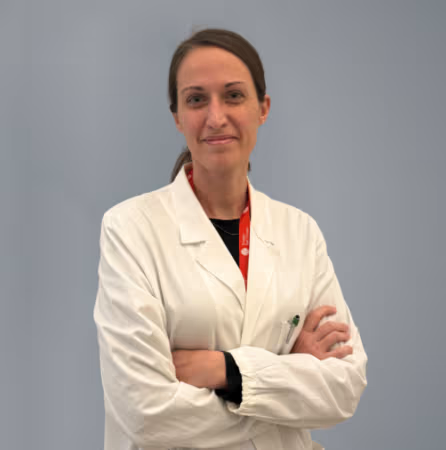
Dr. Giulia Berzero is a leading neurologist in Italy with over a decade of experience in neuro-oncology. She currently practices at the IRCCS Galeazzi-Sant'Ambrogio Hospital and the IRCCS San Raffaele Hospital in Milan. With an academic background from the prestigious University of Pavia and advanced training in Paris, Dr. Berzero is highly regarded for her expertise in diagnosing and treating primary brain tumors and neurological complications associated with systemic cancers. She is considered one of the top neurologists in Italy for her clinical precision and strong academic contributions in neuro-oncology.
Price upon request
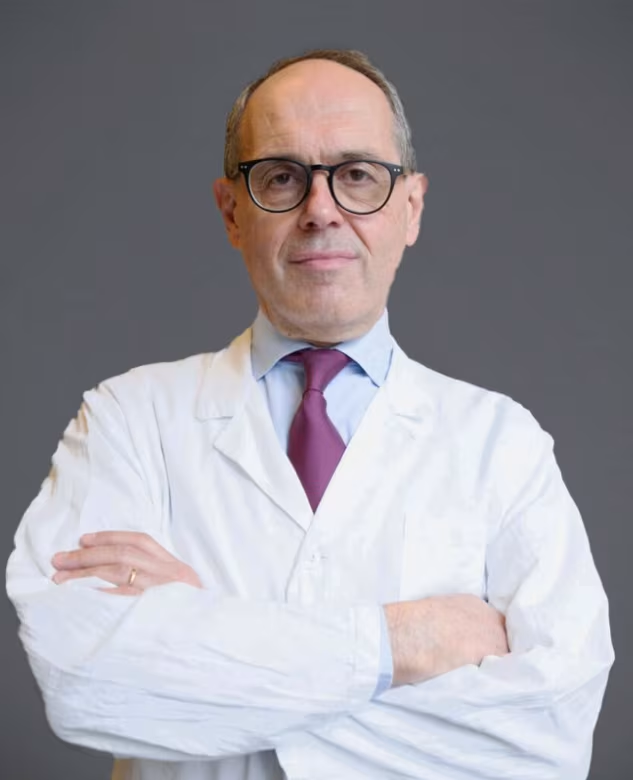
Prof. Stefano Cascinu is a leading oncologist in Italy, currently serving as the Director of the Strategic Research Program in Upper Gastrointestinal Oncology at IRCCS San Raffaele Hospital in Milan. He is also a Full Professor of Medicine at Vita-Salute San Raffaele University. With over three decades of clinical and academic experience, Prof. Cascinu is widely recognized as one of the top oncology specialists in Italy, especially in the treatment of gastrointestinal cancers including esophageal, gastric, pancreatic, colon, and biliary tract neoplasms. His significant contributions to cancer biology and personalized treatment approaches have placed him at the forefront of modern oncology.
Price upon request
Cancer remains one of the leading causes of illness and death worldwide. According to the World Health Organization (WHO), millions of new cancer cases are diagnosed each year, and the global demand for qualified oncologists continues to grow. As cancer detection improves and life expectancy increases, more patients are seeking comprehensive oncology care that includes accurate diagnosis, evidence-based treatment, and long-term follow-up.
Italy has a well-established healthcare system that combines public and private services under strict national regulation. Oncology care in Italy follows internationally recognized clinical guidelines, including those developed by European and global oncology societies. Treatment planning typically involves multidisciplinary tumor boards, where medical oncologists, radiation oncologists, surgeons, radiologists, and pathologists collaborate to determine individualized care strategies.
Italian oncology centers are often affiliated with major universities and tertiary referral hospitals, particularly in cities such as Milan, Rome, Bologna, and Turin. These institutions emphasize clinical research, adherence to standardized protocols, and careful patient monitoring. Treatment approaches may include chemotherapy, targeted therapy, immunotherapy, radiation therapy, or combined modalities, depending on tumor type and stage.
For international patients, Italy offers advanced infrastructure, transparent regulatory oversight, and access to modern cancer therapies. Costs can vary depending on the facility and treatment complexity, but consultation and treatment fees may be comparatively accessible relative to some other Western countries.
Oncology care in Italy generally emphasizes not only medical management but also psychological and supportive services, recognizing the emotional and physical impact of a cancer diagnosis. Patients are encouraged to discuss risks, expected benefits, and possible limitations of each treatment option with a licensed oncology specialist before making decisions.
Prof. Giampaolo Tortora, MD
Specialization: Medical Oncology
Years of Experience: 30+ years
Prof. Giampaolo Tortora is a medical oncologist associated with Humanitas Research Hospital. His clinical work focuses on gastrointestinal cancers, including pancreatic and colorectal malignancies. He has been involved in translational oncology research and multidisciplinary cancer management. His practice follows European oncology guidelines and evidence-based chemotherapy and targeted therapy protocols. He participates in tumor boards to support individualized treatment planning.
Prof. Armando Santoro, MD
Specialization: Medical Oncology and Hematologic Oncology
Years of Experience: 35+ years
Prof. Armando Santoro works at Humanitas Cancer Center. His clinical expertise includes lymphoma, breast cancer, and thoracic malignancies. He has contributed to clinical research in systemic therapies and immunotherapy. His approach emphasizes guideline-based care and careful assessment of treatment tolerance, especially in older patients. Multidisciplinary collaboration is central to his clinical practice.
Prof. Michele Maio, MD
Specialization: Immuno-oncology
Years of Experience: 25+ years
Prof. Michele Maio is affiliated with Azienda Ospedaliera Universitaria Senese. He is known for his work in melanoma and cancer immunotherapy. His clinical focus includes immune checkpoint inhibitors and research-driven oncology care. Treatment decisions are based on tumor biology, staging, and patient health status. He is involved in clinical trials and academic oncology education.
Prof. Francesco Cognetti, MD
Specialization: Medical Oncology
Years of Experience: 40+ years
Prof. Francesco Cognetti practices at Regina Elena National Cancer Institute. His areas of focus include breast cancer and solid tumors. He has participated in international oncology studies and emphasizes protocol-driven cancer treatment. His clinical care integrates systemic therapies with careful side-effect monitoring. Institutional tumor boards guide individualized treatment strategies.
Prof. Pierfranco Conte, MD
Specialization: Breast Oncology
Years of Experience: 30+ years
Prof. Pierfranco Conte is associated with Istituto Oncologico Veneto. He specializes in breast cancer management and systemic therapies. His work includes clinical trials and evidence-based treatment pathways. Patient assessment includes staging, biomarker evaluation, and risk stratification. Treatment plans are adapted according to tumor subtype and patient tolerance.
Prof. Carmine Pinto, MD
Specialization: Gastrointestinal Oncology
Years of Experience: 30+ years
Prof. Carmine Pinto works at Azienda USL IRCCS Reggio Emilia. His clinical focus includes colorectal cancer and targeted therapies. He is involved in national oncology networks and research initiatives. Care decisions are aligned with European Society for Medical Oncology (ESMO) guidelines. Multidisciplinary review supports comprehensive management.
Prof. Paolo Marchetti, MD
Specialization: Thoracic Oncology
Years of Experience: 30+ years
Prof. Paolo Marchetti is affiliated with Sapienza University of Rome. His expertise includes lung cancer and precision oncology. Molecular diagnostics and biomarker-driven therapy selection are central to his practice. He emphasizes balanced discussion of treatment benefits and potential adverse effects. Academic involvement supports evidence-based care delivery.
Prof. Saverio Cinieri, MD
Specialization: Medical Oncology
Years of Experience: 25+ years
Prof. Saverio Cinieri practices at Perrino Hospital. His areas of expertise include breast and gastrointestinal cancers. He is active in oncology associations and clinical protocol development. His approach prioritizes patient safety, toxicity management, and long-term follow-up planning. Treatment pathways are tailored to individual clinical profiles.
Doctor listings are provided for informational purposes only and do not represent rankings or endorsements.
| Consultation Type | Estimated Cost Range |
| Oncologists consultation | $180–$450 |
Note: Costs are approximate and provided for general guidance only. Prices vary by healthcare provider, hospital type, city, and consultation format (in-person or remote). Diagnostic tests, imaging, or additional evaluations are not included. Final fees are determined by the provider after an individual clinical assessment and may be affected by currency fluctuations.
Choosing an oncology specialist in another country can feel complex. You may be balancing medical needs, travel considerations, and emotional stress at the same time. Careful planning and clear information are important before making decisions about cancer treatment abroad.
➤ Availability of English-speaking medical staff and professional medical translators in many facilities
➤ Specialized clinics that manage a high volume of international patients
➤ Government regulations and oversight mechanisms supporting medical tourism safety and international patient protection
➤ Structured hospital documentation, patient-safety protocols, and informed consent practices
Foreign patients should also consider visa or entry requirements before traveling to Italy. For certain treatments, a postoperative or monitoring stay of 7–14 days may be necessary, depending on therapy type and recovery needs. While major medical centers often provide multilingual services, language barriers may exist outside large cities. Planning follow-up care with your local physician after returning home is essential for continuity and monitoring of treatment response.
Patients considering oncology care in Italy can share their medical reports with Best Clinic Abroad to receive coordinated support, guidance on consultation options, and a structured starting point for treatment planning. Best Clinic Abroad functions as a medical travel facilitator and does not provide medical treatment directly.
Do oncology centers in Italy provide visa assistance for international patients?
Many hospitals that work with international patients offer administrative support letters to help you apply for a medical visa. You are generally responsible for submitting documents to the Italian consulate in your country. Visa approval depends on national immigration policies, medical documentation, and the planned duration of stay. It is advisable to begin this process early to avoid delays.
Can I communicate in English with oncologists in Italy?
In major oncology centers, many physicians and medical staff speak English, especially in facilities that regularly treat international patients. You may also have access to professional medical interpreters if needed. Clear communication is important when discussing diagnosis, risks, treatment options, and possible side effects.
Is online consultation available before traveling to Italy?
Yes. You can arrange an online consultation through Best Clinic Abroad, which coordinates remote appointments with licensed oncologists in Italy. During this consultation, your medical reports and imaging can be reviewed. This allows you to better understand possible treatment pathways, required tests, and whether travel is medically appropriate before making arrangements.
How long should I plan to stay in Italy for cancer treatment?
The length of stay depends on the type of treatment recommended. Some therapies, such as chemotherapy cycles or radiation planning, may require multiple visits or a stay of several weeks. Your oncologist will explain the expected treatment schedule, monitoring requirements, and possible side effects. Follow-up planning with your local healthcare provider is also important.
Are cancer treatments in Italy based on international guidelines?
Yes. Oncology care in Italy typically follows European and international clinical guidelines. Treatment decisions are based on tumor type, stage, molecular characteristics, and your overall health status. Multidisciplinary teams often review each case to ensure that the proposed plan aligns with accepted medical standards.
Disclaimer
This content is provided for informational purposes only and does not constitute medical advice. Diagnosis and treatment decisions should be made in consultation with a licensed medical specialist based on individual clinical evaluation.


