









Bestclinicabroad
Connect with the world's Best Clinic and doctors at Best Clinic Abroad. Your well-being is our priority, with personalized care every step of the way.


Connect with the world's Best Clinic and doctors at Best Clinic Abroad. Your well-being is our priority, with personalized care every step of the way.


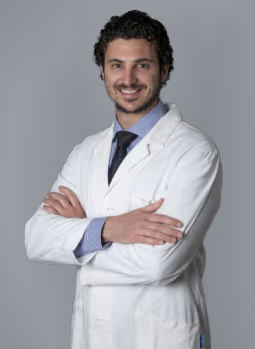
Dr. Francesco Amendola is a leading plastic and reconstructive surgeon in Italy, currently practicing at IRCCS Ospedale Galeazzi - Sant’Ambrogio and Policlinico San Pietro. He specializes in both reconstructive and post-bariatric plastic surgery and is known for his advanced expertise in microsurgery, lymphatic vessel procedures, and facial aesthetic techniques. As one of the best young plastic surgeons in Italy, Dr. Amendola has received international training in top medical centers across France, the United States, and Taiwan, with a strong focus on facial rejuvenation and facelift surgery.
Price upon request
According to global health data from the World Health Organization and international plastic surgery societies, reconstructive and aesthetic procedures continue to increase worldwide. Demand is driven by reconstructive needs after trauma or cancer, congenital conditions, and elective aesthetic concerns. As populations age and medical technologies advance, plastic surgery has become more specialized and safety-focused.
Plastic surgery in Italy is delivered within a regulated national healthcare framework overseen by the Italian Ministry of Health. Surgeons complete extensive medical education, followed by structured residency training in plastic, reconstructive, and aesthetic surgery. Board certification and hospital credentialing are required for clinical practice. Many Italian plastic surgeons work in tertiary or academic hospitals in cities such as Milan, Rome, Bologna, and Turin, where multidisciplinary collaboration is standard.
Italian plastic surgeons follow European and international clinical guidelines emphasizing patient safety, informed consent, realistic expectations, and long-term follow-up. Procedures may include reconstructive breast surgery, facial reconstruction, hand surgery, body contouring, and aesthetic facial procedures. Care plans are individualized, taking into account anatomy, medical history, and psychological readiness.
Italy’s healthcare infrastructure includes public and private facilities. Costs may be more accessible compared to some Western countries, particularly for self-funded international patients, although pricing varies by city and hospital type. Psychological evaluation and preoperative counseling are considered important parts of patient preparation, particularly in elective cosmetic procedures.
For patients considering plastic surgery in Italy, the focus is generally on evidence-based care, careful surgical planning, and balanced discussion of risks and limitations rather than on promises of specific outcomes.
Dr. Marco Klinger, MD
Specialization: Plastic and Reconstructive Surgery
Years of Experience: 20+ years
Dr. Marco Klinger practices at Humanitas Research Hospital in Milan. His clinical work includes breast reconstruction, post-oncologic reconstructive surgery, and aesthetic breast procedures. He is involved in academic teaching and research activities, reflecting ongoing engagement with evolving surgical techniques. His approach emphasizes individualized planning, tissue preservation, and careful risk discussion before surgery.
Dr. Matteo Bassetto, MD
Specialization: Reconstructive and Aesthetic Plastic Surgery
Years of Experience: 15+ years
Dr. Matteo Bassetto is affiliated with the University Hospital of Padua. His clinical focus includes complex reconstructive procedures, microsurgery, and post-traumatic reconstruction. He works within a multidisciplinary hospital setting where collaboration with oncologists and orthopedic surgeons is common. Treatment planning includes assessment of patient's health status and functional outcomes.
Dr. Pierluigi Tos, MD
Specialization: Reconstructive Microsurgery and Hand Surgery
Years of Experience: 20+ years
Dr. Pierluigi Tos practices at CTO Hospital in Turin. His clinical expertise includes reconstructive microsurgery, hand surgery, and nerve repair procedures. His work often involves trauma-related reconstruction and functional restoration. Clinical decision-making is based on anatomical assessment and long-term rehabilitation planning.
Dr. Giovanni Botti, MD
Specialization: Aesthetic Plastic Surgery
Years of Experience: 25+ years
Dr. Giovanni Botti is associated with Villa Bella Clinic in Salò. His practice focuses on aesthetic facial and body procedures. Preoperative consultation typically includes discussion of surgical limits, healing timelines, and scar management. He emphasizes informed consent and patient suitability evaluation before elective procedures.
Dr. Stefano Bruschi, MD
Specialization: Reconstructive Plastic Surgery
Years of Experience: 30+ years
Dr. Stefano Bruschi has worked in major Italian university hospitals including Careggi University Hospital in Florence. His clinical interests include reconstructive surgery following cancer treatment and congenital malformation correction. He has academic involvement in surgical training programs and adheres to structured hospital safety protocols.
Dr. Giacomo Berlucchi, MD
Specialization: Aesthetic and Reconstructive Surgery
Years of Experience: 20+ years
Dr. Giacomo Berlucchi practices in Brescia within a regulated clinical setting. His work includes facial aesthetic procedures and breast surgery. Clinical consultations focus on patient expectations, anatomical limitations, and postoperative recovery planning. Emphasis is placed on balanced decision-making.
Dr. Roy De Vita, MD
Specialization: Oncoplastic and Reconstructive Surgery
Years of Experience: 20+ years
Dr. Roy De Vita practices at Regina Elena National Cancer Institute in Rome. His expertise includes oncoplastic breast surgery and reconstruction after cancer treatment. He works within a multidisciplinary oncology team. Surgical planning incorporates oncologic safety principles and reconstructive considerations.
Dr. Carlo D’Aniello, MD
Specialization: Reconstructive and Aesthetic Surgery
Years of Experience: 25+ years
Dr. Carlo D’Aniello practices at the University of Naples Federico II. His clinical focus includes breast reconstruction and body contouring surgery. As part of a university hospital, he participates in resident education and clinical research. Patient safety, infection prevention, and postoperative monitoring are integral to his practice.
The above doctor listings are provided for informational purposes and do not represent rankings.
| Consultation Type | Estimated Cost Range |
| Plastic surgeon consultation | $250–$350 |
Note: Costs are approximate and provided for general guidance only. Prices vary by healthcare provider, hospital type, city, and consultation format (in-person or remote). Diagnostic tests, imaging, or additional evaluations are not included. Final fees are determined by the provider after an individual clinical assessment and may be affected by currency fluctuations.
Choosing a plastic surgeon abroad can feel complex. You may be balancing medical needs, safety considerations, travel logistics, and financial planning. It is important to review credentials carefully and understand how care is delivered in another healthcare system.
➤ Availability of English-speaking medical staff and professional medical translators in many facilities
➤ Specialized clinics that manage a high volume of international patients
➤ Government regulations and oversight mechanisms supporting medical tourism safety and international patient protection
➤ Structured hospital documentation, patient-safety protocols, and informed consent practices
Foreign patients should also consider visa or entry requirements before travel. For surgical procedures, a postoperative stay of approximately 7–14 days is often recommended, depending on the type of surgery and recovery progress. While English is widely spoken in major cities, language barriers may exist outside large urban centers. It is important to arrange follow-up care with a local physician after returning home to ensure appropriate healing and monitoring.
Patients considering plastic surgery care in Italy can share their medical reports with Best Clinic Abroad to receive coordinated support, guidance on consultation options, and a structured starting point for treatment planning. Best Clinic Abroad acts as a medical travel facilitator and does not provide medical treatment directly.
Do I need a medical visa for plastic surgery in Italy?
If you are traveling from outside the European Union, you may require a short-stay Schengen visa for medical purposes. The specific visa category depends on your nationality and planned duration of stay. Hospitals or clinics typically provide a medical invitation letter after confirming your consultation or procedure date. It is important to check requirements with the Italian consulate in your country before making travel arrangements.
Do plastic surgeons in Italy speak English?
Many plastic surgeons in major Italian cities such as Milan and Rome speak English, especially those who work with international patients. Larger hospitals and private clinics often provide professional medical interpreters when needed. However, outside major urban centers, English proficiency may vary, so it is helpful to confirm language support in advance.
Can I have an online consultation before traveling to Italy?
Yes, you can arrange an online consultation through Best Clinic Abroad. You may be asked to share medical records, photographs (if appropriate), and previous surgical history. An online consultation helps you understand whether you are a suitable candidate for a specific procedure and allows you to discuss potential risks, limitations, and recovery expectations before making travel decisions.
How long should I stay in Italy after plastic surgery?
The recommended stay depends on the procedure performed and your individual healing process. For many surgical procedures, a minimum stay of 7–14 days is commonly advised to allow for postoperative monitoring, suture removal if necessary, and early follow-up evaluation. Your surgeon will provide guidance based on your clinical condition.
Is plastic surgery in Italy regulated and safe?
Plastic surgery in Italy is regulated under national healthcare laws and professional medical licensing systems. Surgeons must complete accredited medical education and specialty training. Hospitals follow infection-control standards, anesthesia safety protocols, and informed-consent procedures. As with any surgery, risks such as bleeding, infection, scarring, or anesthesia-related complications exist, and outcomes vary between individuals. A detailed preoperative consultation is essential to understand these factors.
Disclaimer
This content is provided for informational purposes only and does not constitute medical advice. Diagnosis and treatment decisions should be made in consultation with a licensed medical specialist based on individual clinical evaluation.


