








Bestclinicabroad
Connect with the world's Best Clinic and doctors at Best Clinic Abroad. Your well-being is our priority, with personalized care every step of the way.


Connect with the world's Best Clinic and doctors at Best Clinic Abroad. Your well-being is our priority, with personalized care every step of the way.


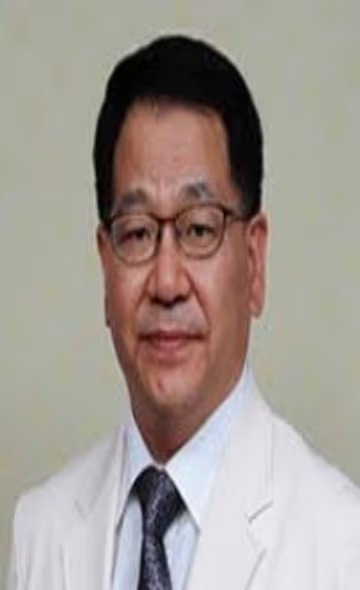
Dr. Kang See Woong is a leading ophthalmologist in South Korea, internationally recognized for his groundbreaking work in retinal disease management and macular surgery. Currently serving as a senior ophthalmologist at Samsung Medical Center and Professor at Sungkyunkwan University School of Medicine, Dr. Kang brings over 35 years of experience in clinical practice, research, and academic leadership. He has held prestigious positions such as Chairman of the Department of Ophthalmology at Samsung Medical Center and President of the Korean Retina Society. Dr. Kang’s training includes a highly regarded fellowship at the Bascom Palmer Eye Institute, University of Miami, further solidifying his status as a world-renowned retina specialist.
Price upon request
Ophthalmology is a critical branch of medicine focused on the diagnosis, treatment, and prevention of eye diseases and vision problems. As one of the most rapidly growing specialties globally, the demand for ophthalmic treatments continues to rise, with an increasing number of patients seeking advanced care options abroad. According to the World Health Organization (WHO), over 2.2 billion people worldwide suffer from vision impairment, and this number is expected to grow due to aging populations and chronic diseases. This has led many patients to explore medical tourism as a means of accessing high-quality eye care at more affordable prices.
South Korea has become a prominent destination for international patients seeking ophthalmologic treatments. The country is renowned for its advanced healthcare infrastructure, adherence to international clinical guidelines, and highly skilled ophthalmologists who offer both medical and surgical solutions for eye conditions. South Korean hospitals and clinics provide a personalized approach to treatment, ensuring that each patient’s individual needs and concerns are addressed. Emotional and psychological support is also a significant part of the patient care experience, especially when undergoing procedures that affect one's vision.
The South Korean government has invested heavily in medical tourism, ensuring that healthcare facilities maintain high standards of quality, patient safety, and transparency. Many hospitals are internationally accredited and work with foreign insurance providers to make treatments more accessible. Additionally, international patients can expect advanced technology, such as laser surgery, cataract procedures, and retinal treatments, delivered by highly trained specialists.
Overall, South Korea is one of the leading destinations for ophthalmic care, offering a combination of expert knowledge, modern treatments, and affordability, making it a highly attractive option for medical tourists worldwide.
The following is a list of top ophthalmologists in South Korea, known for their extensive experience, clinical focus, and international recognition.
Dr. Kim Ji-ho, MD
Specialization: Cataract and Refractive Surgery
Years of Experience: 18 years
Dr. Kim has dedicated his practice to cataract surgery and advanced refractive techniques such as LASIK and lens implants. He employs the latest technologies, including 3D imaging systems, to ensure precise results and faster recovery for his patients. He works at Seoul National University Hospital, a leading academic medical institution in the country.
Dr. Lee Jung-min, MD
Specialization: Retina and Vitreous Surgery
Years of Experience: 22 years
Dr. Lee specializes in retinal diseases and vitreoretinal surgery, particularly for patients suffering from macular degeneration and diabetic retinopathy. He is known for using cutting-edge treatments such as anti-VEGF injections and retinal laser therapy to manage complex cases. Dr. Lee practices at Samsung Medical Center, a top-tier tertiary hospital in South Korea.
Dr. Park Hye-young, MD
Specialization: Glaucoma and Ocular Surgery
Years of Experience: 15 years
Clinical Focus: Dr. Park’s work is focused on glaucoma treatments and minimally invasive surgeries that reduce intraocular pressure and preserve vision. She utilizes the latest technologies such as micro-incisional glaucoma surgery (MIGS) for better outcomes and faster recovery times. Dr. Park practices at Asan Medical Center, one of the largest hospitals in the country.
Dr. Choi Seung-won, MD
Specialization: Pediatric Ophthalmology
Years of Experience: 20 years
Dr. Choi specializes in pediatric ophthalmology, treating conditions like amblyopia, strabismus, and congenital cataracts in children. His approach combines compassionate care with the latest techniques in eye surgery and treatment, ensuring young patients receive the best possible care. He works at Seoul National University Hospital.
Dr. Oh Eun-ji, MD
Specialization: Cornea and External Diseases
Years of Experience: 16 years
Clinical Focus: Dr. Oh is an expert in corneal diseases and surgeries, including corneal transplants and LASIK. Her clinical approach focuses on personalized care, ensuring that each patient’s unique needs are met, especially for those with complex corneal conditions. Dr. Oh works at Seoul National University Hospital, which is renowned for its research and treatment options.
| Consultation | Cost |
| Consultation with Ophthalmologists | $200 - $300 |
Note: Costs are approximate and provided for general guidance only. Prices vary depending on the healthcare provider, hospital type, city, and consultation format (in-person or remote). Diagnostic tests, imaging, or additional evaluations are not included. Final fees are determined by the provider after an individual clinical assessment and may be affected by currency fluctuations.
Choosing a specialist abroad can be a daunting process, but many patients turn to South Korea due to its reputation for high-quality healthcare. The country’s ophthalmic specialists are renowned for their expertise, and the medical facilities are equipped with cutting-edge technology to ensure optimal treatment. Patients can expect a high standard of care, ensuring their safety and well-being throughout their treatment journey.
➤ Specialist training pathways and board certification standards are internationally recognized
➤ Use of evidence-based clinical guidelines and modern diagnostics, ensuring the highest level of care
➤ Multidisciplinary care environments and regulated practice settings focused on patient-centered care
➤ Emphasis on patient safety, documentation, and informed consent to enhance the treatment experience
Patients considering ophthalmic care in South Korea can share their medical reports with Best Clinic Abroad to receive coordinated support, guidance on consultation options, and a clear starting point for treatment planning.
What are the most popular procedures for international patients?
The most popular ophthalmic procedures sought by international patients in South Korea include LASIK for vision correction, cataract surgery, retinal treatments, and glaucoma surgeries. South Korea is also a leading destination for complex corneal transplants and pediatric eye care.
Are consultations available in English?
Yes, many South Korean hospitals and clinics offer consultations in English. Additionally, some facilities provide professional translators to assist international patients, ensuring clear communication and understanding throughout the treatment process.
How long should I plan to stay in South Korea after surgery?
The duration of stay in South Korea after ophthalmic surgery depends on the specific procedure. For minor surgeries, such as LASIK, patients may only need to stay for 3–7 days for follow-up care. For more complex surgeries, such as retinal or corneal surgery, a stay of 7–14 days is typically required to ensure proper recovery and monitoring.
What documents are needed for medical treatment abroad in South Korea?
When traveling for medical treatment in South Korea, you will need a valid passport, a medical history report (including previous eye treatments and prescriptions), and a referral letter from your home country doctor. You may also need to provide medical test results, such as blood tests or imaging, depending on your procedure. Be sure to check with your healthcare provider and embassy for any specific requirements.
Disclaimer
This content is provided for informational purposes only and does not constitute medical advice. Diagnosis and treatment decisions should be made in consultation with a licensed medical specialist based on individual clinical evaluation.


