









Bestclinicabroad
Connect with the world's Best Clinic and doctors at Best Clinic Abroad. Your well-being is our priority, with personalized care every step of the way.


Connect with the world's Best Clinic and doctors at Best Clinic Abroad. Your well-being is our priority, with personalized care every step of the way.



Prof. Dr. Halil Burç is a leading orthopedic and spine surgeon in Turkey, with over 32 years of extensive clinical and academic experience. He specializes in complex spine conditions, prosthetic surgeries, sports injuries, and orthopedic trauma. He currently serves at Hisar Intercontinental Hospital in Istanbul and lectures in the Orthosis and Prosthesis Program at Beykent University. Recognized as one of the top orthopedic doctors in Turkey, Dr. Halil Burç is renowned for his expertise in scoliosis, kyphosis, joint degeneration, and lower extremity deformities using the Ilizarov technique.
Price upon request
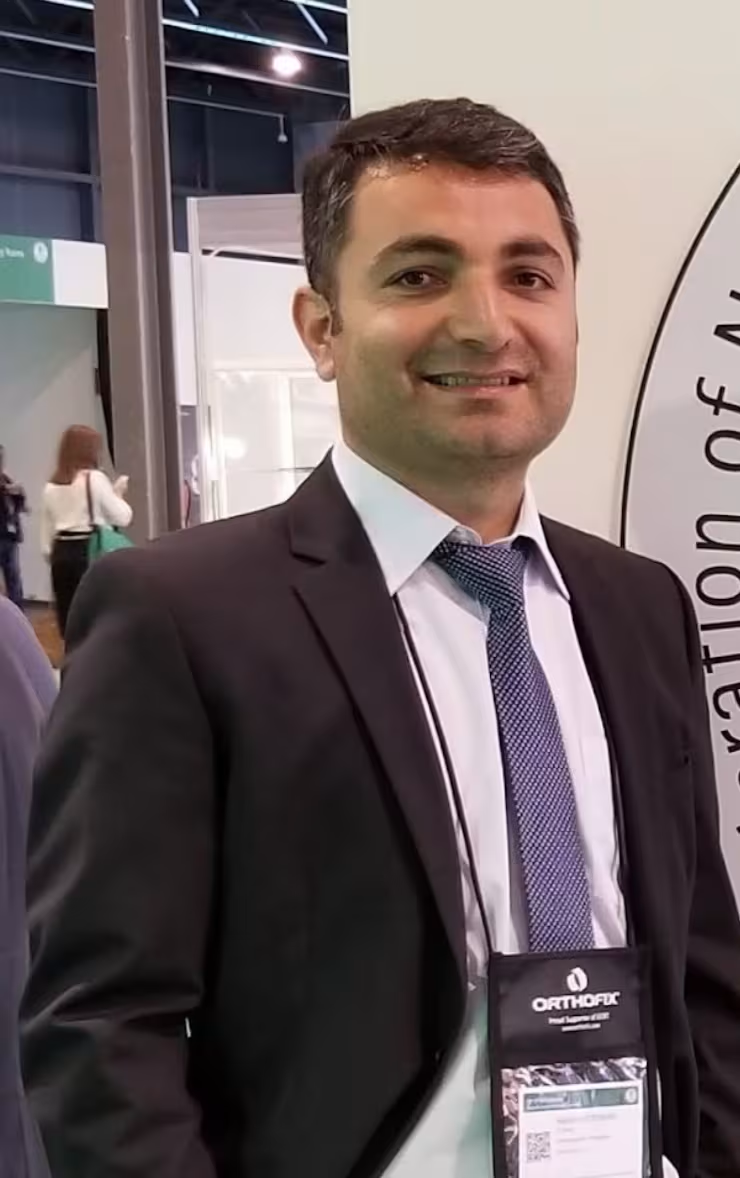
Assoc. Prof. Dr. Hanifi Ucpunar is a top orthopedic surgeon in Turkey with over 13 years of experience specializing in pediatric and adult spine surgery, robotic-assisted orthopedic procedures, and joint replacements. He is known for his dedication to patient-centered care and with that same attitude he has performed countless successful spine and joint surgeries making him a leading orthopedic and spine surgeon in Turkey. His outstanding contributions to orthopedic science are backed by more than 40 publications in international journals and recognition from several prestigious medical congresses. Currently practicing at the Turan & Turan Health Group in Bursa, Dr. Ucpunar continues to deliver innovative treatments for complex musculoskeletal conditions using the latest techniques in robotic-assisted surgery.
Price upon request
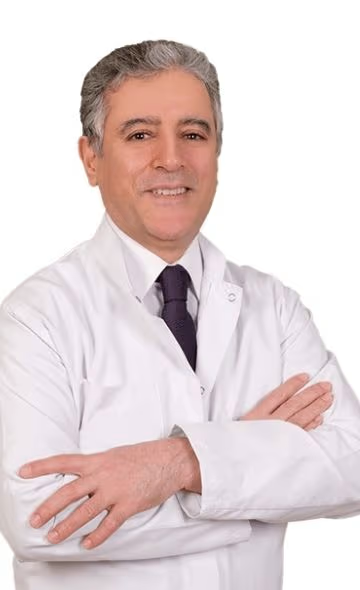
Dr. Siyavus Muhammedrezai is a leading neurosurgeon in Turkey with more than two decades of experience in treating brain and spine disorders. Dr. Siyavus has also gained valuable international experience at the Hannover Nordstadt Hospital in Germany. Currently, he practices at Acıbadem International Hospital, where he offers expert care in brain injury, disc herniation, and neurological trauma. A respected member of Turkish and international neurosurgery societies, Dr. Muhammedrezai is widely regarded for his commitment to advancing neurosurgical techniques and providing patient-centered care.
Price upon request
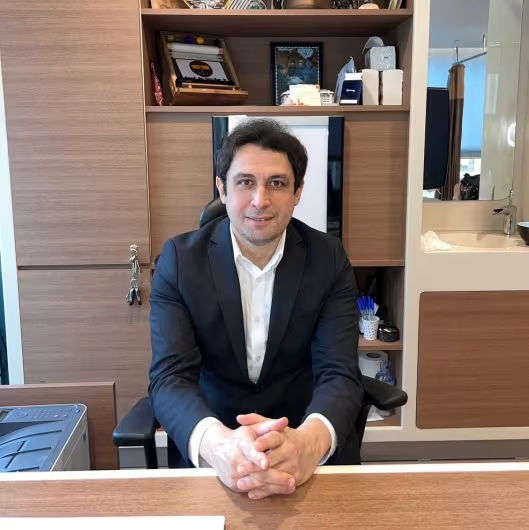
Prof. Dr. Serdar Baki Albayrak is a world-renowned neurosurgeon in Turkey, recognized for his exceptional skill and pioneering work in brain and spinal surgeries. With over two decades of experience, he is among the top neurosurgeons in Turkey, known for performing over 5000 complex neurosurgical procedures. His global training journey spans prestigious institutions like Harvard University and the University of Helsinki, making him a sought-after expert in brain tumor surgery, cerebrovascular conditions, and functional neurosurgery. As a leading neurosurgeon in Turkey, Dr. Serdar Baki Albayrak holds licenses to practice across Europe and the United States, and has treated patients from more than 50 countries. He currently practices at VM Medical Park Florya Hospital, where he combines state-of-the-art techniques with a compassionate, patient-centered approach.
Price upon request
Spinal disorders are a major source of pain, disability, and reduced quality of life worldwide. According to the World Health Organization, musculoskeletal and neurological spine-related conditions, including low back pain, spinal degeneration, trauma, and deformities, are among the leading causes of years lived with disability globally. As populations age and lifestyles change, the demand for both conservative spine care and complex spinal surgery continues to increase.
Spine surgery is a highly specialized field that sits at the intersection of orthopedics and neurosurgery. In Turkey, spine surgeons typically complete formal training in either orthopedics and traumatology or neurosurgery, followed by focused clinical experience in spinal disorders and surgical techniques. Medical education pathways include six years of medical school and five to six years of residency training. Professional licensing, hospital standards, and ongoing clinical oversight are regulated by the Turkish Ministry of Health, which establishes requirements for surgical safety, infection control, and clinical governance.
Spine care in Turkey is delivered through university hospitals, large city hospitals, and regulated private institutions. Many tertiary centers are equipped with advanced spinal imaging, intraoperative neuromonitoring, minimally invasive surgical tools, and specialized intensive care units. Clinical decision-making commonly follows internationally recognized spine care and surgical guidelines, emphasizing appropriate patient selection, stepwise treatment, and shared decision-making. Some hospitals also hold accreditation from Joint Commission International, reflecting adherence to established quality and patient safety frameworks.
From an international patient perspective, Turkey is often considered because of its developed surgical infrastructure and relatively accessible costs compared with some high-income countries. These differences are influenced by healthcare system economics rather than reduced professional standards. Importantly, spine surgery is never a one-size-fits-all solution. Treatment planning emphasizes individualized evaluation, as surgical risk, recovery, and outcomes vary depending on diagnosis, age, overall health, bone quality, and rehabilitation participation.
Spine conditions can have a profound emotional and psychological impact, particularly when pain or mobility limitations affect daily life. In many Turkish hospitals, spine surgeons work within multidisciplinary teams that include neurologists, pain specialists, physiotherapists, rehabilitation physicians, and nursing staff. This collaborative approach supports both technical surgical care and the broader physical and emotional needs of patients. Overall, Turkey offers a structured and regulated environment for spine surgery when patients engage in careful consultation and informed decision-making.
Prof. Dr. Ahmet Alanay, MD
Specialization: Orthopedic Spine Surgery
Years of Experience: Over 25 years
His clinical focus includes spinal deformities, scoliosis, and complex spine reconstruction. He works at Acıbadem Maslak Hospital in Istanbul, a multispecialty tertiary hospital with advanced spinal imaging, neuromonitoring, and postoperative rehabilitation services.
Prof. Dr. Memduh Kaymaz, MD
Specialization: Neurosurgery and Spine Surgery
Years of Experience: Over 25 years
His evidence-based practice includes degenerative spine disease, spinal tumors, and minimally invasive spine procedures. He practices at Ankara City Hospital, a large tertiary care center with dedicated neurosurgical and spinal intensive care units.
Assoc. Prof. Dr. Ersoy Kocabıçak, MD
Specialization: Functional Neurosurgery and Spine Surgery
Years of Experience: 15 years
His clinical interests include spinal disorders, neuromodulation, and advanced surgical planning. He works at Koç University Hospital in Istanbul, where spine cases are reviewed within multidisciplinary teams and managed using modern surgical technologies.
Dr. Murat Bozkurt, MD
Specialization: Orthopedic Spine and Trauma Surgery
Years of Experience: 20 years
His practice focuses on spinal trauma, degenerative spine conditions, and stabilization procedures. He works at Ankara City Hospital, collaborating closely with neurosurgery and rehabilitation specialists to support comprehensive spine care.
Doctor listings are provided for informational purposes only and do not represent rankings or endorsements.
| Consultation Type | Estimated Cost Range (USD) |
| spine surgeon consultation | 350-400 |
Note: Costs are approximate and provided for general guidance only. Prices vary depending on the healthcare provider, hospital type, city, and consultation format (in-person or remote). Diagnostic tests, imaging, or additional evaluations are not included. Final fees are determined by the provider after an individual clinical assessment and may be affected by currency fluctuations.
Deciding to seek spine care or surgery in another country can feel especially complex, given the potential risks, recovery time, and long-term impact on mobility and quality of life. A careful, informed approach helps ensure decisions are based on clinical need and realistic expectations.
➤ Clearly defined training pathways in orthopedic and neurosurgical spine care with national licensing oversight
➤ Use of evidence-based spine surgery guidelines, advanced imaging, and intraoperative safety technologies
➤ Multidisciplinary care environments including spine surgery, neurology, pain management, and rehabilitation services
➤ Strong emphasis on patient safety, detailed documentation, informed consent, and discussion of risks and limitations
Patients considering spine surgery in Turkey may choose to share their medical reports with Best Clinic Abroad to receive coordinated support, guidance on consultation options, and a clear starting point for structured treatment planning with licensed spine specialists.
What is the safest spine surgery?
There is no single spine surgery that can be labeled as the safest for everyone. Safety depends on the type of spinal condition, the surgical approach, your overall health, and the experience of the surgical team. Less invasive procedures may carry lower risk for some patients, but your spine surgeon will assess which option is most appropriate for your situation.
What is the hardest spine surgery?
Complex spine surgeries, such as those involving severe deformities, spinal tumors, or revision surgery after previous operations, are often considered technically demanding. Difficulty depends on anatomical factors, disease extent, and patient health rather than the procedure name alone. These cases typically require experienced surgical teams and multidisciplinary planning.
Is there an age limit for spine surgery?
There is no fixed age limit for spine surgery. Decisions are based on overall health, functional status, bone quality, and the potential benefits versus risks of surgery. Older adults can sometimes undergo spine surgery safely with appropriate evaluation, while younger patients may also face limitations depending on their condition.
Disclaimer
“This content is provided for informational purposes only and does not constitute medical advice. Diagnosis and treatment decisions should be made in consultation with a licensed medical specialist based on individual clinical evaluation.”


