








Bestclinicabroad
Connect with the world's Best Clinic and doctors at Best Clinic Abroad. Your well-being is our priority, with personalized care every step of the way.


Connect with the world's Best Clinic and doctors at Best Clinic Abroad. Your well-being is our priority, with personalized care every step of the way.



The Ophthalmology Department at Bright Eye Clinic in Seoul is a specialized center dedicated exclusively to advanced eye care, refractive surgery, and lens-based vision correction. As a focused ophthalmic institution, the clinic provides a comprehensive range of diagnostic, preventive, and surgical services designed to improve visual clarity and support long-term ocular health. The department addresses refractive errors such as myopia, hyperopia, and astigmatism, as well as age-related vision changes including presbyopia and cataracts. With extensive experience in laser vision correction and implantable lens procedures, the medical team emphasizes accurate diagnosis, individualized surgical planning, and structured follow-up care. Each treatment plan is based on detailed corneal mapping, retinal evaluation, and functional vision assessment to ensure suitability and safety.
Equipped with Clean Room–standard operating theaters, ZEISS VisuMax femtosecond laser systems, advanced excimer platforms, high-resolution imaging tools, and precision intraocular lens calculation technology, the department maintains high standards of surgical accuracy and patient safety. Board-certified ophthalmologists collaborate with trained optometrists, anesthetic professionals, and nursing teams to deliver coordinated care across all stages of treatment. Comprehensive recovery programs include scheduled postoperative examinations, corneal healing assessment, intraocular pressure monitoring, and long-term tracking of visual stability. With structured international patient services and multilingual coordination, the department provides a supportive and transparent treatment environment for both local and overseas patients seeking reliable ophthalmic care.
Key Services & Procedures
✔ Laser Vision Correction – SMILE Pro, SMILE LASIK, LASIK, LASEK, and customized corneal refractive procedures
✔ Implantable Collamer Lens (ICL) – Lens-based refractive correction for patients unsuitable for corneal laser surgery
✔ Cataract Surgery – Modern phacoemulsification with monofocal, multifocal, toric, or extended depth-of-focus intraocular lenses
✔ Presbyopia Correction – Lens replacement procedures designed to improve near and distance vision balance
✔ Comprehensive Eye Examinations – Full ocular diagnostics including corneal mapping, retinal imaging, glaucoma screening, and tear-film analysis
✔ Dry Eye Management – Diagnostic evaluation and medical treatment for ocular surface disorders
✔ Retinal & Optic Nerve Evaluation – Early detection and monitoring of retinal diseases and optic nerve conditions
✔ Preventive Ophthalmic Care – Routine monitoring for patients with systemic health risks such as diabetes or hypertension
Minimally Invasive & Advanced Techniques
✔ Femtosecond Laser Technology – Precision corneal reshaping with minimal tissue disruption
✔ Wavefront-Guided Treatment Planning – Customized correction based on higher-order aberration analysis
✔ High-Resolution Corneal Tomography – Detailed mapping for safe refractive surgery candidacy
✔ Advanced Intraocular Lens Calculation Systems – Enhanced accuracy in cataract and presbyopia surgery planning
✔ Micro-Incision Lens Surgery – Minimally invasive lens implantation techniques designed to reduce recovery time
✔ Clean Room Surgical Environment – Controlled filtration systems to minimize contamination and infection risks
✔ Digital Diagnostic Platforms – Integrated imaging and surgical planning systems for precise outcome prediction
The Ophthalmology Department at Bright Eye Clinic delivers specialized eye care supported by modern laser platforms, advanced diagnostic systems, and a structured patient-centered approach. Its commitment to precision, safety, and transparent communication has positioned the clinic as a recognized destination for patients seeking dependable refractive surgery and comprehensive ophthalmic care in South Korea.
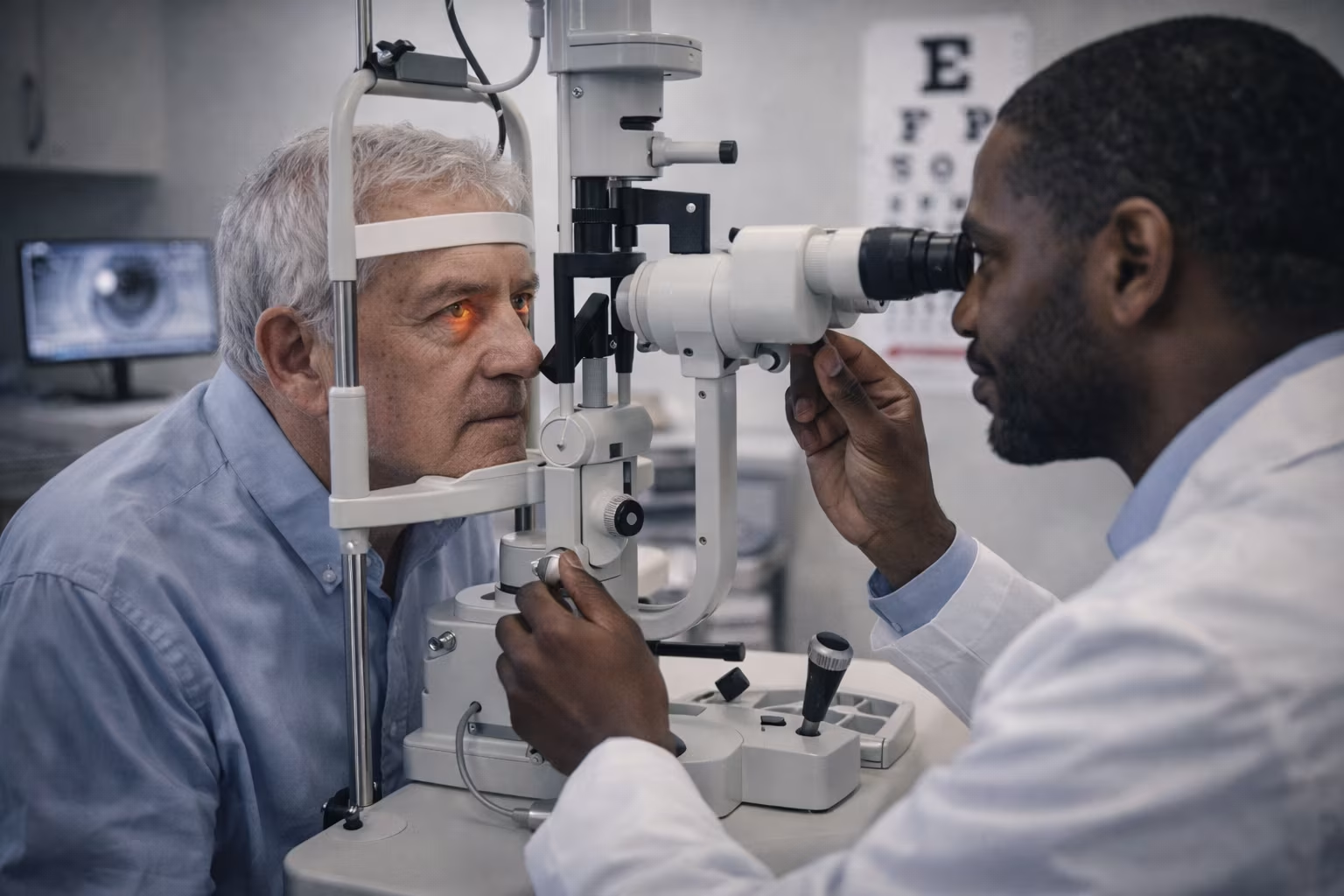
The Comprehensive Ophthalmology and Eye Health Department provides preventive, diagnostic, and therapeutic care for a wide range of ocular conditions. Services include glaucoma screening, optic nerve evaluation, retinal imaging, macular assessment, corneal disease diagnostics, dry eye analysis, and routine visual examinations. Advanced imaging technologies allow early detection of diabetic retinopathy, macular degeneration, retinal tears, and optic neuropathies. Detailed corneal and tear-film assessments support accurate diagnosis of ocular surface disorders that may impact vision quality or surgical candidacy.
Patients receive individualized treatment plans based on clinical findings and systemic health factors. Management strategies may include prescription eye drops, lifestyle modifications, nutritional recommendations, or referral for surgical intervention when indicated. The department emphasizes preventive care for patients with chronic systemic conditions such as diabetes or hypertension that can affect ocular structures. Clear communication regarding diagnosis, disease progression, and treatment expectations supports informed patient decisions. Structured follow-up programs monitor the response to therapy and detect early changes that require intervention. By integrating advanced diagnostics with long-term monitoring and patient education, the department supports sustained vision preservation and early management of potentially sight-threatening eye diseases.