








Bestclinicabroad
Connect with the world's Best Clinic and doctors at Best Clinic Abroad. Your well-being is our priority, with personalized care every step of the way.


Connect with the world's Best Clinic and doctors at Best Clinic Abroad. Your well-being is our priority, with personalized care every step of the way.



 South Korea, Seoul, 29, Saemunan-ro, Jongno-gu
Founded in 1968 in Seoul, Kangbuk Samsung Hospital (KBSMC) is among South Korea’s best hospitals, offering advanced medical technology and comprehensive patient care. Kangbuk Samsung Hospital focuses on medical research, public health initiatives, and patient-centered care, ensuring top-quality services for both local and international patients. Over the years, Kangbuk Samsung Hospital's highly skilled specialized medical teams have continuously worked to combat various diseases through innovative healthcare solutions, contributing to a healthier society.
Key Aspects of Kangbuk Samsung Hospital
Comprehensive Medical Services
Excellence in Cancer Treatment
Smart Hospital with Advanced Medical Technology
Commitment to Patient-Centered Care & International Patients
Healthcare Through Social Responsibility
With a strong focus on medical research, innovative healthcare solutions, and patient-centered care, Kangbuk Samsung Hospital remains a top healthcare provider in South Korea. Combining advanced medical technology with a multidisciplinary approach, KBSMC continues to deliver high-quality treatments while ensuring the best possible outcomes for all patients.


 South Korea, Seoul, 892 Dongnam-ro, Sangil-dong, Gangdong-gu
Established in 1971, Kyung Hee University Hospital is one of South Korea's premier medical centers, renowned for its aim of fostering a disease-free environment. The hospital uniquely combines Eastern and Western medical approaches, making it the only center globally to integrate these methods with dental care. With its advanced infrastructure, Kyung Hee University Hospital handles over a million patients annually, including more than 1,000 international visitors.
Advanced Technology & Facilities
Key Services
Affiliated with the Korean Ministry of Health and the World Health Organization, Kyung Hee University Hospital combines advanced technology, skilled professionals, and outstanding care, solidifying its reputation as a leading global medical center.
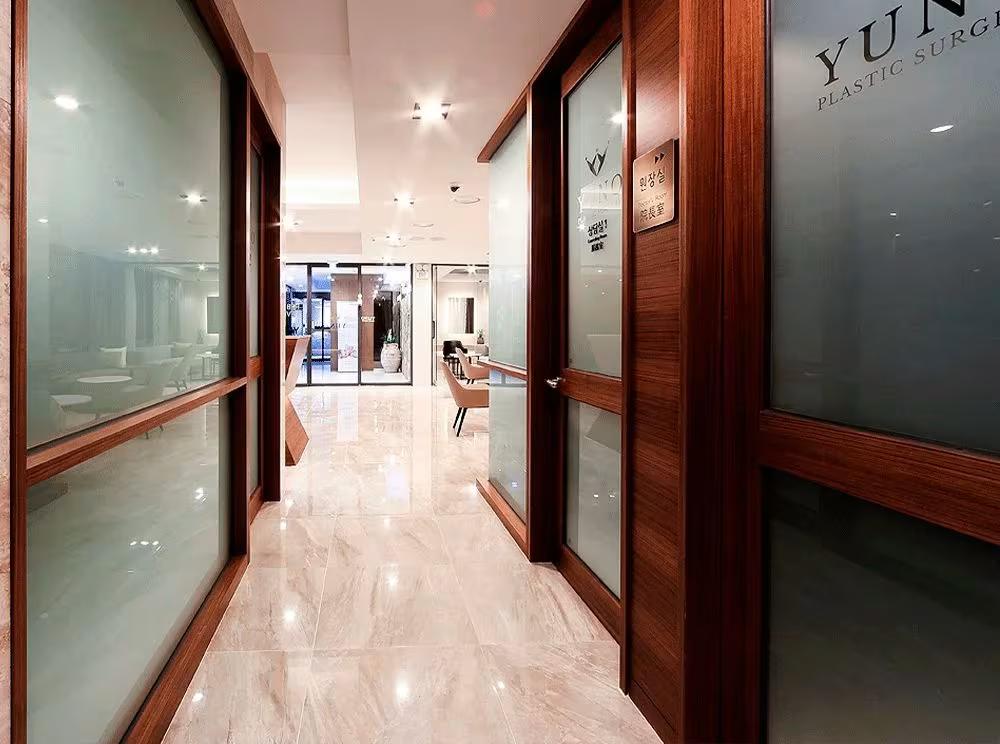 South Korea, Seoul, Seocho-gu, Seocho-dong, 1303-37 W타
Yuno Plastic Surgery Clinic, located in Seoul, South Korea, is a well-known destination for individuals seeking aesthetic surgeries to enhance their facial features. Recognized as one of the best plastic surgery clinics in Seoul, Yuno Plastic Surgery Clinic specializes in facial contouring surgery, particularly procedures involving the eyes, nose, and chin. With a team of board-certified plastic surgeons in Seoul, Yuno Plastic Surgery Clinic is dedicated to delivering precise and natural-looking plastic surgery results while maintaining the highest standards of patient care.
Key Features of Yuno Clinic
By combining expertise, innovation, and a patient-focused plastic surgery experience, Yuno Plastic Surgery Clinic remains a trusted name in Korean medical tourism for plastic surgery. Yuno Plastic Surgery Clinic provides safe and effective cosmetic procedures, helping patients achieve natural beauty with a high level of satisfaction.
 South Korea, Seoul, 102 Heukseok-ro, Heukseok-dong, Dongjak-gu, Seoul, South Korea
Chung-Ang University Hospital, located in Seoul, South Korea, is a world-class healthcare provider renowned for its multidisciplinary approach and advanced medical services. Established in 1968, the hospital is funded by the Doosan Corporation, enabling continuous upgrades in technology, research, and patient care. Spanning over 78,965.53㎡, it features two ultra-modern buildings and offers 23 specialized departments, including cardiology, gastroenterology, and spinal surgery.
Advanced Technology & Facilities
Key Services
Chung-Ang University Hospital continues to be a pioneer in healthcare, combining advanced technology, a highly skilled team, and patient-centric services. Its reputation as a leading medical institution in South Korea is solidified by its innovative treatment approaches and outstanding patient outcomes.

South Korea is widely recognized for advanced dentistry supported by a highly regulated healthcare system, strong academic training, and modern clinical infrastructure. Leading dental clinics in the country are typically staffed by board-certified dentists with subspecialty training in prosthodontics, implantology, orthodontics, periodontics, and oral and maxillofacial surgery, often affiliated with university hospitals or teaching institutions. Many facilities adhere to international quality frameworks such as ISO-certified clinical processes and, in select hospital-based centers, Joint Commission International (JCI) standards, reflecting established protocols for infection control, anesthesia safety, diagnostics, and patient data protection. The scope of care commonly includes preventive dentistry, restorative treatments, dental implants, digital prosthetics, orthodontic care, and complex oral rehabilitation, delivered within facilities equipped with advanced imaging, CAD/CAM laboratories, and multidisciplinary consultation models that support evidence-based treatment planning.
For international patients, South Korea’s dental clinics are differentiated by transparent pricing structures, predictable treatment pathways, and access to contemporary dental technologies that are integrated into routine care rather than positioned as premium add-ons. Treatment costs are generally competitive compared with many Western countries while maintaining compliance with national medical regulations and professional oversight, which contributes to consistent clinical standards and patient safety. Established medical tourism clinics offer coordinated services such as pre-arrival case review, multilingual clinical staff, informed consent processes aligned with global norms, and structured post-treatment follow-up to support continuity of care after patients return home. This emphasis on accessibility, technology-enabled precision, and long-term outcomes has positioned South Korea as a trusted destination for dental care among international patients seeking reliable, patient-centered treatment within a well-regulated healthcare environment.
South Korea has rapidly adopted the latest innovations in modern dentistry, combining advanced technology with evidence-based clinical practice. Dental clinics strictly follow international guidelines for infection control, radiology safety, anesthesia, and post-treatment monitoring. Many dentists are trained at globally respected universities and continuously update their skills through international conferences and continuing medical education (CME).
Advanced Dental Treatment in South Korea is supported by technologies such as digital smile design, 3D CT imaging, CAD/CAM systems, laser dentistry, and computer-guided implant surgery. These tools allow for precise diagnosis, minimally invasive procedures, and predictable outcomes with reduced recovery time. Patients receive personalized treatment plans based on oral health status, medical history, and long-term goals. Clinics also prioritize informed consent, post-procedure follow-up, and preventive education, ensuring safe and sustainable results. With its strong reputation for accuracy, innovation, and patient care, South Korea stands out as a premier destination for advanced Dental Treatment.
A long-term solution for replacing missing teeth using titanium or zirconia implants. In South Korea, clinics utilize 3D CT scans and computer-guided implant placement to enhance accuracy and safety. The procedure restores chewing function, speech clarity, and jawbone health while offering natural-looking results.
Focuses on correcting misaligned teeth and bite issues using braces or clear aligners. South Korean dental clinics provide advanced orthodontic planning with digital simulations and customized appliances. Benefits include improved oral function, easier hygiene maintenance, and enhanced facial balance.
Includes procedures such as teeth whitening, veneers, and smile design to enhance dental aesthetics. Clinics in South Korea use minimally invasive techniques, high-quality ceramic materials, and digital smile analysis. Results include brighter, more symmetrical smiles with a natural appearance.
A procedure to treat infected or damaged tooth pulp while preserving the natural tooth structure. South Korean dentists use modern rotary instruments, digital X-rays, and enhanced sterilization protocols. This treatment relieves pain, prevents further infection, and restores tooth function safely.
A comprehensive dental treatment plan combining restorative, prosthetic, and cosmetic procedures. In South Korea, multidisciplinary dental teams carefully assess bite alignment, jaw health, and aesthetics. The result is improved oral function, comfort, and long-term dental stability.
Accreditations:
Joint Commission International (JCI); oversight by the Ministry of Health and Welfare of South Korea; university teaching hospital affiliated with the University of Ulsan College of Medicine.
Specializations:
Comprehensive dental and oral healthcare delivered within a tertiary-care framework, including oral and maxillofacial surgery, dental implantology, complex prosthodontics, oral pathology, jaw reconstruction, and multidisciplinary care for patients with systemic medical conditions requiring coordinated dental treatment.
Accreditations:
Joint Commission International (JCI); national public university hospital governance; regulated under South Korean national healthcare standards; teaching hospital affiliated with Seoul National University College of Medicine.
Specializations:
Advanced dental and oral-maxillofacial services, including surgical dentistry, orthodontics, periodontology, implant dentistry, treatment of congenital and acquired jaw disorders, oral oncology support, and interdisciplinary care with medical and surgical departments.
Accreditations:
Joint Commission International (JCI); teaching hospital under Yonsei University College of Medicine; regulated by South Korean national healthcare authorities.
Specializations:
Evidence-based dental care covering oral and maxillofacial surgery, implant rehabilitation, complex restorative dentistry, periodontal treatment, and dental management for medically compromised patients within a university hospital environment.
Accreditations:
Joint Commission International (JCI), affiliated with Sungkyunkwan University School of Medicine, is regulated by South Korea’s Ministry of Health and Welfare.
Specializations:
Advanced dental diagnostics and treatment, including implant surgery, digital dentistry, oral surgery, prosthodontics, and multidisciplinary dental care integrated with oncology, endocrinology, and internal medicine services when required.
Accreditations:
Licensed and regulated by South Korean healthcare authorities; university-affiliated specialty dental hospital operating under national medical standards.
Specializations:
Comprehensive dental care with dedicated departments for implant dentistry, orthodontics, prosthodontics, periodontology, pediatric dentistry, and oral-maxillofacial surgery, serving both domestic and international patients within an academic clinical setting.
| Procedure | Cost |
| Tooth Extraction | $50 - $100 |
| Composite Filling (per tooth) | $50 - $100 |
| Root Canal Treatment (per tooth) | $120 - $180 |
| Dental Crown (per tooth) | $200 - $300 |
| Porcelain Veneer (per tooth) | $200 - $300 |
| Full Set of Veneers | $7,000 - $9,000 |
| Dental Bridge (3 units) | $500 - $700 |
| Dental Implant | $1,100 - $1,400 |
| Teeth Whitening | $200 - $300 |
| Invisalign | $2,300 - $2,700 |
| Orthodontic Braces | $1,800 - $2,200 |
| Sinus Lift Surgery | $1,300 - $1,700 |
| Bone Grafting (per graft) | $900 - $1,100 |
| Gum Contouring (per session) | $300 - $400 |
| Dentures | $900 - $1,100 |
| Full Mouth Restoration | $9,000 - $11,000 |
Note: The prices listed above are approximate, non-binding estimates provided for general informational purposes only. Actual treatment costs may vary based on individual clinical requirements, diagnostic findings, treatment complexity, materials selected, dentist expertise, facility type, and duration of care. Final pricing is determined only after a professional dental examination by a licensed dentist or accredited dental hospital.
South Korea is internationally recognized as a regulated destination for dental treatment, supported by a structured healthcare system, licensed dental facilities, and formally trained dental professionals. Dental hospitals and clinics operate under national healthcare regulations, with dentists completing accredited education and specialty training in fields such as oral surgery, prosthodontics, orthodontics, and implant dentistry. This regulatory framework supports patient safety and informed medical decision-making.
Dental specialists in South Korea undergo extensive academic education, clinical residency programs, and ongoing professional development. Many practitioners have international training or exposure, contributing to familiarity with global dental standards and diverse patient needs. Treatment is commonly delivered in multidisciplinary environments, allowing collaboration with medical specialists when dental care intersects with broader health conditions.
Healthcare facilities offering dental treatment are equipped with modern diagnostic and treatment technologies, including digital imaging, 3D dental scanning, computer-guided implant systems, and sterilization protocols aligned with internationally accepted infection-control standards. These systems support accurate diagnosis, procedural planning, and postoperative care without implying guaranteed outcomes.
From a medical tourism perspective, South Korea is often considered cost-effective compared with several Western countries. Depending on the type of dental procedure and facility, international patients may observe estimated cost differences of approximately 40–60%, reflecting system-level efficiencies rather than differences in clinical quality. Transparent treatment plans and itemized cost estimates support financial clarity.
Shorter waiting times for dental consultations and elective procedures are another practical advantage. Coordinated scheduling and international patient departments allow timely access to diagnostics, treatment planning, and care delivery, which is particularly relevant for patients traveling abroad for dental treatment.
Although South Korea follows its own national healthcare regulations rather than EU frameworks, many dental hospitals align their operational standards with internationally recognized patient safety principles. Emphasis on informed consent, ethical treatment planning, licensed providers, and structured follow-up supports responsible medical tourism in South Korea.
Arranging dental care in another country can be challenging, especially when trying to understand clinics, procedures, and follow-up needs. Best Clinic Abroad works only as a medical travel support service, helping patients understand how to access dental treatment in South Korea. The company does not provide dental care, offer diagnoses, or give treatment recommendations. All clinical decisions are made by licensed dental professionals.
➤ Clinic coordination – Help patients connect with accredited dental clinics and hospitals in South Korea
➤ Appointment support – Assist with scheduling dental consultations and evaluations
➤ Communication assistance – Help patients understand general clinic processes and documentation requests without replacing dental advice
➤ Logistical guidance – Provide non-medical support related to travel planning and coordination
If you would like general information about how dental clinic coordination typically works or what details clinics may request, you can choose to contact Best Clinic Abroad for informational support.
South Korea operates under a regulated healthcare system in which dental clinics and hospitals must be licensed by national authorities. Dentists complete accredited education and specialty training, and many large hospitals follow internationally recognized safety standards, including those reflected in Joint Commission International (JCI) accreditation.
Dental treatment in South Korea is supported by advanced clinical training, modern dental technology, and a competitive healthcare environment that emphasizes precision, patient safety, and evidence-based care. The country has developed strong expertise in implant dentistry, oral surgery, and restorative dental treatments.
The cost of dental treatment in South Korea varies depending on the procedure, treatment complexity, clinic or hospital setting, and dentist's expertise. Prices are often lower than in some Western countries due to systemic efficiencies, not reduced clinical standards. Cost estimates are typically provided after clinical evaluation and should be considered indicative.
Yes. Dentists in South Korea must complete accredited dental education and are licensed by the national authorities. Specialists undergo additional residency training in their respective fields, ensuring compliance with professional and regulatory standards.
Medical Disclaimer:
This content is provided for informational purposes only and does not constitute medical advice. Diagnosis and treatment decisions should be made in consultation with a licensed medical specialist based on individual clinical evaluation.
Last updated: January 2026