









Bestclinicabroad
Connect with the world's Best Clinic and doctors at Best Clinic Abroad. Your well-being is our priority, with personalized care every step of the way.


Connect with the world's Best Clinic and doctors at Best Clinic Abroad. Your well-being is our priority, with personalized care every step of the way.



 South Korea, Busan, Saha-gu, Dadae-ro 145
Kang Dong Hospital, located in Busan, South Korea, is a well-regarded orthopedic hospital specializing in a wide range of treatments, including joint replacement surgery in Korea and spine surgery in South Korea. Established in 1993, Kang Dong Hospital has built a strong reputation for offering comprehensive care for musculoskeletal disorders. Kang Dong Hospital is officially recognized by the Ministry of Health and Welfare as a healthcare provider for international patients, making it a top choice for medical tourism in South Korea.
Key Features and Achievements
Each year, Kang Dong Hospital performs more than 4,000 orthopedic surgeries, making it one of the best hospitals for orthopedics in Asia. Its dedication to continuous improvement, patient care, and medical advancements ensures Kang Dong Hospital remains a trusted choice for both local and international patients seeking affordable orthopedic surgery in South Korea.


 South Korea, Seoul, 88, OLYMPIC-RO 43-GIL, SONGPA-GU,
Asan Medical Center South Korea is one of the largest and most well-respected healthcare institutions in South Korea. Established 32 years ago, Asan Medical Center serves as the flagship hospital of the ASAN Foundation, which has been actively involved in social welfare, medical support, scholarships, and research initiatives since 1977. Asan Medical Center spans 280,000 square meters, housing 2,764 patient beds, and provides medical care to approximately 926,794 inpatients and 13,260 outpatients daily.
Key Features of Asan Medical Center
With its strong emphasis on patient care, research, and medical advancement, Asan Medical Center South Korea is recognized as one of the best hospitals in South Korea. Its dedication to innovation, collaboration, and comprehensive healthcare solutions makes Asan Medical Center a preferred choice for international patients seeking top-quality treatments in Seoul.
 South Korea, Seoul, 81 Irwon-ro, Irwon-dong, Gangnam-gu, Seoul, South Korea Service language
Samsung Medical Center, founded in 1994, is a leading multidisciplinary hospital in Seoul and one of the best hospitals in South Korea, recognized for its commitment to medical advancement and patient-centered care. Guided by the vision of "Happiness through Innovation," Samsung Medical Center has gained international recognition and continues to expand its services. With plans to establish a medical college, the center is dedicated to shaping the future of healthcare.
Handling an average of 210 emergency cases daily, Samsung Medical Center accommodates up to 2,000 patients at a time, supported by a team of over 1,300 doctors and professors among its 7,000 healthcare professionals. Samsung Medical Center Seoul integrates digital solutions with medical expertise, ensuring high-quality treatment. Samsung Medical Center collaborates with over 150 hospitals and 2,520 cooperative treatment clinics, backed by 4,294 partner doctors, strengthening its extensive referral network.
Key Features of Samsung Medical Center
Comprehensive Medical Services
Excellence in Cancer Treatment
Advanced Cardiac and Vascular Care
Global Recognition & Awards
Technological Advancements & Future Vision
Samsung Medical Center Seoul stands as a global hub for medical treatment in South Korea, attracting patients from 167 countries. With its expertise in oncology, cardiology, and multidisciplinary care, Samsung Medical Center continues to set benchmarks in patient care and research. Positive reviews highlight its high standard of medical care, commitment to innovation, and patient-friendly services, making Samsung Medical Center a preferred choice for both local and international patients.
 South Korea, Seoul, Geumgok-dong, Seongnam-si, South Korea
Established in 2002, Bobath Memorial Hospital is a leading medical institution dedicated to treating neurological disorders and chronic illnesses. Founded to honor the contributions of Dr. Karel Bobath and Mrs. Berta Bobath, pioneers in neurodevelopmental treatment, the hospital specializes in comprehensive care for patients with central nervous system disorders. With a multidisciplinary team of experts, Bobath Memorial Hospital offers personalized, patient-centered healthcare services to national and international patients.
Advanced Technology & Facilities
Key Services at Bobath Memorial Hospital
Bobath Memorial Hospital is committed to medical excellence, combining innovative treatments, advanced technologies, and compassionate patient care, making it a leading destination for specialized neurological and rehabilitative services in South Korea and beyond.
 South Korea, Seoul, 102 Heukseok-ro, Heukseok-dong, Dongjak-gu, Seoul, South Korea
Chung-Ang University Hospital, located in Seoul, South Korea, is a world-class healthcare provider renowned for its multidisciplinary approach and advanced medical services. Established in 1968, the hospital is funded by the Doosan Corporation, enabling continuous upgrades in technology, research, and patient care. Spanning over 78,965.53㎡, it features two ultra-modern buildings and offers 23 specialized departments, including cardiology, gastroenterology, and spinal surgery.
Advanced Technology & Facilities
Key Services
Chung-Ang University Hospital continues to be a pioneer in healthcare, combining advanced technology, a highly skilled team, and patient-centric services. Its reputation as a leading medical institution in South Korea is solidified by its innovative treatment approaches and outstanding patient outcomes.
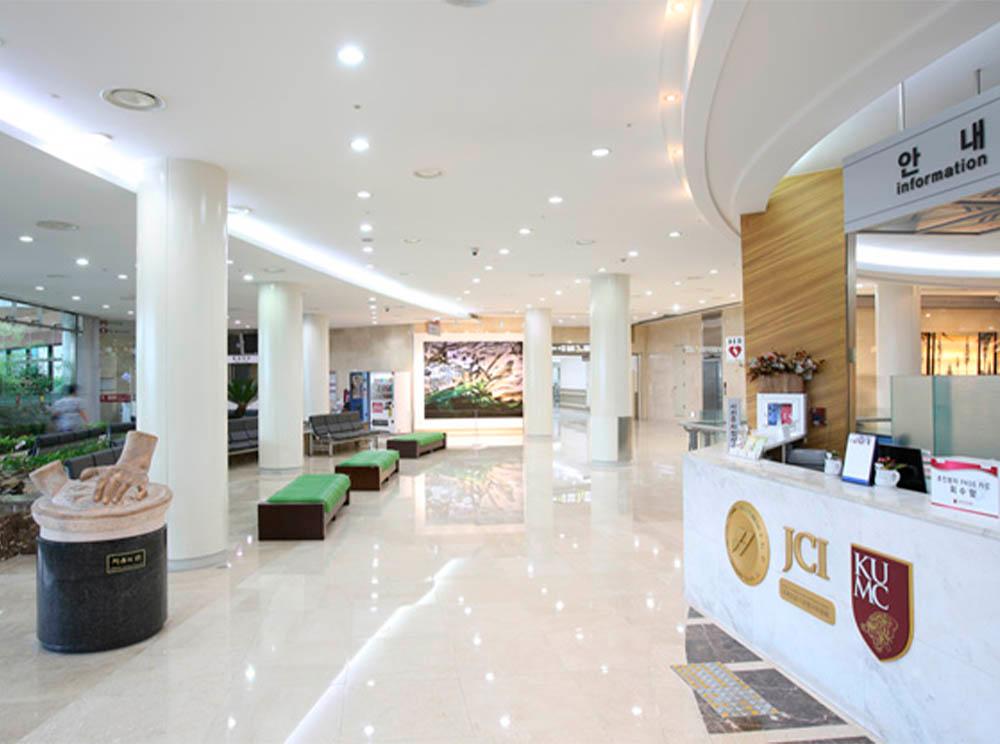 South Korea, Seoul, Seongbuk-gu, Anam-dong, 고려대로 73
Established as a leading multidisciplinary medical center, Korea University Anam Hospital is a prominent healthcare institution in South Korea. Since its expansion with a new building in 2005, the hospital has strengthened its reputation internationally. Known for patient-centered care, the hospital serves both local and international patients with excellence across 42 specialized departments. Korea University Anam Hospital is also recognized for its eco-friendly initiatives and state-of-the-art medical technologies.
Advanced Technology & Facilities
Key Services
With its commitment to excellence and innovation, Korea University Anam Hospital continues to stand out as a premier healthcare provider in South Korea.
 South Korea, Seoul, 892 Dongnam-ro, Sangil-dong, Gangdong-gu
Established in 1971, Kyung Hee University Hospital is one of South Korea's premier medical centers, renowned for its aim of fostering a disease-free environment. The hospital uniquely combines Eastern and Western medical approaches, making it the only center globally to integrate these methods with dental care. With its advanced infrastructure, Kyung Hee University Hospital handles over a million patients annually, including more than 1,000 international visitors.
Advanced Technology & Facilities
Key Services
Affiliated with the Korean Ministry of Health and the World Health Organization, Kyung Hee University Hospital combines advanced technology, skilled professionals, and outstanding care, solidifying its reputation as a leading global medical center.
 1071, Anyangjeon-roh, Yangcheon-gu, Seoul, 07985, Korea
Established in 1887, Ewha Womans University Medical Center (EUMC) has grown into one of South Korea’s most respected hospitals, blending over a century of academic excellence with compassionate, patient-first care. With its main campus in Seoul, Ewha is known for its advanced treatment facilities and a strong commitment to women's health and beyond. Internationally recognized for quality, the hospital continues to serve patients from across the globe through top-tier medical and surgical services, earning trust through a balanced combination of innovation, safety, and a warm approach to healthcare.
Advanced Technology & Amenities
Key Services
Ewha Womans University Medical Center continues to lead with compassion, skill, and science, providing high-standard healthcare to every patient, whether for a general check-up or life-saving treatment.
 South Korea, Seoul, : 50-1 Yonsei-ro, Sinchon-dong, Seodaemun-gu
Established in 1885 by the American physician and missionary Horace Allen, Severance Hospital is one of South Korea’s largest and oldest medical institutions. Renamed in 1904 in honor of Louis Severance, a generous American philanthropist, the hospital has a rich legacy of advancing healthcare in South Korea. In 1957, Severance Hospital became affiliated with Yonsei University, further cementing its position as a leading academic medical center.
With more than 135 years of history, the Severance Hospital continues to set high standards in patient care and medical innovation. The hospital operates under internationally recognized practices and was accredited by the Joint Commission International (JCI) in 2007, ensuring the delivery of world-class healthcare services.
Advanced Technology & Facilities
Key Services
Severance Hospital combines a legacy of excellence with modern medical practices, making it a trusted choice for patients seeking high-quality healthcare in South Korea.
 South Korea, Seoul, Daesagwan-ro, 59, Hannam-dong, Yongsan-gu
Soon Chun Hyang University Hospital is a leading medical facility and the flagship branch of the Soon Chun Hyang University Medical Center Network. Established as the first Korea Medical Corporation, it aims to promote wellness and respect for humanity. The hospital network is renowned globally, treating over 100,000 patients in the last decade and earning the title of one of the best healthcare centers in South Korea and the world.
Advanced Technology & Facilities
Key Services





South Korea operates a highly regulated and centrally governed healthcare system that combines public oversight with advanced private and academic medical institutions. Healthcare delivery is supervised by the Ministry of Health and Welfare, which is responsible for hospital licensing, physician credentialing, patient safety regulation, and enforcement of national clinical standards. All orthopedic surgery clinics, whether public or private, must comply with strict regulatory requirements related to infrastructure, staffing, infection control, and clinical governance.
Orthopedic specialists in South Korea undergo extensive, standardized training pathways. After completing medical school, physicians must pass national licensing examinations before entering structured residency programs in orthopedic surgery. Many pursue additional fellowship training in subspecialties such as joint reconstruction, spine surgery, sports orthopedics, or trauma care, typically within university-affiliated teaching hospitals. Ongoing professional development, periodic license renewal, and adherence to evidence-based guidelines are mandatory, supporting consistent clinical quality and ethical practice.
Hospital infrastructure in South Korea reflects long-term investment in advanced medical technology, academic research, and multidisciplinary care models. Major orthopedic surgery clinics are commonly embedded within large academic medical centers affiliated with leading universities. These hospitals are equipped with modern operating theaters, advanced diagnostic imaging, digital surgical planning systems, and integrated rehabilitation units. Many institutions align their safety and quality systems with international frameworks promoted by the World Health Organization, particularly in surgical safety, infection prevention, and continuity of care for international patients.
Orthopedic surgery in South Korea reflects the integration of global clinical advancements with nationally regulated healthcare delivery. Treatment approaches emphasize precision, patient safety, and structured perioperative management, while remaining grounded in evidence-based orthopedic practice.
Minimally invasive surgical techniques are increasingly used in appropriate clinical scenarios to reduce soft tissue disruption and support functional recovery under supervised rehabilitation. In joint replacement procedures, some centers employ computer-assisted navigation or robotic-supported systems to assist with implant positioning and alignment accuracy, depending on patient anatomy and clinical indications.
Arthroscopic techniques are widely utilized for joint-related conditions, allowing detailed visualization and treatment through small incisions. In spine surgery, image-guided technologies and refined instrumentation are used to enhance anatomical precision during decompression or stabilization procedures. Across orthopedic subspecialties, hospitals apply standardized perioperative care pathways, including enhanced recovery protocols that emphasize patient education, pain management, and gradual mobilization.
All orthopedic procedures are preceded by a comprehensive diagnostic evaluation and informed consent. Final treatment selection is determined solely by licensed specialists based on individual clinical findings, overall health status, and recovery considerations.
Total knee replacement involves resurfacing damaged joint structures with prosthetic components designed to restore alignment and joint mechanics. It is generally considered for advanced degenerative conditions following a comprehensive clinical assessment, imaging analysis, and evaluation of functional impairment.
Hip replacement surgery addresses conditions affecting the hip joint, including degenerative disease or fracture-related damage. Surgical approach and implant selection are determined by anatomical factors, bone quality, and patient-specific functional requirements identified during evaluation.
Arthroscopic ligament reconstruction is used to manage joint instability related to ligament injury, most commonly in the knee or shoulder. The procedure utilizes minimally invasive instrumentation and is followed by structured rehabilitation to support joint stability and movement restoration.
Spine decompression procedures aim to relieve pressure on neural structures caused by disc herniation or spinal canal narrowing. Technique selection depends on imaging findings, neurological assessment, and symptom severity, with recovery timelines varying among individuals.
Spinal fusion involves stabilizing affected vertebral segments using implants and bone graft material. It may be considered in cases of instability, deformity, or specific degenerative conditions after detailed diagnostic evaluation and multidisciplinary review.
Orthopedic trauma surgery includes stabilization of fractures using plates, screws, rods, or other fixation devices. Treatment planning considers fracture complexity, soft tissue condition, and the patient’s overall medical status within regulated trauma care pathways.
Recovery duration, rehabilitation needs, and postoperative experiences vary depending on procedure type and individual factors. Temporary swelling, discomfort, or activity limitations may occur and are addressed through clinically supervised follow-up care.
Accreditations:
Joint Commission International (JCI); regulated by the Ministry of Health and Welfare of South Korea; univ,,rsity teaching hospital affiliated with the University of Ulsan College of Medicine.
Specializations:
Comprehensive spine and orthopedic surgery services include minimally invasive spine procedures, disc herniation and spinal stenosis treatment, deformity correction, trauma-related surgery, and complex revision cases delivered through a multidisciplinary care model.
Accreditations:
Joint Commission International (JCI); nationally governed public university hospital operating under South Korea’s healthcare regulations; affiliated with Seoul National University College of Medicine.
Specializations:
Advanced orthopedic and spine care for degenerative disorders, spinal deformities, infections, and complex cervical and thoracolumbar conditions, supported by evidence-based protocols and academic research integration.
Accreditations:
Joint Commission International (JCI); teaching hospital under Yonsei University College of Medicine; overseen by South Korea’s national healthcare authorities.
Specializations:
Full-spectrum orthopedic and spine surgery includes minimally invasive procedures, spinal fusion, disc replacement, scoliosis correction, trauma care, and complex revision surgery within an academic multidisciplinary framework.
Accreditations:
Joint Commission International (JCI); affiliated with Sungkyunkwan University School of Medicine and is regulated by the Ministry of Health and Welfare of South Korea.
Specializations:
Highly advanced orthopedic and spine surgery services include robotic-assisted procedures, minimally invasive and endoscopic techniques, deformity correction, spine oncology, and integrated rehabilitation pathways.
Accreditations:
Licensed and regulated by South Korean healthcare authorities; internationally recognized specialty hospital focused exclusively on spine care.
Specializations:
Non-fusion and motion-preserving spine treatments include using minimally invasive and endoscopic techniques, herniated disc management, and spinal stenosis care using conservative-first clinical pathways.
Cost of Orthopedic Surgery Procedures in South Korea
| Procedures | Cost |
| Knee Replacement | $15,000 – $25,000 |
| Hip Replacement | $14,000 – $24,000 |
| Arthroscopic Surgery | $6,000 – $12,000 |
| Spine Surgery | $10,000 – $30,000 |
| Fracture Fixation | $5,000 – $15,000 |
| Wrist and Hand Arthroscopic Surgery | $2,500 – $3,500 |
| Tumor Surgery | $10,000 – $15,000 |
Note: The prices listed above are approximate, non-binding estimates provided for general informational purposes only. Actual treatment costs may vary based on individual clinical requirements, diagnostic findings, treatment complexity, materials or technology used, physician expertise, facility type, and duration of care. Final pricing is determined only after a professional evaluation by a licensed specialist or accredited medical institution.”
South Korea’s orthopedic care environment is defined by regulation, structured training, and institutional accountability rather than promotional positioning. Hospitals operate under nationally mandated safety frameworks that align with international clinical governance principles and patient safety standards.
Physician licensing systems ensure that orthopedic surgeons meet rigorous educational and clinical competency requirements. Hospital accreditation processes, including those aligned with Joint Commission International, reinforce standardized approaches to infection control, surgical safety, documentation, and quality improvement.
Advanced diagnostic imaging, digital surgical planning, and integrated rehabilitation services support comprehensive care delivery within regulated settings. Transparency in consent processes, clinical documentation, and cost communication further supports ethical medical tourism and informed patient decision-making.
Seeking orthopedic surgery in another country can be challenging, especially when treatment involves careful diagnosis, rehabilitation planning, and follow-up care. Best Clinic Abroad works only as a medical travel support service, helping patients understand how to access orthopedic care in South Korea. The company does not provide medical treatment, make diagnoses, or recommend surgical procedures. All clinical decisions are made by licensed orthopedic surgeons.
➤ Hospital coordination – Help patients connect with accredited hospitals and orthopedic surgery departments in South Korea
➤ Appointment support – Assist with arranging consultations and evaluations with licensed orthopedic specialists
➤ Communication assistance – Help patients understand general hospital processes and information requests without replacing medical advice
➤ Logistical guidance – Provide non-medical support related to travel planning and coordination
If you would like general information about how hospital coordination typically works or what details medical centers may request, you can choose to contact Best Clinic Abroad for informational support.
Is orthopedic surgery safe in South Korea?
Orthopedic surgery is performed within a regulated healthcare system overseen by national authorities, with many hospitals adhering to international safety and quality standards. Individual risk varies and requires professional evaluation.
Are orthopedic surgeons in South Korea licensed and qualified?
All orthopedic surgeons must complete nationally regulated training programs and hold valid medical licenses. Many also participate in academic research or international clinical collaboration.
Do hospitals follow international standards?
Several major hospitals hold Joint Commission International accreditation, reflecting compliance with global patient safety and quality benchmarks.
Is postoperative follow-up necessary after returning home?
Postoperative follow-up is a critical component of orthopedic care and should be coordinated with local healthcare providers after international treatment.
Medical Disclaimer
This content is provided for informational purposes only and does not constitute medical advice. Diagnosis and treatment decisions should be made in consultation with a licensed medical specialist based on individual clinical evaluation.”
Last updated: January 2026

 Prof. Dr. Ryu Ki Hyung
 Orthopedic
.avif&w=3840&q=75)


