









Bestclinicabroad
Connect with the world's Best Clinic and doctors at Best Clinic Abroad. Your well-being is our priority, with personalized care every step of the way.


Connect with the world's Best Clinic and doctors at Best Clinic Abroad. Your well-being is our priority, with personalized care every step of the way.


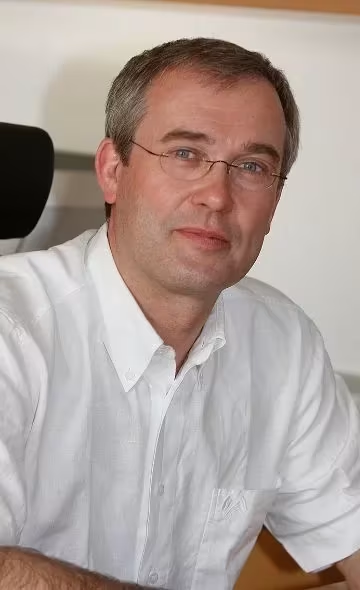
Dr. Michael Herg, a leading gastroenterologist in Austria, is affiliated with Privatklinik Graz Ragnitz, where he provides specialized medical care. With extensive experience in gastrointestinal health, Dr. Michael Herg, a renowned gastroenterology expert in Austria, offers expert diagnosis and treatment for various digestive conditions. Patients seeking the best gastroenterologist in Austria can consult him at Privatklinik Graz Ragnitz, where he delivers advanced medical solutions for digestive health.
Price upon request
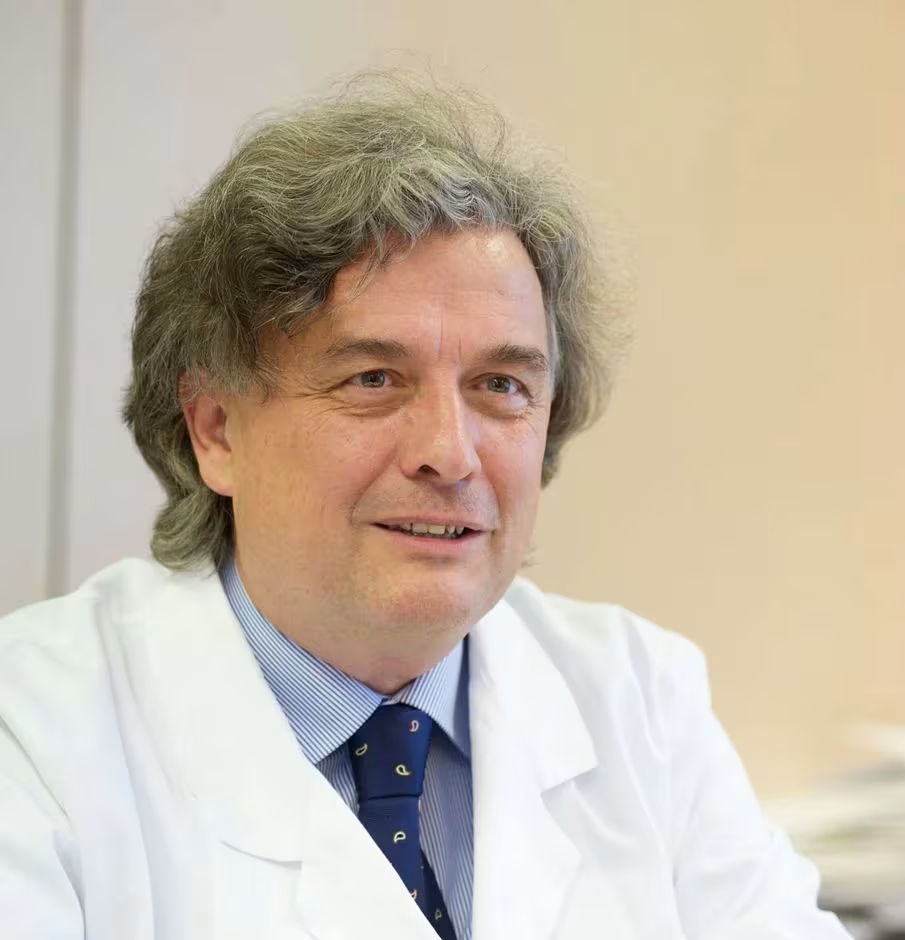
Prof. Dr. Anton Luger is a renowned endocrinologist in Austria, serving as the Professor of Medicine and Head of the Division of Endocrinology and Metabolism at the Medical University of Vienna. With a distinguished career in endocrinology and metabolic medicine, he has contributed extensively to international and national scientific organizations. Recognized as a leading endocrinology expert, he has held key positions, including President of the Section Endocrinology of the European Union of Medical Specialists (UEMS) and a board member of the Austrian Society of Endocrinology. His research contributions are substantial, with over 300 publications in peer-reviewed journals, solidifying his reputation as a famous endocrine doctor and a top metabolism specialist.
Price upon request
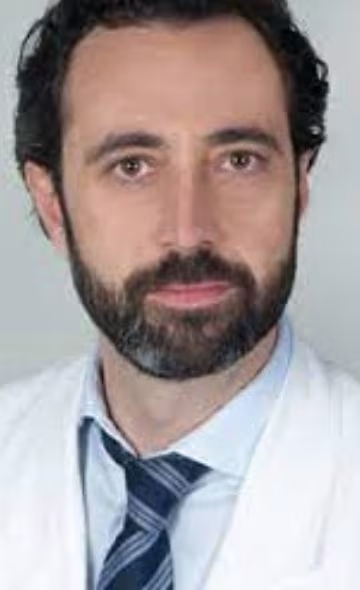
Dr. Sebastian Schoppmann is a leading gastroesophageal tumor specialist, recognized for his extensive research and expertise in digestive tract cancer. With a 400% rise in GE junction carcinomas over the past two decades, largely due to Gastroesophageal Reflux Disease (GERD), Dr. Sebastian Schoppmann focuses on understanding the adenoma-carcinoma sequence and its implications. As a top oncologist for GE junction cancer, he is dedicated to advancing multimodal and targeted therapies, personalized surgical approaches, and improving survival rates for these aggressive malignancies. His work in molecular-pathologic prognostic markers and advanced esophageal cancer treatment has contributed significantly to the field. Moreover, his expertise in personalized surgery for GE tumors and multimodal therapy concepts underscores his role as a famous GERD specialist. His unwavering commitment to research and innovation places him among the popular cancer surgeons in Austria, constantly striving to enhance treatment outcomes for patients facing these challenging diseases.
Price upon request
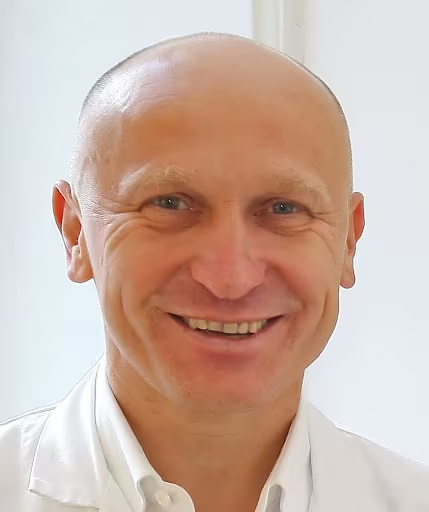
Professor Gerhard Prager is a distinguished specialist in bariatric surgery, boasting an extensive portfolio of over 3,000 operations dedicated to obesity treatment. Currently serving as the head of the Obesity Outpatient Clinic at Vienna General Hospital and leading the Metabolic Surgery Center at Confraternitaet Private Hospital, he plays a pivotal role in advancing metabolic surgery practices. His active involvement includes memberships in esteemed organizations such as IFSO-European Chapter, Austrian Obesity Association, International Federation for the Surgery of Obesity and Metabolic Disorders, Austrian Society of Surgery, Austrian Society of Bariatric Surgery, and the American Society for Metabolic & Bariatric Surgery.
Price upon request
Surgical care is an essential component of global healthcare systems. According to international public health data, millions of surgical procedures are performed every year to treat conditions such as appendicitis, hernias, gallbladder disease, colorectal disorders, thyroid conditions, and abdominal tumors. Access to safe surgery is recognized by the World Health Organization as a critical part of universal health coverage. As awareness of surgical quality and safety standards increases, some patients consider traveling abroad for evaluation and treatment by experienced general surgeons.
Austria has a structured and highly regulated healthcare system. General surgeons complete medical education followed by specialist surgical training under national licensing authorities. Clinical practice follows European Union healthcare directives and internationally recognized surgical guidelines. Hospitals in Austria are subject to strict safety regulations, infection control standards, and documentation requirements.
General surgery services are delivered in university hospitals, tertiary referral centers, and multispecialty private clinics in cities such as Vienna, Graz, Innsbruck, Salzburg, and Linz. Many institutions are equipped with modern operating rooms, advanced imaging technologies, laparoscopic and minimally invasive surgical systems, and postoperative monitoring units. Multidisciplinary collaboration is common, particularly for complex cases involving oncology, gastroenterology, or endocrine disorders.
For international patients seeking general surgeons in Austria, treatment planning typically includes diagnostic imaging, laboratory assessment, and a thorough review of medical history. Surgeons emphasize informed consent, discussion of risks and potential complications, and realistic expectations regarding recovery. Emotional reassurance is balanced with evidence-based medical information. Austria’s regulated healthcare infrastructure provides a structured environment focused on patient safety and individualized surgical care.
The following surgeons are listed for informational purposes only and are not ranked.
Prof. Dr. Gerhard Prager, MD
Specialization: General and Visceral Surgery
Years of Experience: 20+ years
Prof. Dr. Gerhard Prager practices at the Medical University of Vienna (AKH Wien). His clinical focus includes gastrointestinal surgery and minimally invasive abdominal procedures. He works within a university hospital setting with structured perioperative care protocols. Multidisciplinary case reviews are part of treatment planning. Surgical decisions are based on established European surgical guidelines.
Prof. Dr. Michael Gnant, MD
Specialization: General and Oncologic Surgery
Years of Experience: 25+ years
Prof. Dr. Michael Gnant is affiliated with Vienna General Hospital (AKH Wien). His expertise includes surgical oncology and breast surgery. He practices in a tertiary academic center with integrated tumor board discussions. Clinical management follows internationally recognized cancer surgery standards. Patient counseling includes discussion of risks, benefits, and postoperative recovery.
Prof. Dr. Klaus Emmanuel, MD
Specialization: General and Abdominal Surgery
Years of Experience: 20+ years
Prof. Dr. Klaus Emmanuel practices at the Medical University of Graz. His clinical areas include colorectal surgery and laparoscopic procedures. He works in a hospital environment equipped with modern surgical technology. Treatment plans are individualized based on imaging and diagnostic findings.
Prof. Dr. Dietmar Öfner, MD
Specialization: General and Visceral Surgery
Years of Experience: 30+ years
Prof. Dr. Dietmar Öfner is associated with the Medical University of Innsbruck. His expertise includes gastrointestinal and oncologic abdominal surgery. He practices within structured surgical safety systems. Preoperative risk assessment and postoperative monitoring are integral to his approach.
Prof. Dr. Andreas Shamiyeh, MD
Specialization: Minimally Invasive Surgery
Years of Experience: 20+ years
Prof. Dr. Andreas Shamiyeh works at Ordensklinikum Linz. His clinical focus includes laparoscopic gallbladder and hernia surgery. He follows standardized infection control and anesthesia safety protocols. Surgical decisions are based on patient-specific clinical evaluation.
Prof. Dr. Rainer Schmid, MD
Specialization: Endocrine and General Surgery
Years of Experience: 25+ years
Prof. Dr. Rainer Schmid practices at Salzburg University Hospital. His expertise includes thyroid and parathyroid surgery. He collaborates with endocrinologists and radiologists for a comprehensive evaluation. Clinical management adheres to European endocrine surgery guidelines.
Prof. Dr. Bruno Niederle, MD
Specialization: General and Endocrine Surgery
Years of Experience: 35+ years
Prof. Dr. Bruno Niederle is affiliated with Medical University of Vienna. His clinical interests include pancreatic and endocrine surgical procedures. He practices in a multidisciplinary hospital setting with access to intensive care support. Risk discussion and long-term follow-up planning are part of routine care.
Prof. Dr. Christoph Neumayer, MD
Specialization: General and Vascular Surgery
Years of Experience: 20+ years
Prof. Dr. Christoph Neumayer works at Vienna General Hospital (AKH Wien). His areas of practice include abdominal and vascular surgical procedures. He operates within structured hospital-based safety systems. Surgical planning involves imaging, laboratory review, and individualized patient evaluation.
| Consultation Type | Estimated Cost Range |
| General surgeon consultation | $150–$400 |
Note: Costs are approximate and provided for general guidance only. Prices vary depending on the healthcare provider, hospital type, city, and consultation format (in-person or remote). Diagnostic tests, imaging, or additional evaluations are not included. Final fees are determined by the provider after an individual clinical assessment and may be affected by currency fluctuations.
Choosing a general surgeon abroad requires careful consideration. Surgical procedures involve planning, anesthesia, and recovery, so understanding the healthcare system and safety standards is important. Many patients seek clarity about qualifications, communication, and postoperative care before making a decision.
➤ Availability of English-speaking medical staff and professional medical translators in many facilities
➤ Specialized clinics that manage a high volume of international patients
➤ Government regulations and oversight mechanisms supporting medical tourism safety and international patient protection
➤ Structured hospital documentation, patient-safety protocols, and informed consent practices
International patients should review visa or entry requirements according to their nationality and expected duration of stay. For abdominal or other major surgical procedures, a postoperative stay of at least 7–14 days may be recommended to allow early monitoring and follow-up, depending on the complexity of surgery. English is commonly spoken in major cities, though communication may vary outside urban centers. Arranging follow-up care with your local physician after returning home is important for safe recovery.
Patients considering general surgery in Austria may share their medical records, imaging reports, and previous test results with Best Clinic Abroad to receive support in coordinating consultations and understanding the initial evaluation process with licensed general surgeons.
Do I need visa assistance for general surgery in Austria?
Visa requirements depend on your nationality and the length of your stay. Austria is part of the Schengen Area, so medical travel typically follows Schengen visa regulations. You should contact the Austrian embassy or consulate in your country to confirm the appropriate visa category. Hospitals may provide appointment documentation, but visa approval decisions are handled by immigration authorities.
Do general surgeons in Austria speak English?
Many general surgeons working in university hospitals and private clinics in major cities communicate in English, especially when treating international patients. English is widely used in medical education and research. However, proficiency may vary in smaller regions. Medical interpreters can often be arranged if needed.
Is online consultation available before traveling to Austria for general surgery?
Yes, preliminary online consultations are often available for international patients considering general surgery in Austria. If you coordinate your care through Best Clinic Abroad, their team can assist in arranging an online consultation with a licensed general surgeon. You may be asked to provide imaging studies, laboratory results, and medical history documents for review. Final surgical decisions are typically made after an in-person clinical examination.
How long should I stay in Austria after general surgery?
The recommended stay depends on the type and complexity of the procedure. Minimally invasive surgeries may require shorter recovery periods, while major abdominal operations may require longer hospitalization and monitoring. Many patients are advised to remain in Austria for 7–14 days after discharge for early follow-up. Your surgeon will provide individualized guidance based on your recovery progress.
Can follow-up care continue in my home country after surgery in Austria?
Yes, follow-up care is usually coordinated with your local physician after you return home. It is important to obtain detailed discharge summaries and postoperative instructions before traveling. Some surgeons may offer remote follow-up consultations when clinically appropriate. Ongoing monitoring and adherence to postoperative recommendations are essential for recovery.
Disclaimer
This content is provided for informational purposes only and does not constitute medical advice. Diagnosis and treatment decisions should be made in consultation with a licensed medical specialist based on individual clinical evaluation.


