








Bestclinicabroad
Connect with the world's Best Clinic and doctors at Best Clinic Abroad. Your well-being is our priority, with personalized care every step of the way.


Connect with the world's Best Clinic and doctors at Best Clinic Abroad. Your well-being is our priority, with personalized care every step of the way.



 South Korea, Seoul, : 50-1 Yonsei-ro, Sinchon-dong, Seodaemun-gu
Established in 1885 by the American physician and missionary Horace Allen, Severance Hospital is one of South Korea’s largest and oldest medical institutions. Renamed in 1904 in honor of Louis Severance, a generous American philanthropist, the hospital has a rich legacy of advancing healthcare in South Korea. In 1957, Severance Hospital became affiliated with Yonsei University, further cementing its position as a leading academic medical center.
With more than 135 years of history, the Severance Hospital continues to set high standards in patient care and medical innovation. The hospital operates under internationally recognized practices and was accredited by the Joint Commission International (JCI) in 2007, ensuring the delivery of world-class healthcare services.
Advanced Technology & Facilities
Key Services
Severance Hospital combines a legacy of excellence with modern medical practices, making it a trusted choice for patients seeking high-quality healthcare in South Korea.


 South Korea, Busan, Saha-gu, Dadae-ro 145
Kang Dong Hospital, located in Busan, South Korea, is a well-regarded orthopedic hospital specializing in a wide range of treatments, including joint replacement surgery in Korea and spine surgery in South Korea. Established in 1993, Kang Dong Hospital has built a strong reputation for offering comprehensive care for musculoskeletal disorders. Kang Dong Hospital is officially recognized by the Ministry of Health and Welfare as a healthcare provider for international patients, making it a top choice for medical tourism in South Korea.
Key Features and Achievements
Each year, Kang Dong Hospital performs more than 4,000 orthopedic surgeries, making it one of the best hospitals for orthopedics in Asia. Its dedication to continuous improvement, patient care, and medical advancements ensures Kang Dong Hospital remains a trusted choice for both local and international patients seeking affordable orthopedic surgery in South Korea.

 South Korea, Incheon, 27 Inhang-ro, Sinheung-dong, Jung-gu, Incheon, South Korea
Inha University Hospital is a renowned university hospital in Incheon, South Korea, known for its multidisciplinary healthcare services and patient-centered approach. Established in 1996 as the first university hospital in the region, Inha University Hospital has been instrumental in improving medical care for both local and international patients. Founded by Dr. Cho Joong-Hoon, the visionary behind the Hanjin Group, the hospital was created with a mission to give back to society and enhance community well-being.
Recognized for its international medical standards, Inha University Hospital holds dual accreditation from the Joint Commission International (JCI) and approval from the Korean government. With a focus on advanced medical care, Inha University Hospital operates specialized centers for various conditions, providing comprehensive treatment and emergency services.
Key Highlights of Inha University Hospital
Inha University Hospital remains a top choice for international patients seeking advanced medical care in South Korea. Its commitment to patient safety, specialized treatments, and emergency medical services makes it a trusted healthcare institution. With a strong focus on quality, efficiency, and compassionate care, Inha University Hospital ensures a positive medical experience for every patient.
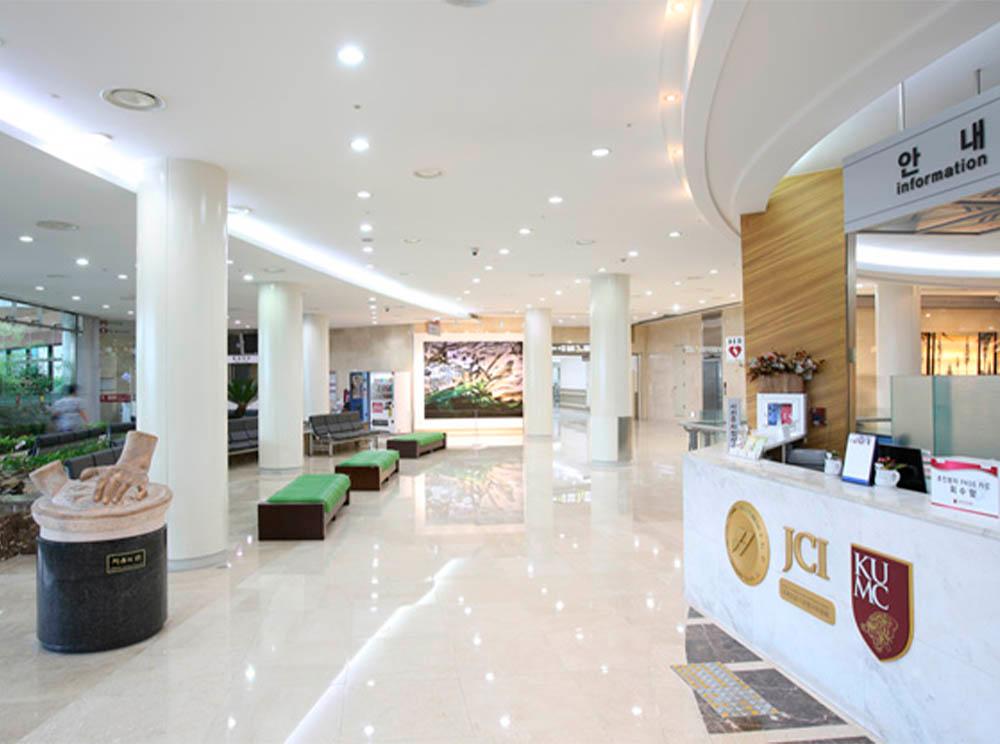 South Korea, Seoul, Seongbuk-gu, Anam-dong, 고려대로 73
Established as a leading multidisciplinary medical center, Korea University Anam Hospital is a prominent healthcare institution in South Korea. Since its expansion with a new building in 2005, the hospital has strengthened its reputation internationally. Known for patient-centered care, the hospital serves both local and international patients with excellence across 42 specialized departments. Korea University Anam Hospital is also recognized for its eco-friendly initiatives and state-of-the-art medical technologies.
Advanced Technology & Facilities
Key Services
With its commitment to excellence and innovation, Korea University Anam Hospital continues to stand out as a premier healthcare provider in South Korea.
 South Korea, Seoul, 892 Dongnam-ro, Sangil-dong, Gangdong-gu
Established in 1971, Kyung Hee University Hospital is one of South Korea's premier medical centers, renowned for its aim of fostering a disease-free environment. The hospital uniquely combines Eastern and Western medical approaches, making it the only center globally to integrate these methods with dental care. With its advanced infrastructure, Kyung Hee University Hospital handles over a million patients annually, including more than 1,000 international visitors.
Advanced Technology & Facilities
Key Services
Affiliated with the Korean Ministry of Health and the World Health Organization, Kyung Hee University Hospital combines advanced technology, skilled professionals, and outstanding care, solidifying its reputation as a leading global medical center.
 South Korea, Seoul, 29, Saemunan-ro, Jongno-gu
Founded in 1968 in Seoul, Kangbuk Samsung Hospital (KBSMC) is among South Korea’s best hospitals, offering advanced medical technology and comprehensive patient care. Kangbuk Samsung Hospital focuses on medical research, public health initiatives, and patient-centered care, ensuring top-quality services for both local and international patients. Over the years, Kangbuk Samsung Hospital's highly skilled specialized medical teams have continuously worked to combat various diseases through innovative healthcare solutions, contributing to a healthier society.
Key Aspects of Kangbuk Samsung Hospital
Comprehensive Medical Services
Excellence in Cancer Treatment
Smart Hospital with Advanced Medical Technology
Commitment to Patient-Centered Care & International Patients
Healthcare Through Social Responsibility
With a strong focus on medical research, innovative healthcare solutions, and patient-centered care, Kangbuk Samsung Hospital remains a top healthcare provider in South Korea. Combining advanced medical technology with a multidisciplinary approach, KBSMC continues to deliver high-quality treatments while ensuring the best possible outcomes for all patients.
 15F, 17F Kyobo Tower, Gangnam-daero 465, Seocho-gu, Seoul, Republic of Korea
Bright Eye Clinic, located in Seoul, is a specialized ophthalmology center focused on advanced vision correction, refractive surgery, lens implantation, and comprehensive eye care. The clinic provides expert services across multiple subspecialties, including SMILE Pro, SMILE LASIK, LASIK, LASEK, Implantable Collamer Lens (ICL) surgery, presbyopia correction, premium cataract surgery, and general ophthalmic diagnostics. With advanced laser platforms, precision-based surgical suites, and a team of experienced ophthalmologists and refractive specialists, the clinic ensures individualized treatment planning for each patient. It serves both local and international patients seeking surgical vision correction, age-related lens solutions, and long-term ocular health management.
Bright Eye Clinic emphasizes a patient-centered approach by combining detailed pre-operative diagnostics, customized surgical strategies, structured follow-ups, and transparent consultation processes. With multilingual coordination services, internationally aligned safety standards, and clear communication regarding benefits and potential risks, it has become a recognized destination for advanced eye surgery in South Korea. By integrating medical expertise, modern ophthalmic technology, and personalized patient care, the clinic supports improved visual clarity, functional independence, and sustained eye health.
Advanced Technology & Facilities
Key Services
Bright Eye Clinic combines advanced ophthalmic technology, experienced surgeons, and structured patient care systems to deliver safe and individualized vision correction solutions. Through detailed diagnostics, precision-guided procedures, and continuous post-treatment monitoring, the clinic focuses on supporting optimal visual outcomes and long-term ocular stability.




South Korea is internationally recognized for advanced ophthalmology services supported by a highly regulated healthcare system, strong academic training, and modern clinical infrastructure. Leading ophthalmology clinics in the country are typically staffed by board-certified ophthalmologists with subspecialty training in cataract surgery, refractive surgery, glaucoma, retinal diseases, corneal disorders, and pediatric ophthalmology. Many specialists practice within university-affiliated hospitals or tertiary medical centers, ensuring access to multidisciplinary consultation, advanced diagnostics, and evidence-based clinical protocols.
Many ophthalmology clinics and hospital-based eye centers adhere to internationally recognized quality frameworks such as ISO-certified clinical processes and, in select tertiary hospitals, Joint Commission International (JCI) accreditation. These frameworks reflect standardized protocols for infection control, laser and surgical safety, diagnostic imaging, anesthesia use where applicable, and patient data protection. The scope of ophthalmology care commonly includes routine eye examinations, cataract surgery, refractive vision correction, retinal disease management, glaucoma treatment, corneal surgery, and complex ocular reconstruction, delivered within facilities equipped with advanced imaging systems, laser platforms, and microsurgical operating theaters.
For international patients, South Korea’s ophthalmology clinics are differentiated by transparent care pathways, predictable treatment planning, and integration of advanced ophthalmic technologies into routine clinical practice. Treatment costs are generally competitive compared with many Western healthcare systems while maintaining compliance with national medical regulations and professional oversight. Medical tourism-oriented hospitals typically offer structured services such as pre-arrival case review, multilingual coordination teams, informed consent processes aligned with global standards, and postoperative follow-up planning to support continuity of care after patients return home. This emphasis on safety, precision, and long-term visual health has positioned South Korea as a trusted destination for ophthalmology care among international patients.
South Korea has rapidly adopted innovations in modern ophthalmology, combining advanced technology with evidence-based clinical practice. Ophthalmology clinics operate under national healthcare regulations and follow international guidelines for infection control, laser safety, surgical sterilization, diagnostic imaging, and postoperative monitoring. Many ophthalmologists receive training at globally recognized institutions and participate in continuous medical education (CME) to remain aligned with current research and best practices.
Advanced ophthalmology care in South Korea is supported by technologies such as optical coherence tomography (OCT), high-resolution retinal imaging, femtosecond laser systems, excimer lasers, intraocular lens (IOL) technologies, and minimally invasive surgical techniques. These tools allow for precise diagnosis, refined surgical planning, and controlled treatment delivery. Patients receive individualized treatment plans based on visual needs, ocular health, medical history, and long-term outcomes. Clinics emphasize informed consent, postoperative follow-up, and preventive eye care education, supporting safe and sustainable vision management.
Cataract surgery is performed to restore vision impaired by clouding of the eye’s natural lens. In South Korea, cataract surgery commonly utilizes phacoemulsification techniques and advanced intraocular lenses, including monofocal, multifocal, and toric options where clinically appropriate. Procedures are guided by detailed ocular measurements and conducted under standardized safety protocols to support visual rehabilitation.
Refractive surgery aims to correct vision errors such as myopia, hyperopia, and astigmatism. South Korean clinics employ advanced laser platforms and thorough preoperative screening to determine patient suitability. Treatment selection is individualized, prioritizing corneal health, visual stability, and long-term safety.
Retinal services address conditions such as diabetic retinopathy, macular degeneration, retinal detachment, and vascular disorders. Ophthalmology centers integrate advanced retinal imaging, laser therapy, intravitreal injections, and surgical interventions within multidisciplinary care models when systemic disease management is required.
Glaucoma management focuses on preserving optic nerve function and controlling intraocular pressure. South Korean clinics offer medical therapy, laser procedures, and surgical options based on disease severity and patient-specific factors, following internationally accepted glaucoma treatment guidelines.
Corneal procedures address keratoconus, corneal scarring, infections, and endothelial disorders. Treatment options include corneal cross-linking, partial-thickness transplantation, and full corneal transplantation when indicated. Patient selection and postoperative monitoring are carefully managed to support visual recovery.
Accreditations:
Joint Commission International (JCI); overseen by the Ministry of Health and Welfare of South Korea, is a university teaching hospital affiliated with the University of Ulsan College of Medicine.
Specializations:
Comprehensive ophthalmology services, including cataract surgery, retinal disease management, glaucoma care, corneal surgery, pediatric ophthalmology, and ocular oncology within a tertiary-care environment supported by advanced diagnostics and multidisciplinary collaboration.
Accreditations:
Joint Commission International (JCI); nationally governed public university hospital; regulated under South Korea’s national healthcare standards.
Specializations:
Advanced ophthalmic care, including complex retinal surgery, glaucoma treatment, corneal disease management, neuro-ophthalmology, and academic research-driven clinical protocols.
Accreditations:
Joint Commission International (JCI), a teaching hospital under Yonsei University College of Medicine.
Specializations:
Full-spectrum ophthalmology services covering cataract and refractive surgery, retinal disorders, glaucoma, corneal disease, and interdisciplinary care for patients with systemic medical conditions.
Accreditations:
Joint Commission International (JCI), affiliated with Sungkyunkwan University School of Medicine.
Specializations:
Advanced ophthalmic diagnostics and treatment, including retinal surgery, minimally invasive glaucoma procedures, refractive surgery, and integration with oncology and endocrinology services when required.
Accreditations:
Joint Commission International (JCI); regulated by South Korean healthcare authorities.
Specializations:
Evidence-based ophthalmology care with strengths in cataract surgery, retinal disease treatment, glaucoma management, and advanced imaging-supported diagnostics within an academic hospital setting.
| Procedures | Cost |
| Comprehensive Eye Examination | $70 - $90 |
| Cataract Surgery (per eye) | $1,800 - $2,200 |
| Premium IOL Upgrade | $1,300 - $1,700 |
| LASIK / LASEK | $1,800 - $2,200 |
| SMILE Eye Surgery | $2,300 - $2,700 |
| Retinal Laser Treatment | $900 - $1,100 |
| Intravitreal Injection | $700 - $900 |
| Glaucoma Laser Treatment | $1,100 - $1,300 |
| Corneal Cross-Linking | $1,800 - $2,200 |
| Vitrectomy Surgery | $5,500 - $6,500 |
Note: The prices listed above are approximate, non-binding estimates provided for general informational purposes only. Actual treatment costs may vary based on individual clinical requirements, diagnostic findings, treatment complexity, technology used, physician expertise, facility type, and duration of care. Final pricing is determined only after a professional ophthalmic evaluation by a licensed ophthalmologist or accredited medical institution.
South Korea is internationally recognized as a regulated destination for ophthalmology care, supported by a structured healthcare system, licensed medical facilities, and formally trained ophthalmologists. Eye clinics and hospitals operate under national healthcare regulations, with specialists completing accredited medical education and subspecialty training in ophthalmology. This regulatory framework supports patient safety, ethical practice, and informed clinical decision-making.
Ophthalmologists in South Korea typically complete extensive academic education, residency training, and fellowship programs, with many having international clinical or research experience. Multidisciplinary care is common, particularly when ocular conditions are associated with systemic diseases such as diabetes or neurological disorders.
Healthcare facilities offering ophthalmology services are equipped with advanced diagnostic and surgical technologies, including OCT imaging, laser platforms, microsurgical systems, and infection-control protocols aligned with internationally accepted standards. These systems support accurate diagnosis, procedural planning, and postoperative monitoring without implying guaranteed outcomes.
From a medical tourism perspective, South Korea is often considered cost-efficient compared with several Western healthcare systems. Depending on the procedure and facility, international patients may observe estimated cost differences of approximately 40–60%, reflecting healthcare system efficiencies rather than reduced clinical quality. Transparent treatment plans and itemized cost estimates support informed financial planning.
Looking for eye care in another country can be challenging, especially when vision problems require careful evaluation and follow-up. Best Clinic Abroad works only as a medical travel support service, helping patients understand how to access ophthalmology care in South Korea. The company does not provide medical treatment, make diagnoses, or recommend procedures. All clinical decisions are made by licensed ophthalmologists.
➤ Clinic coordination – Help patients connect with accredited eye clinics and ophthalmology departments in South Korea
➤ Appointment support – Assist with arranging consultations and eye evaluations with licensed specialists
➤ Communication assistance – Help patients understand general clinic processes and information requests without replacing medical advice
➤ Logistical guidance – Provide non-medical support related to travel planning and coordination
If you would like general information about how clinic coordination typically works or what details ophthalmology clinics may request, you can choose to contact Best Clinic Abroad for informational support.
Is South Korea safe for ophthalmology treatment?
Yes. Ophthalmology clinics and hospitals operate under national healthcare regulations, and ophthalmologists complete accredited medical training and licensure. Many major hospitals follow internationally recognized safety and quality standards.
Why is South Korea popular for eye surgery?
South Korea is known for advanced ophthalmic technology, highly trained specialists, regulated healthcare delivery, and transparent treatment planning.
How much does ophthalmology treatment cost in South Korea?
Costs vary depending on the procedure, technology used, and individual clinical needs. Estimates are typically provided after professional evaluation and should be considered indicative.
Are ophthalmologists in South Korea licensed and qualified?
Yes. Ophthalmologists must complete accredited medical education, specialty training, and national licensure to practice.
This content is provided for informational purposes only and does not constitute medical advice. Diagnosis and treatment decisions should be made in consultation with a licensed ophthalmologist based on individual clinical evaluation.
Last updated: March 2026

 Dr. Kang See Woong
 Ophthalmology
.avif&w=3840&q=75)


