









Bestclinicabroad
Connect with the world's Best Clinic and doctors at Best Clinic Abroad. Your well-being is our priority, with personalized care every step of the way.


Connect with the world's Best Clinic and doctors at Best Clinic Abroad. Your well-being is our priority, with personalized care every step of the way.


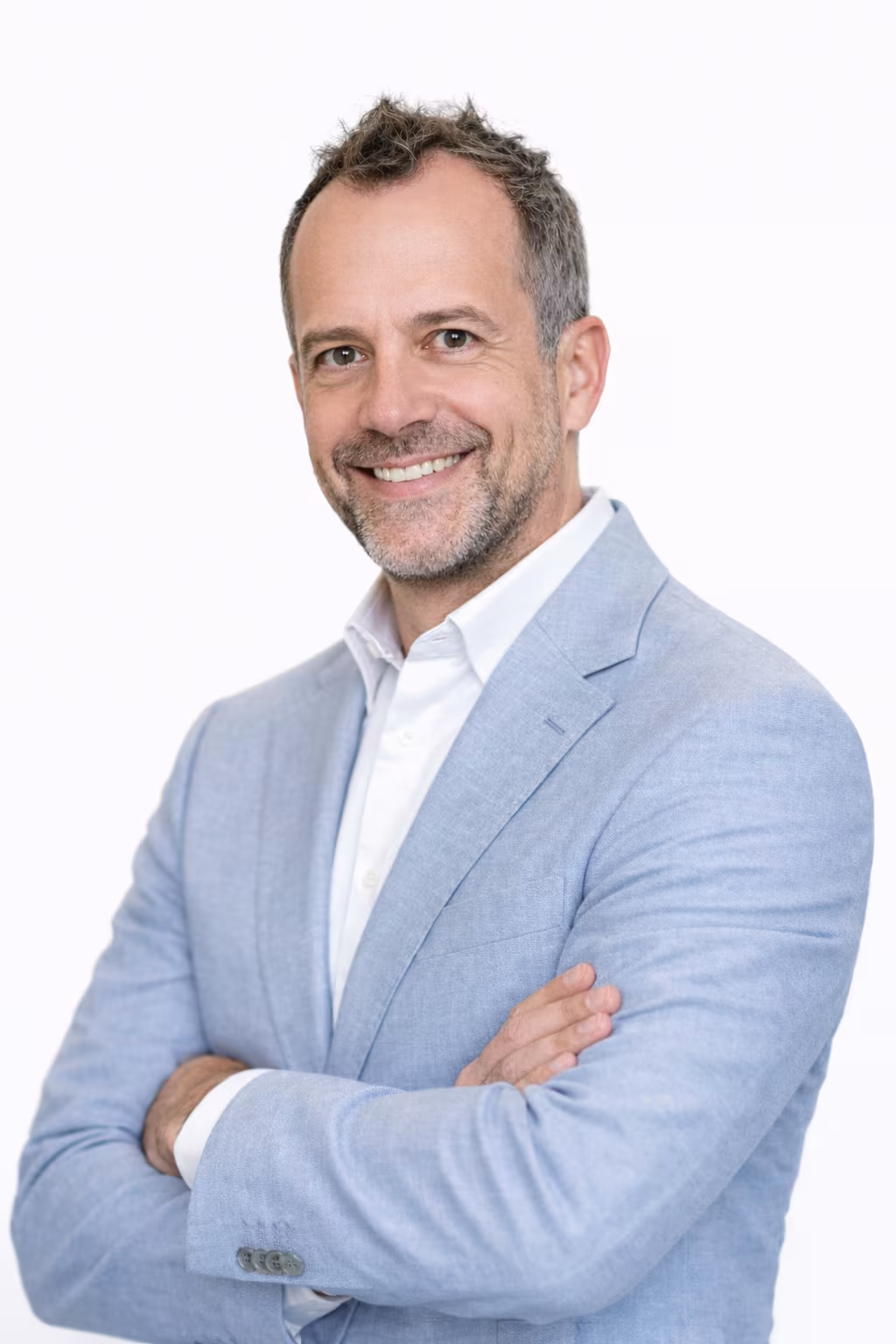
Dr. Kai Lutz, a leading psychologist and top neuropsychologist in Switzerland, has been at the forefront of groundbreaking brain function research for over 26 years. With extensive expertise in neuropsychology, cognitive science, and the musculoskeletal system, Dr. Lutz has dedicated his career to advancing the understanding of neurological disorders and cognitive function. His academic journey spans prestigious institutions in Germany, the USA, and Switzerland, where he honed his skills in psychological diagnostics, neurorehabilitation, and medical sciences.
Currently heading research at cereneo, Dr. Kai Lutz continues to push the boundaries of modern neuroscience, enhancing advanced psychological diagnostics and therapeutic methodologies. His contributions, published in internationally acclaimed scientific journals, have positioned him as one of the best neuropsychologists in Switzerland and a famous neuroscientist recognized for his work in cognitive disorders and neurorehabilitation.
Price upon request
Dr. Andreas Luft is a highly respected neurologist with over 20 years of experience, specializing in stroke rehabilitation and vascular neurology. He is the Medical Director at Cereneo and the Director of the Stroke Center at the University Hospital of Zurich, where he leads advanced neurological treatments. As a Professor at the University of Zurich and Associate Professor at ETH Zurich, Dr. Luft is dedicated to research and innovation in neurorehabilitation. His expertise attracts patients worldwide seeking advanced neurological care and stroke recovery solutions.
Price upon request
Neurological disorders are a major cause of disability and long-term healthcare use worldwide. Global health authorities, including the World Health Organization, report that conditions such as stroke, epilepsy, Parkinson’s disease, multiple sclerosis, brain tumors, spinal cord disorders, and traumatic brain injury affect hundreds of millions of people globally. These conditions often require complex, coordinated care that spans diagnosis, medical management, surgery, rehabilitation, and long-term follow-up. As populations age and survival after acute neurological events improves, demand for specialist neurological and neurosurgical care continues to rise.
Switzerland is known for a highly regulated healthcare system with strong institutional oversight, and this extends to neurology and neurosurgery. Care is delivered primarily through university hospitals, cantonal hospitals, and specialized neuroscience centers. Neurologists and neurosurgeons complete extensive training pathways that include a medical degree, residency training in neurology or neurosurgery, and formal board certification. Many specialists are also involved in academic research and teaching, supporting evidence-based practice and continuous improvement in care standards.
Swiss hospitals generally adhere to internationally recognized clinical guidelines for neurological diagnosis, acute intervention, surgical decision-making, and postoperative care. Advanced imaging technologies, neurophysiology laboratories, and intensive care units are widely available in tertiary centers. Multidisciplinary collaboration is standard, with neurologists, neurosurgeons, neuroradiologists, anesthesiologists, rehabilitation physicians, and specialized nursing teams working together on complex cases.
Treatment planning in Switzerland typically follows a cautious and individualized approach. Conservative management is explored when appropriate, and surgical intervention is recommended only after careful risk-benefit assessment. Potential risks such as bleeding, infection, neurological deficits, and variable recovery outcomes are discussed transparently. Emotional and psychological support is also recognized as important, particularly for patients and families facing life-altering neurological diagnoses.
Overall, neurological and neurosurgical care in Switzerland is characterized by structured clinical pathways, strong governance, and a focus on patient safety, informed consent, and long-term quality of life.
Karl Schaller, MD
Specialization: Neurosurgery with Focus on Brain and Spine Disorders
Years of Experience: Over 25 years
Clinical Focus: Prof. Schaller’s clinical work includes brain tumors, vascular neurosurgery, and complex spinal conditions. He emphasizes careful surgical planning and multidisciplinary case review. He practices at Geneva University Hospitals (HUG), a large public academic hospital providing tertiary neurosurgical care.
Ludwig Kappos, MD
Specialization: Neurology, Multiple Sclerosis, and Neuroimmunology
Years of Experience: Over 30 years
Clinical Focus: Prof. Kappos is widely involved in the management of multiple sclerosis and inflammatory neurological diseases. His work focuses on long-term disease monitoring and evidence-based therapy selection. He is affiliated with University Hospital Basel, a major academic and research-oriented institution.
Javier Fandino, MD
Specialization: Vascular and Skull Base Neurosurgery
Years of Experience: Over 20 years
Clinical Focus: Dr. Fandino’s practice includes cerebrovascular disorders such as aneurysms and arteriovenous malformations, as well as complex cranial surgery. His approach emphasizes microsurgical precision and patient safety. He works at the University Hospital Zurich (USZ), a tertiary academic medical center.
Doctor listings are provided for informational purposes only and do not represent rankings or endorsements.
| Consultation Type | Estimated Cost Range (USD) |
| Neurologists and Neurosurgeons consultation | $200-$500 |
Note: Costs are approximate and provided for general guidance only. Prices vary depending on the healthcare provider, hospital type, city, and consultation format (in-person or remote). Diagnostic tests, imaging, or additional evaluations are not included. Final fees are determined by the provider after an individual clinical assessment and may be affected by currency fluctuations.
Considering neurological or neurosurgical care abroad can feel overwhelming, especially when decisions affect brain or nervous system function. Many patients explore Switzerland because of its structured healthcare environment and emphasis on careful clinical evaluation.
➤ Availability of English-speaking medical staff and professional medical translators in many facilities
➤ Specialized clinics that manage a high volume of international patients
➤ Government regulations and oversight mechanisms supporting medical tourism safety and international patient protection
➤ Structured hospital documentation, patient-safety protocols, and informed consent practices
International patients should also plan for practical considerations. Entry and visa requirements depend on nationality and length of stay. For many neurosurgical procedures, a postoperative stay of at least 7-14 days or longer may be required for monitoring and early rehabilitation. English is commonly spoken in major hospitals, but language barriers may occur outside urban centers. Planning follow-up neurological care after returning home is essential and should be discussed before treatment begins.
Patients considering neurological or neurosurgical care in Switzerland can share their medical reports with Best Clinic Abroad, which acts strictly as a medical travel facilitator. This support can help with coordination, consultation pathways, and establishing a clear starting point for informed treatment planning without replacing care from licensed specialists.
Which is the best neurosurgery in Switzerland?
There is no single neurosurgical center that can be universally defined as “best.” Switzerland has several well-established university hospitals and specialized centers that provide high-quality neurosurgical care. The most suitable option for you depends on your specific diagnosis, the required expertise, and the availability of multidisciplinary support.
Do Swiss hospitals accept international patients?
Yes, many Swiss hospitals regularly accept and treat international patients. Large university and private hospitals often have dedicated international patient services to support communication, administrative processes, and care coordination. Acceptance typically depends on medical appropriateness, available capacity, and administrative requirements.
Disclaimer
“This content is provided for informational purposes only and does not constitute medical advice. Diagnosis and treatment decisions should be made in consultation with a licensed medical specialist based on individual clinical evaluation.”


